– Travel Storys –
Bosnia & Herzegovina and Montenegro
Two Weeks of History, Hidden Gems and Breathtaking Scenery
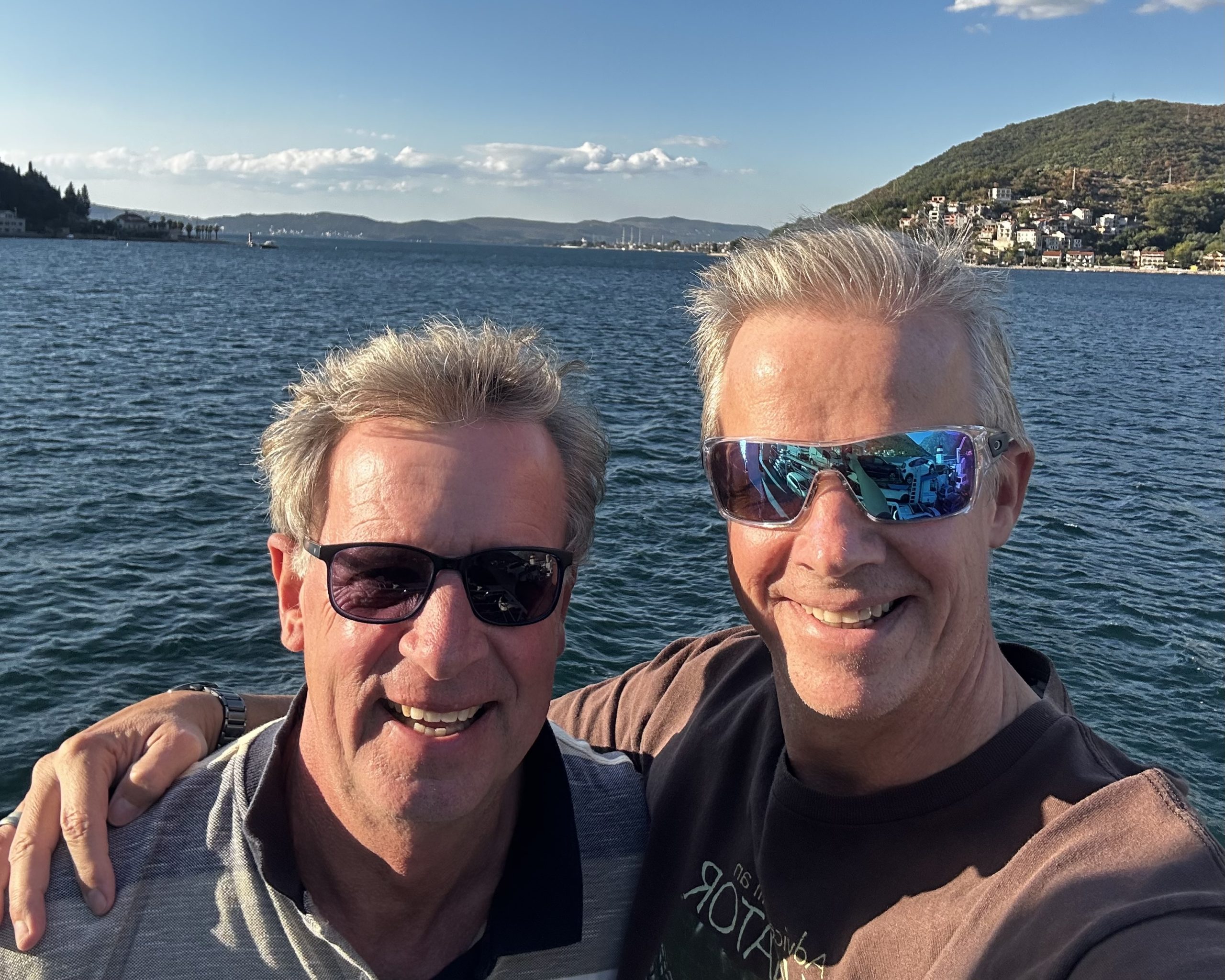
Some destinations have been on your bucket list for years. For my travel buddy Jürgen, the Balkans were one of them. So, when the opportunity arose to explore this fascinating corner of Europe together, we didn’t need much convincing.
With just two weeks available, we decided not to rush through half a dozen countries but instead focus on two: Bosnia & Herzegovina and Montenegro. As it turned out, this was an excellent decision.
We chose the second half of September, hoping to avoid the peak summer crowds while still enjoying pleasantly warm weather. And we couldn’t have picked a better time. Most days were beautifully sunny, temperatures were comfortable, and we could enjoy sightseeing without melting in the summer heat.
Even in late September, popular destinations such as Mostar and Kotor were still buzzing with visitors. We could only imagine what they must be like in July or August, when temperatures can approach 40°C, prices soar, and tourists compete for every square metre of picturesque cobblestone.
Our journey would take us from the historic streets of Sarajevo through the mountains and valleys of Bosnia & Herzegovina, into the beautiful coastal landscapes of Montenegro, and finally to Podgorica.
Along the way, we would encounter extraordinary history, magnificent scenery, wonderful food and, above all, plenty of memorable experiences to share.
Sarajevo – Where History Is Never Far Away
Our adventure began in Sarajevo, the capital of Bosnia & Herzegovina.
Few European cities have witnessed such dramatic historical events, and we were particularly interested in understanding how Sarajevo and its people have dealt with their difficult past.
Sarajevo played a pivotal role in world history long before the Balkan conflicts of the 1990s.
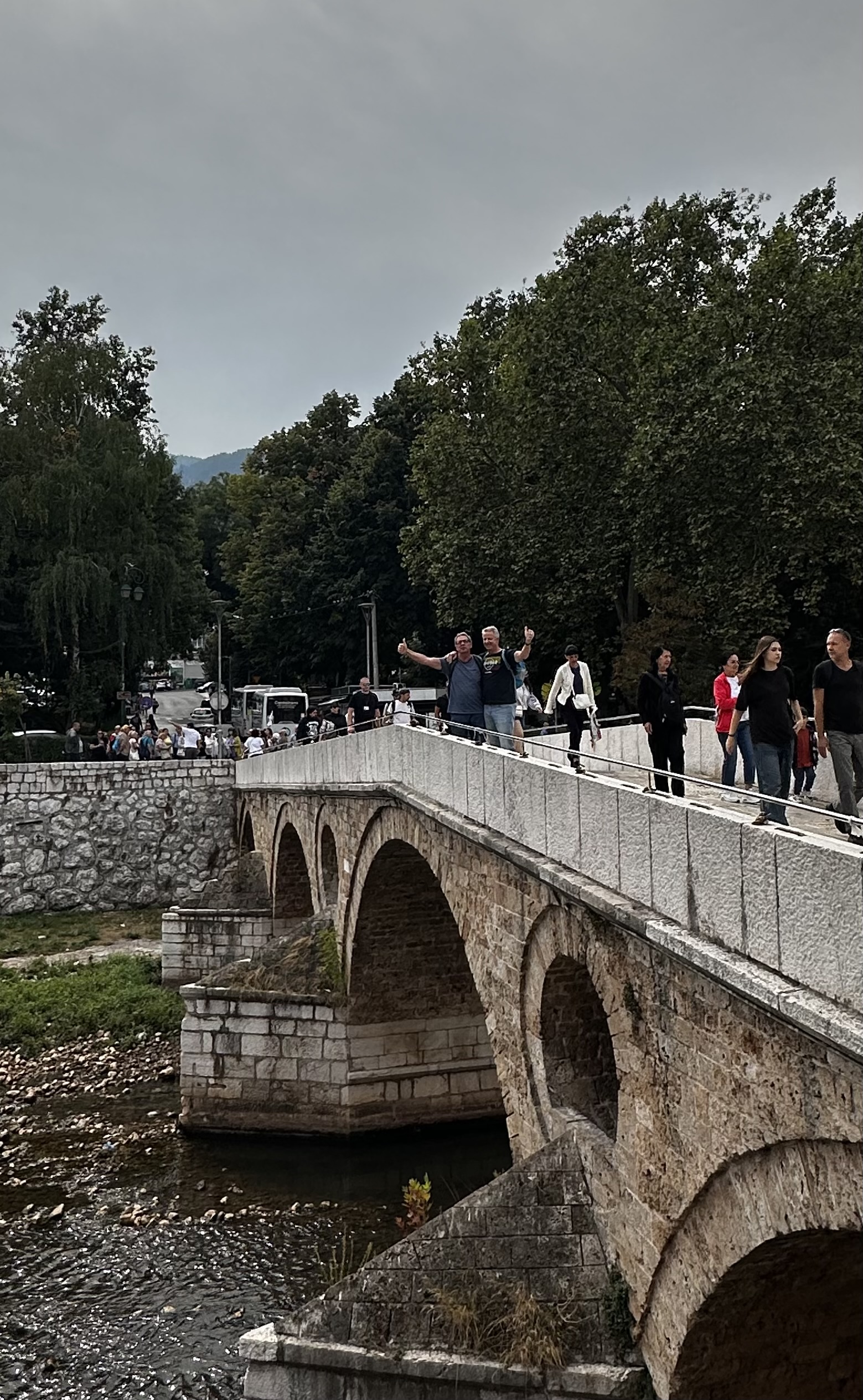
On 28 June 1914, Archduke Franz Ferdinand, heir to the Austro-Hungarian throne, and his wife Sophie were assassinated by Gavrilo Princip near Sarajevo’s Latin Bridge. The assassination triggered a diplomatic crisis between Austria-Hungary and Serbia, setting off a chain reaction of ultimatums, mobilisations and declarations of war that ultimately led to the First World War.
Standing near the Latin Bridge today, it is remarkable to think that an event in this relatively small city helped set in motion one of the greatest catastrophes in human history.
But the most visible reminders of Sarajevo’s past relate to a much more recent tragedy.
The Siege of Sarajevo – Scars That Have Not Disappeared
Between April 1992 and February 1996, Sarajevo endured one of the longest sieges of a capital city in modern history.
For almost four years, Bosnian Serb forces positioned in the surrounding hills subjected the city to shelling and sniper fire. Residents struggled to obtain food, water and electricity, while simply crossing a street could become a life-threatening undertaking.
More than 11,000 people, including approximately 1,600 children, were killed during the siege.
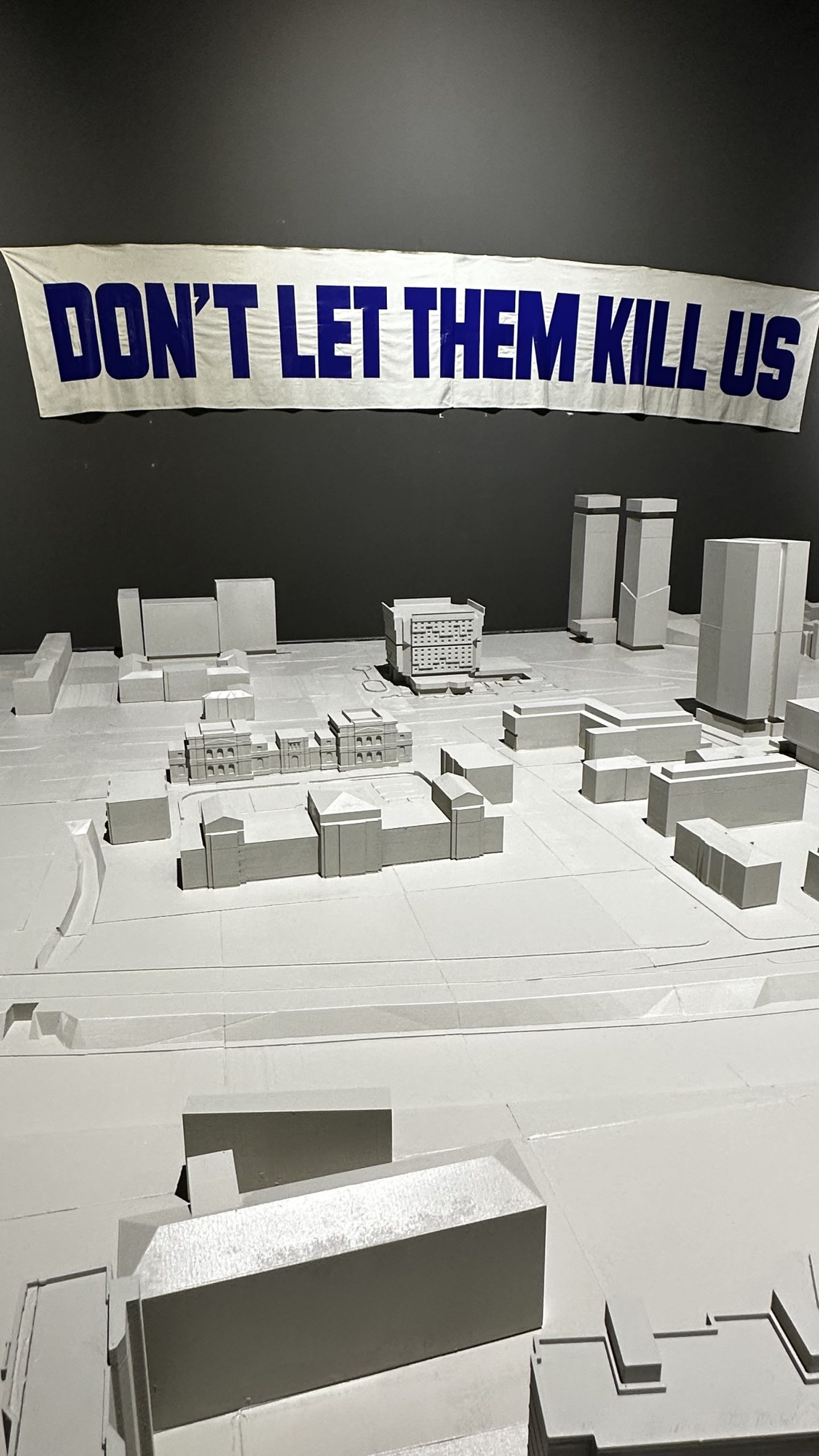
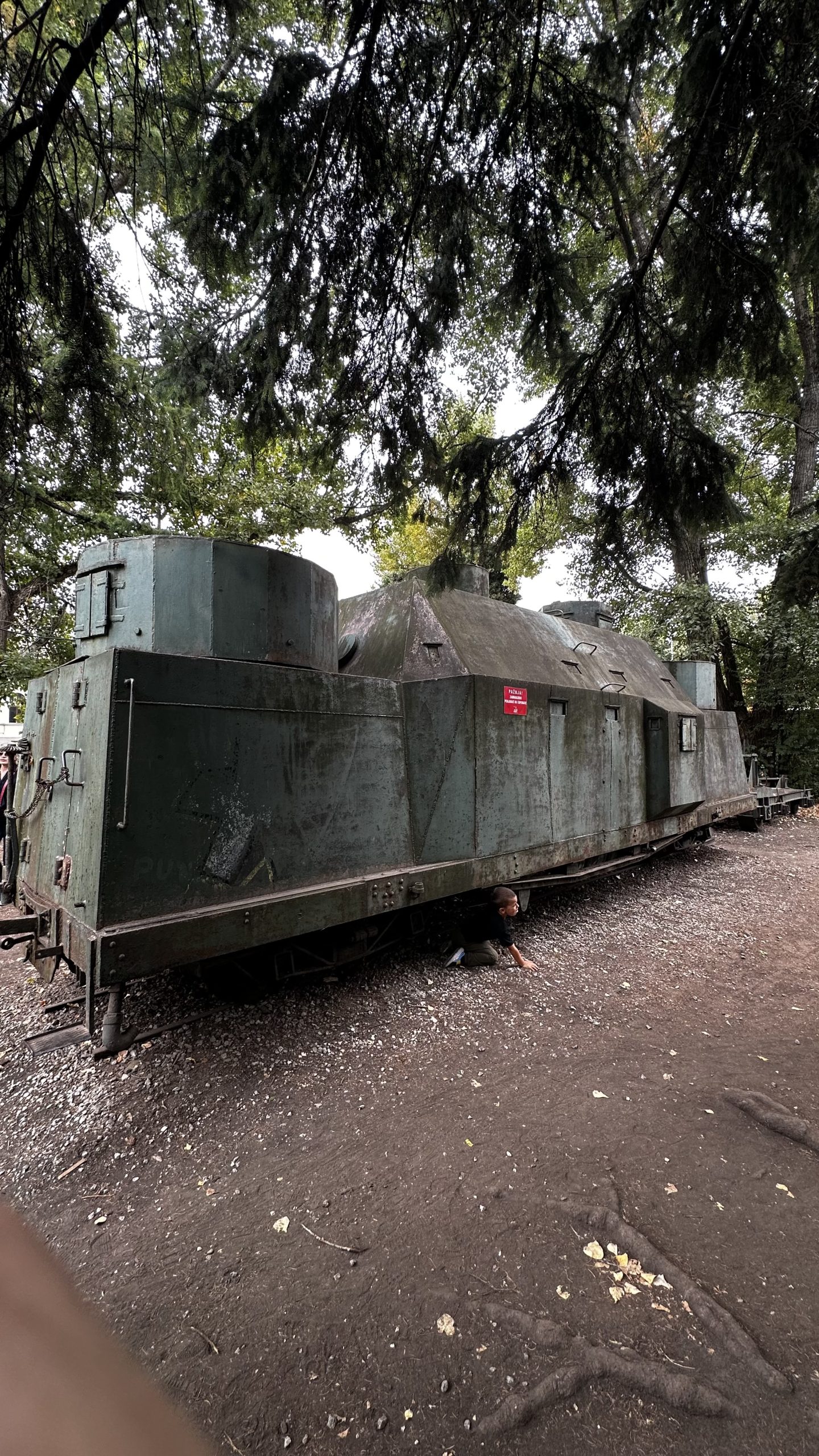
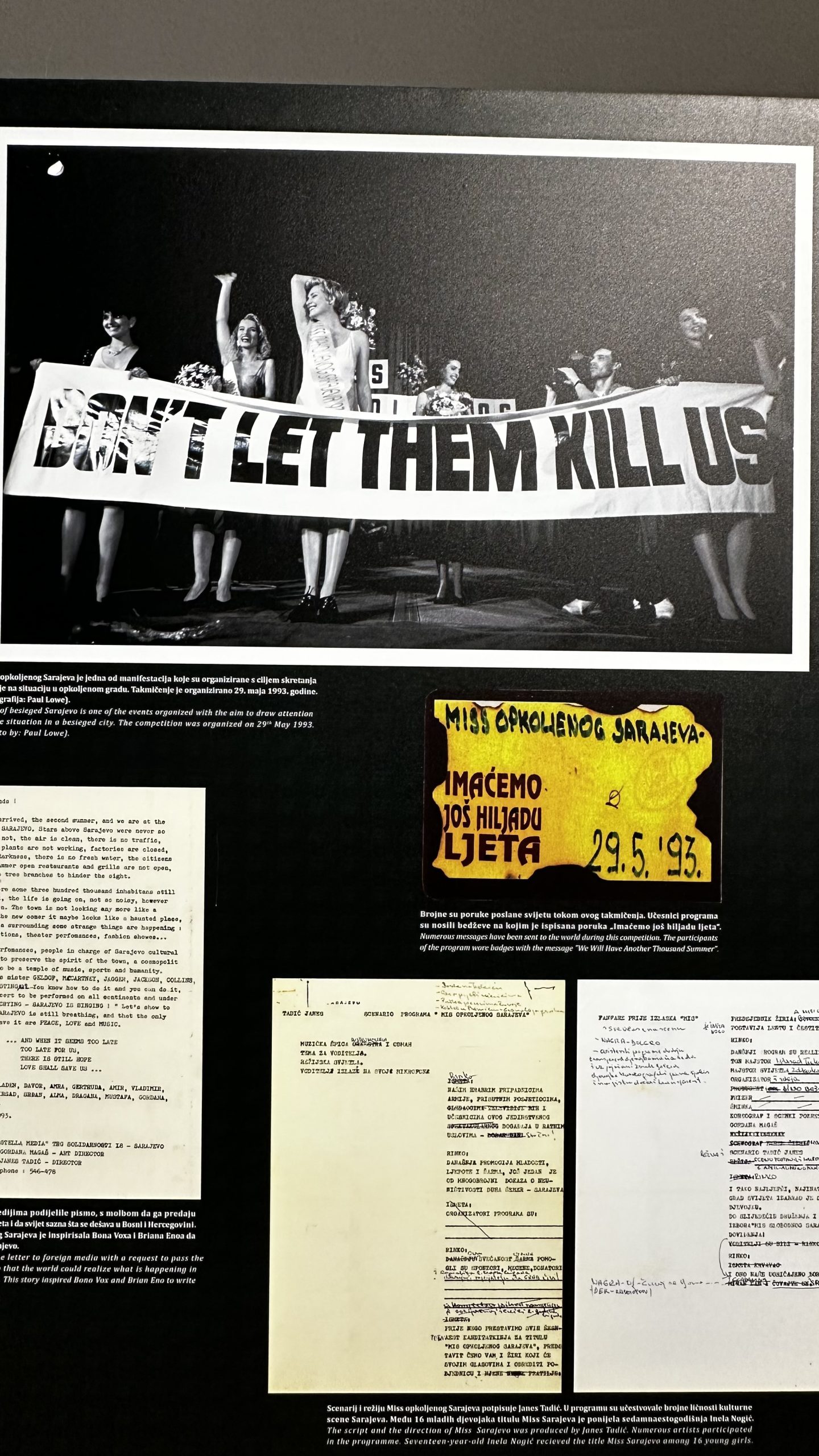
We wanted to understand this history beyond the usual guidebook descriptions, so we visited the Historical Museum of Bosnia & Herzegovina and explored locations associated with the siege.
One of the most haunting was the infamous Sniper Alley, the broad boulevard where civilians risked their lives while moving through the city.
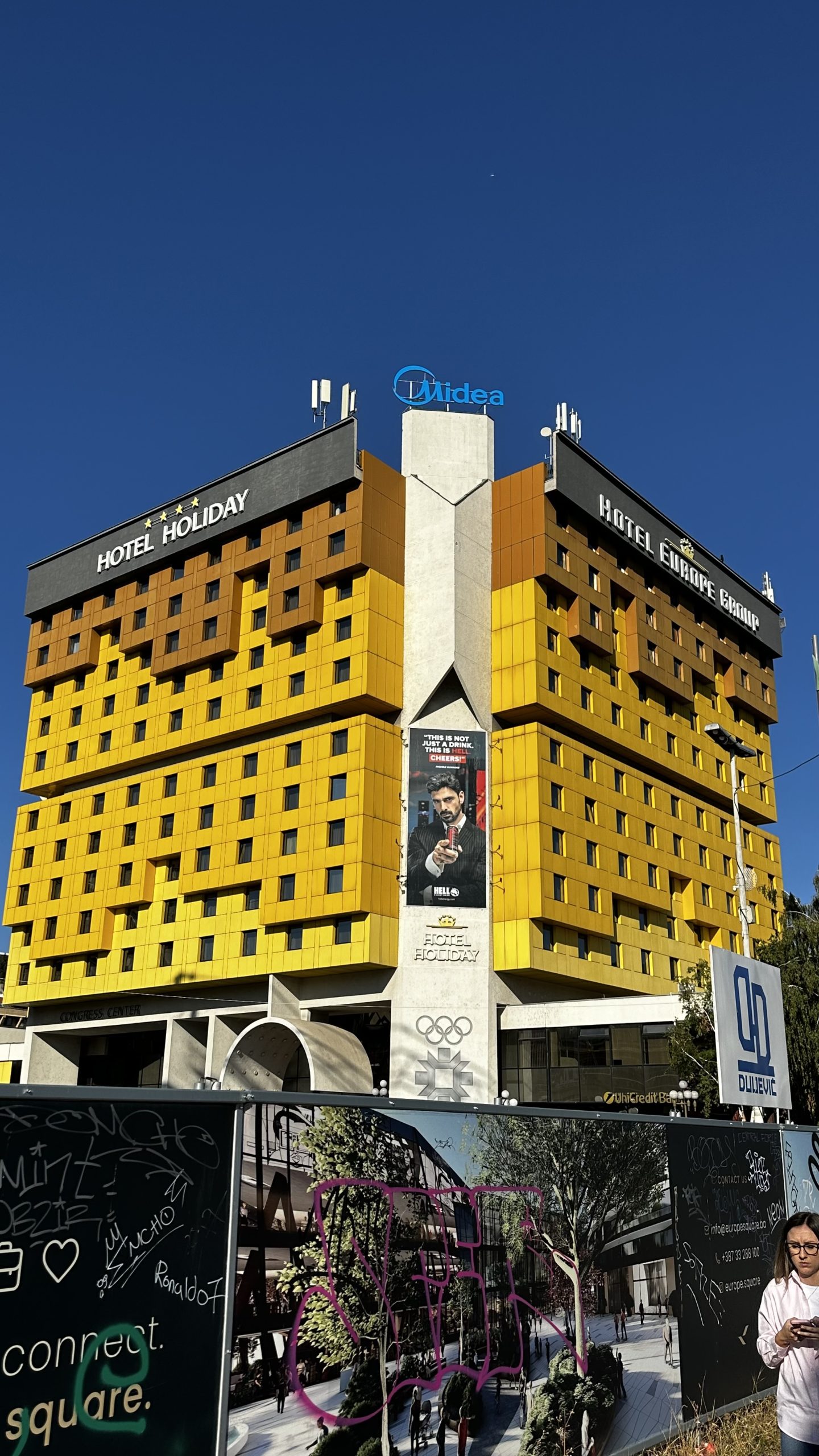
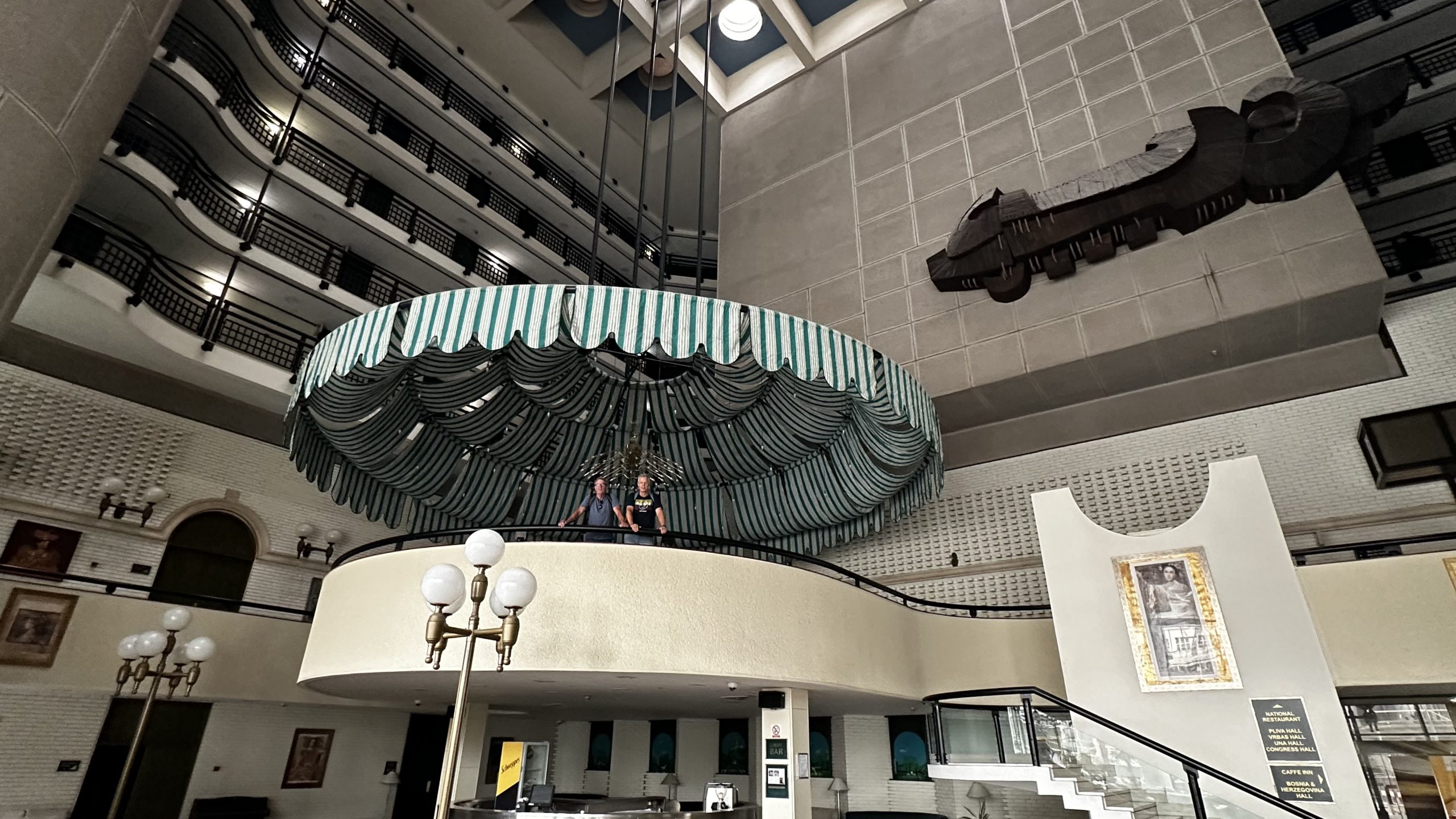
We also visited the famous Holiday hotel, formerly the Holiday Inn, where international journalists stayed during the siege and reported the unfolding tragedy to the outside world.
It must have been a surreal experience: journalists broadcasting reports from their hotel while residents just outside struggled to survive.
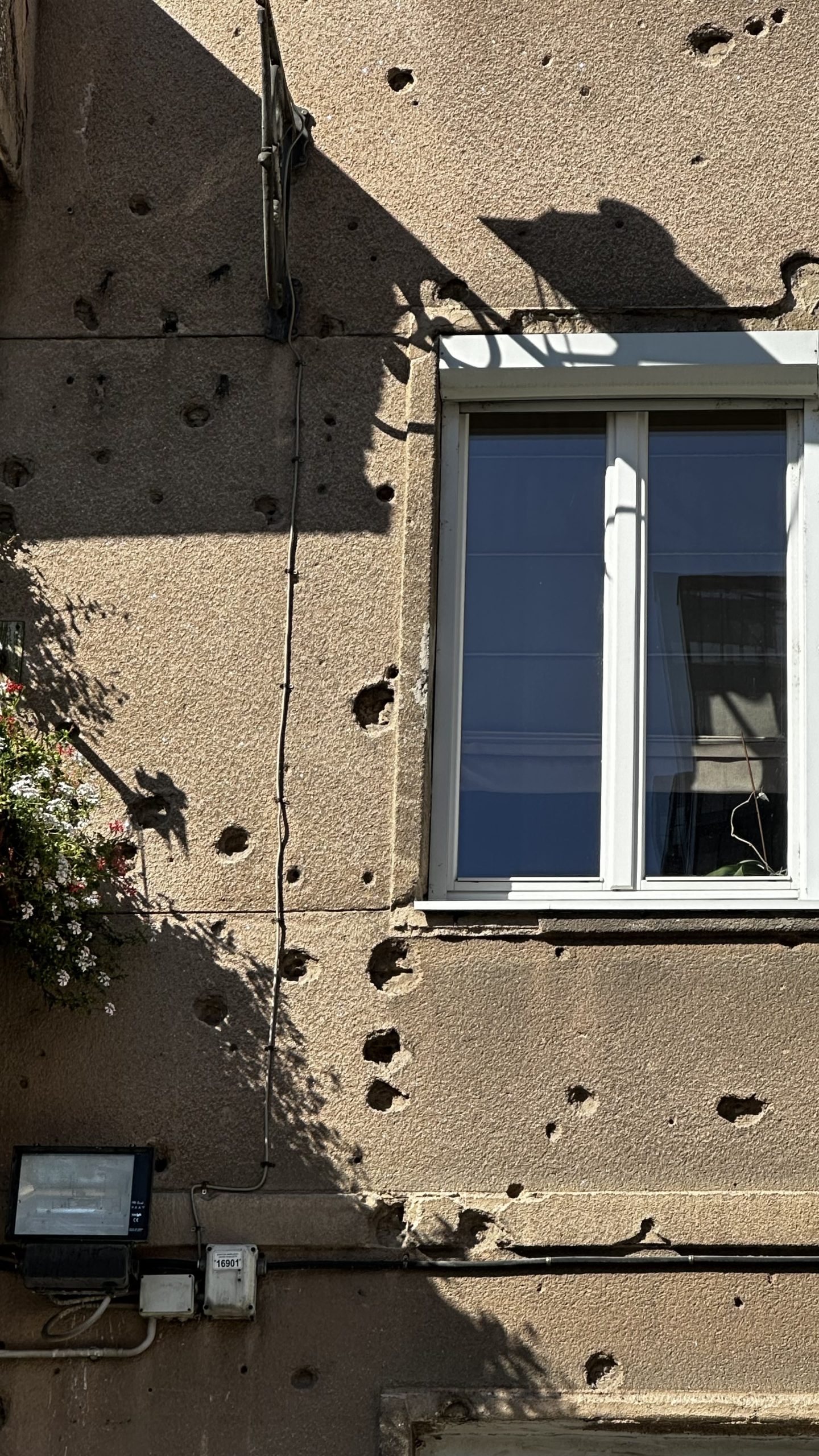
Even today, the war’s physical scars remain unmistakable. Bullet and shrapnel marks can still be seen on numerous building façades, while cemeteries appear throughout the city.
I cannot recall ever seeing so many burial grounds in a single city. Many of the gravestones bear dates from the early 1990s, offering a deeply moving reminder of the human cost of war.
These memorials are not simply tourist attractions. They are part of Sarajevo’s collective memory and a powerful warning about what can happen when ethnic nationalism and hatred spiral out of control.
A City of Cultures – and a Surprisingly Relaxed Atmosphere
What surprised us most about Sarajevo, however, was not its history but its atmosphere.
Despite everything the city has endured, Sarajevo today feels remarkably welcoming and relaxed.
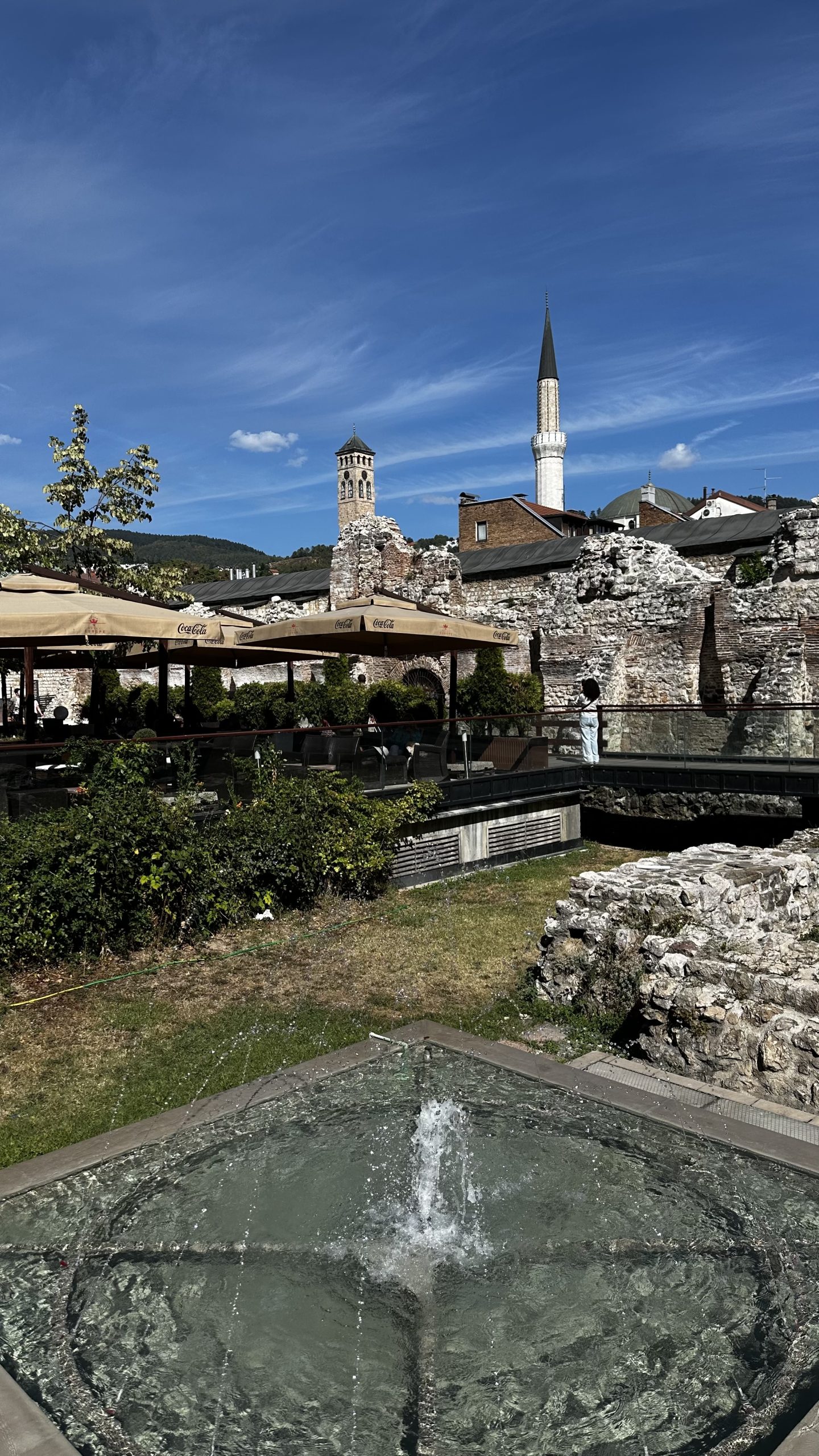
For centuries, it has been a meeting point of different cultures, religions and traditions. Mosques, Catholic churches, Orthodox churches and synagogues stand within walking distance of one another, reflecting a rich and complicated multicultural heritage.
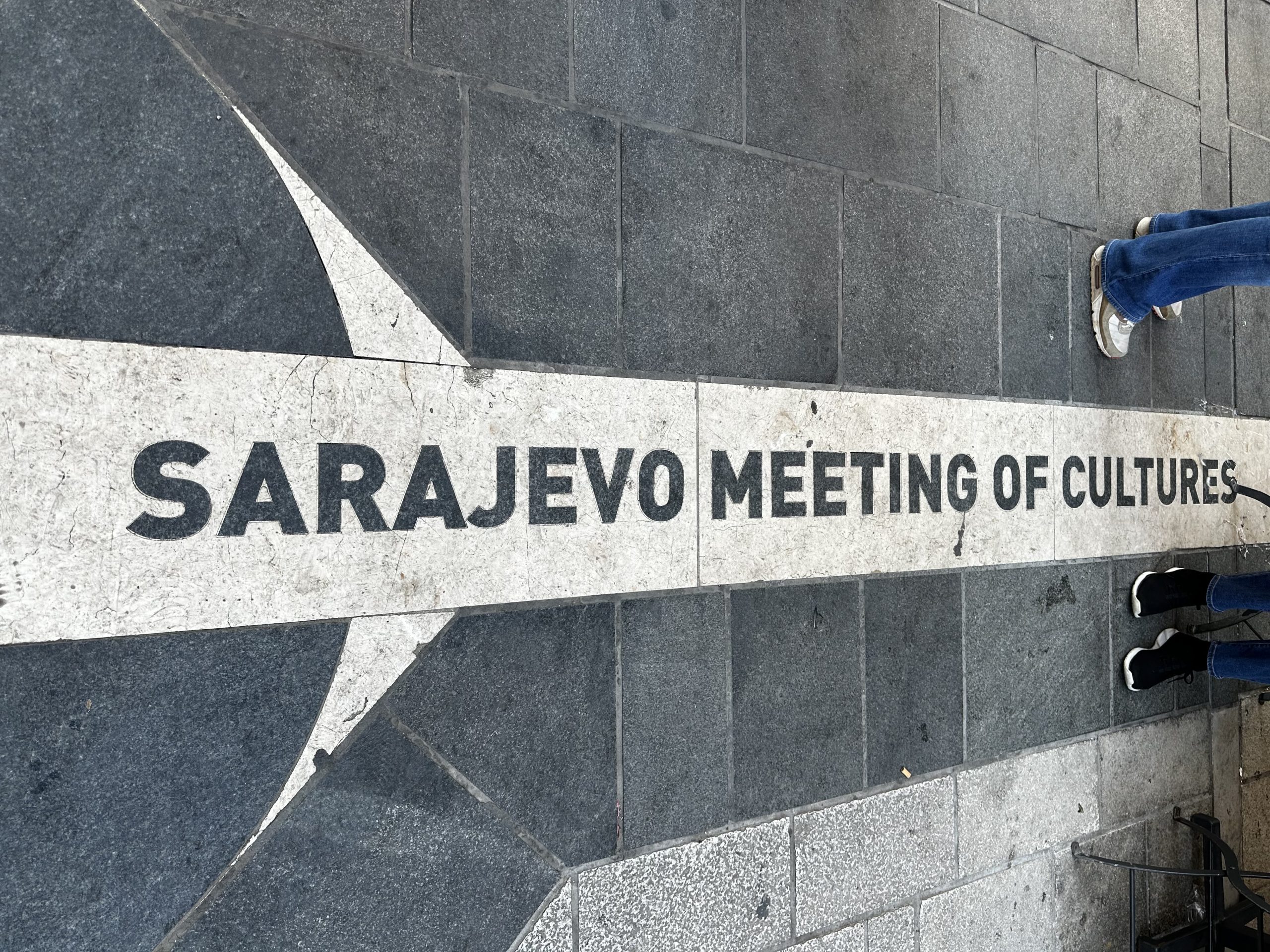
Perhaps nowhere is this cultural crossroads more evident than along Ferhadija Street, where a pavement marker reading “Sarajevo Meeting of Cultures” symbolically marks the transition between the Ottoman-influenced old bazaar and the Austro-Hungarian architecture of the western city centre.
Walk a few metres, and you almost feel as though you have crossed from Istanbul to Vienna.
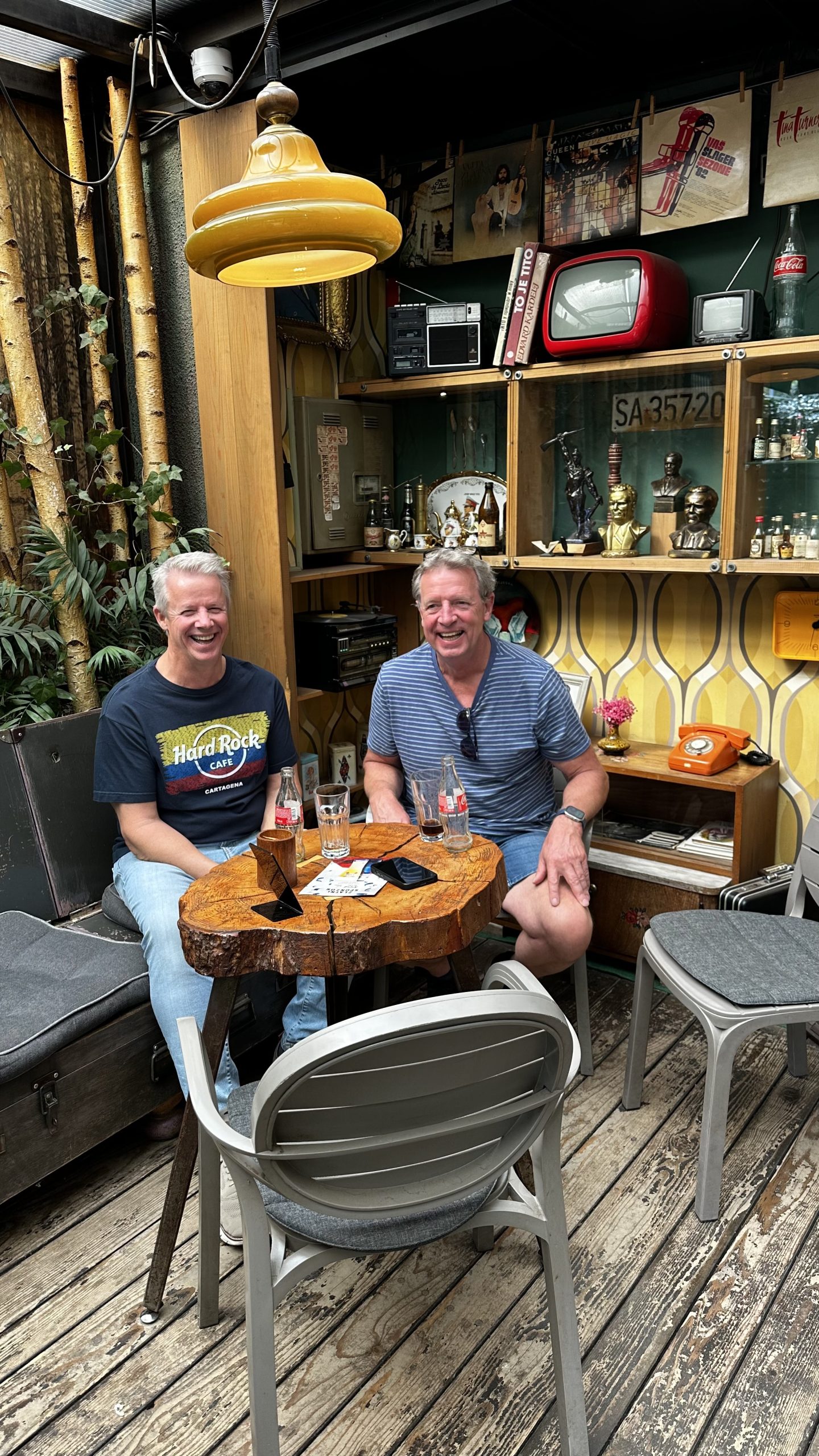
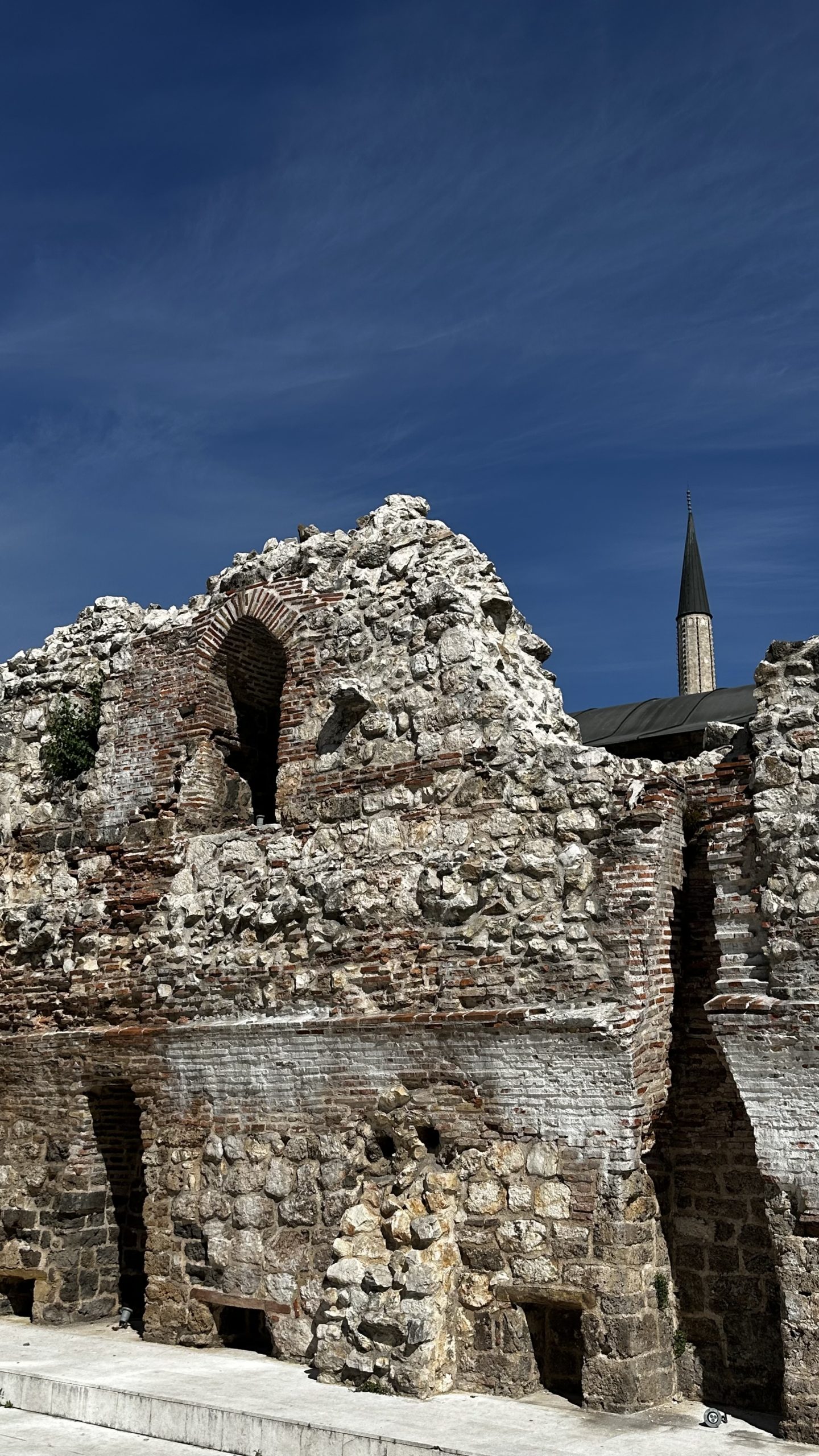
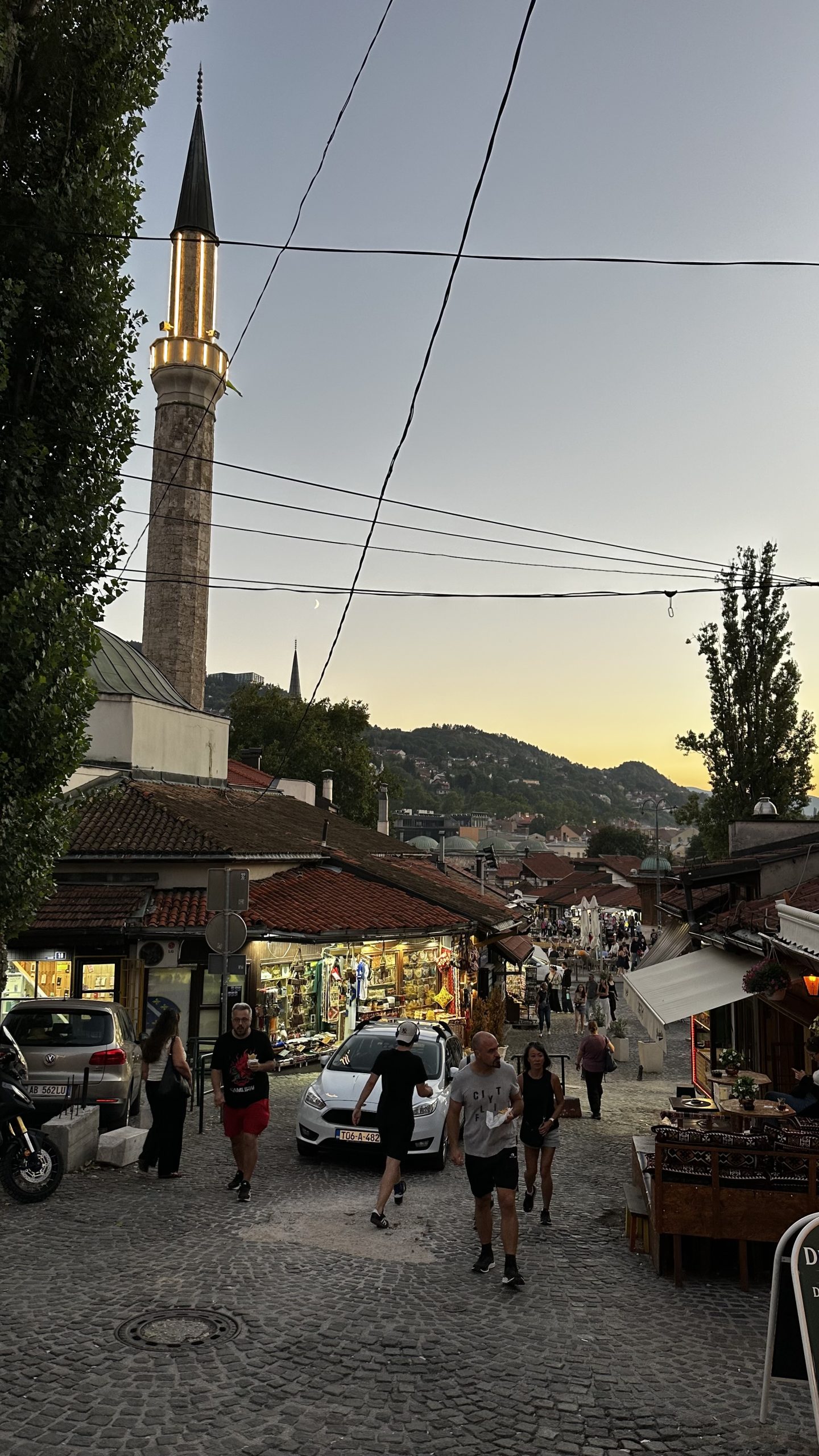
We thoroughly enjoyed wandering through the narrow streets of Baščaršija, Sarajevo’s historic bazaar district, stopping at cafés and watching the fascinating mixture of people passing by.
Although the streets were lively, there was surprisingly little hectic activity. Even the market vendors seemed perfectly happy to let us browse without trying to persuade us to buy something every few seconds.
Anyone who has experienced aggressive sales tactics in other tourist destinations will appreciate how refreshing that is!
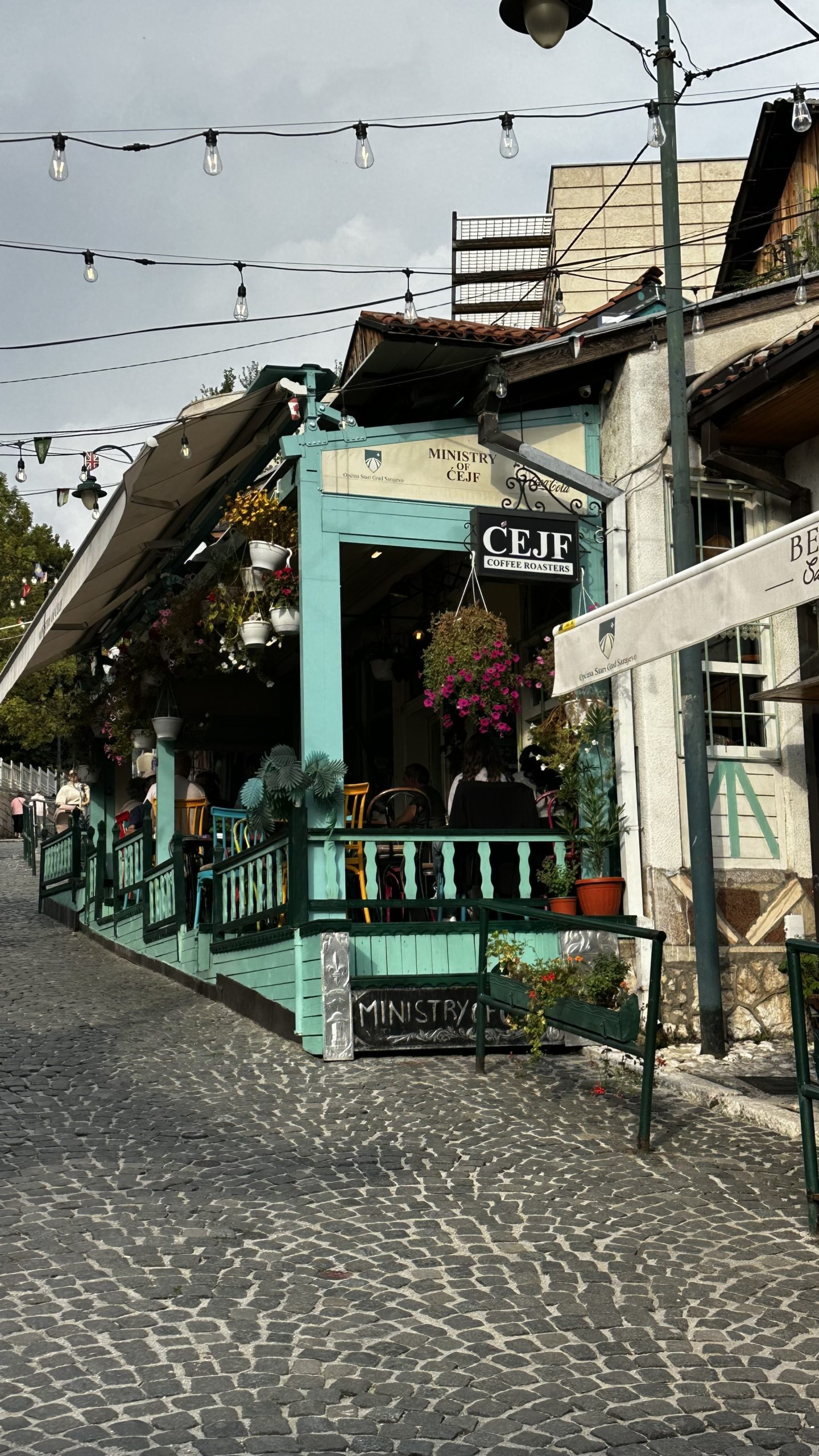
And of course, there was plenty of time for coffee. Sarajevo has a wonderful café culture, and sometimes the best way to experience a city is simply to sit down, order a drink and watch everyday life unfold.
Sunset Above Sarajevo
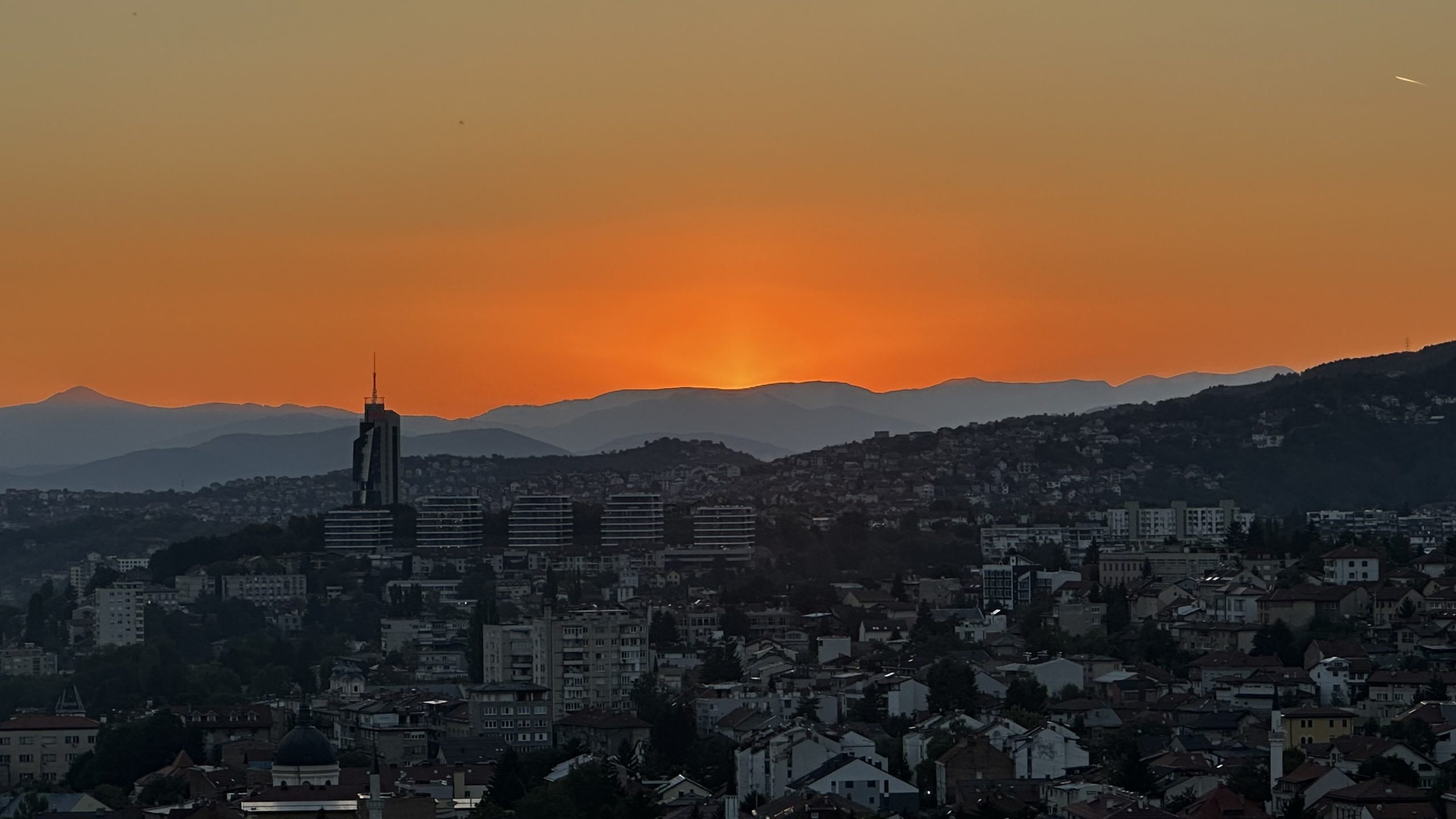
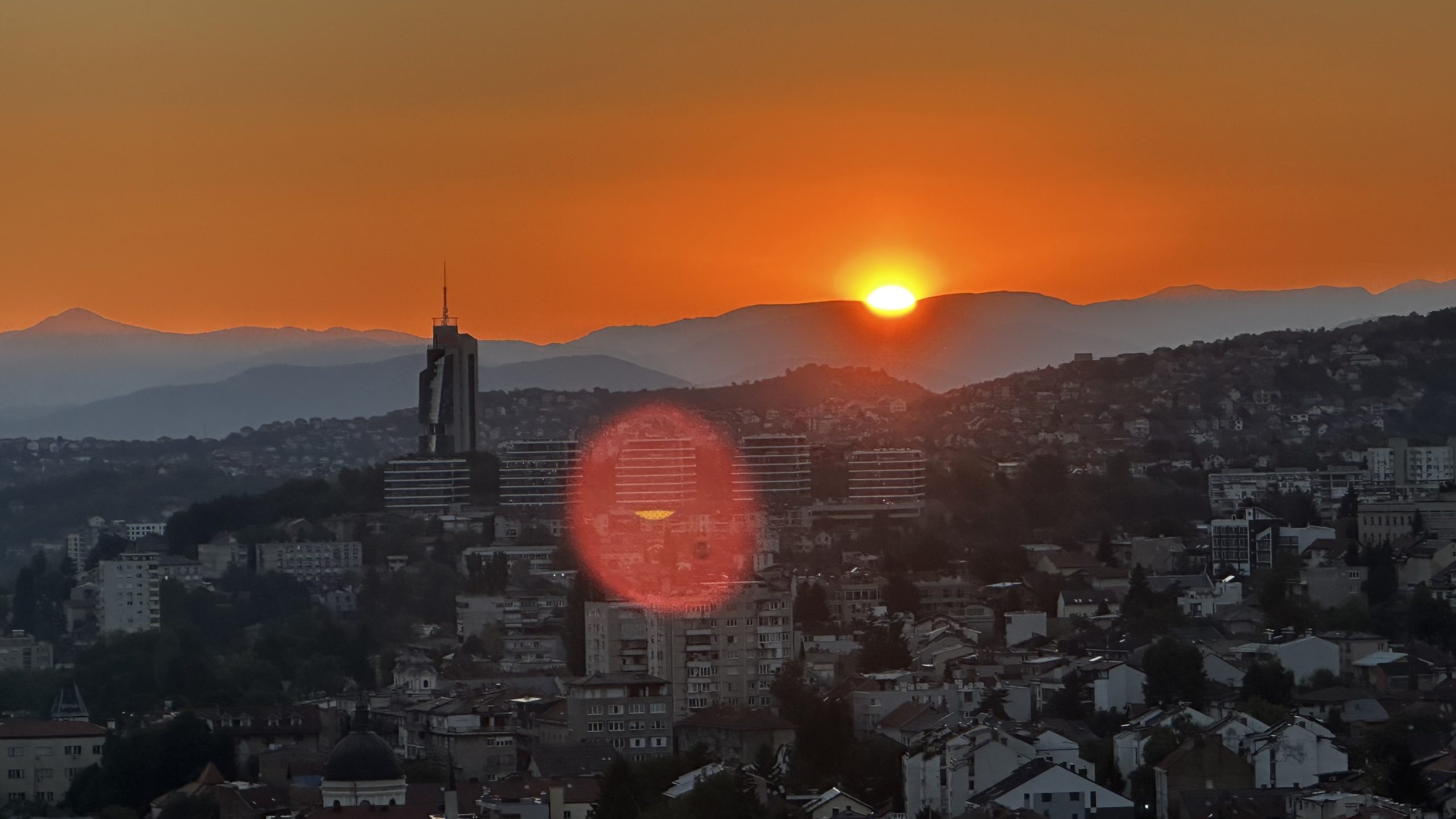
One experience I would recommend to absolutely everyone visiting Sarajevo is watching the sunset from the Yellow Fortress (Žuta Tabija).
Perched on a hillside above the old town, this historic fortification offers sweeping views across Sarajevo’s rooftops, minarets, surrounding mountains and numerous white gravestones.
As the sun slowly disappears behind the hills and the city lights begin to sparkle, the atmosphere becomes almost magical.
There is a small café where you can enjoy a drink while taking in the panorama.
For Jürgen and me, it was one of those moments when there is absolutely no need to rush anywhere. Just sit back, enjoy the view and appreciate being there.
Sometimes the simplest experiences are the most memorable.

Leaving Sarajevo – The Tunnel of Hope
After several days exploring Sarajevo, it was time to continue our journey.
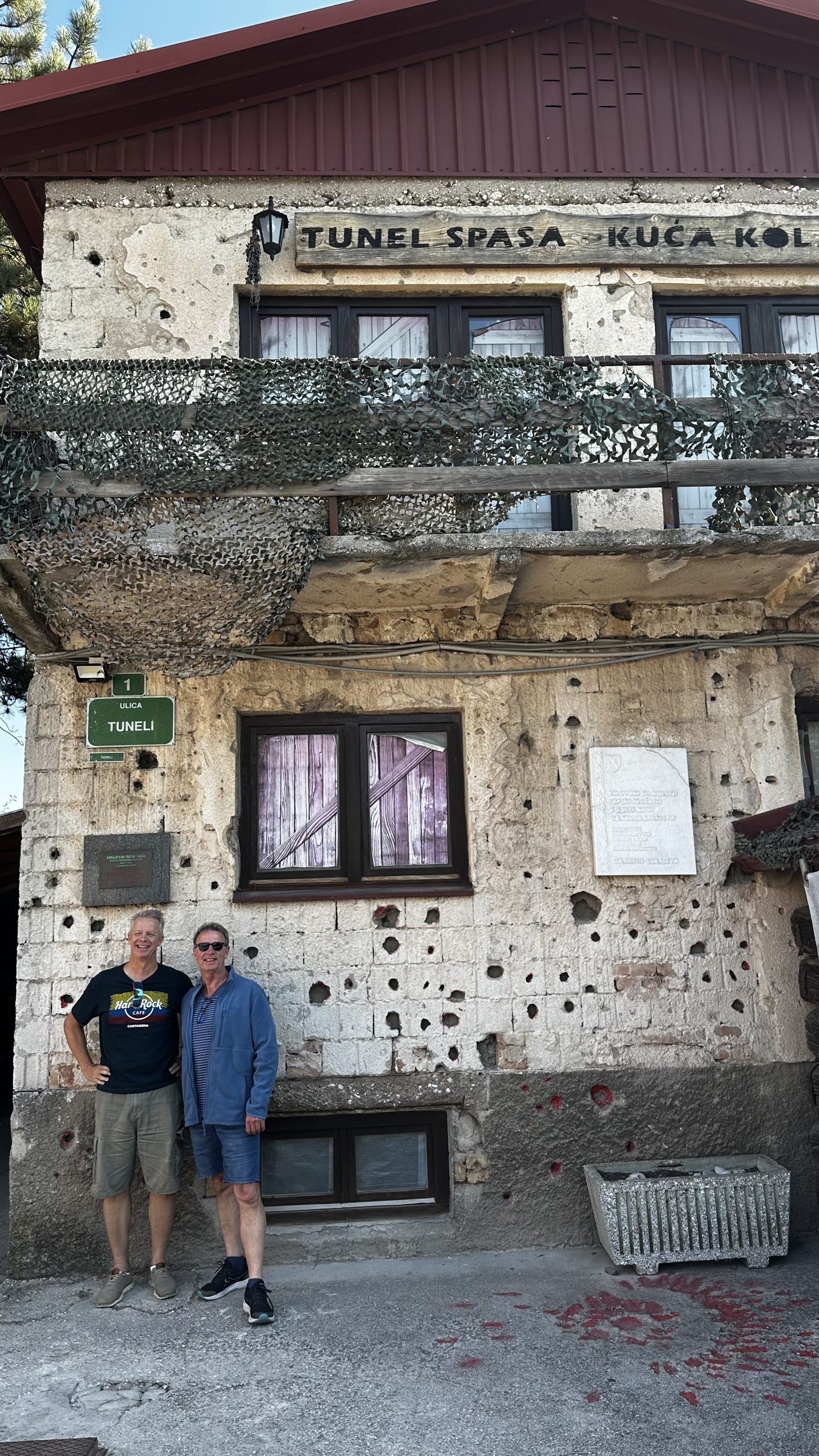
But before leaving, there was one more place we absolutely wanted to visit: the Tunnel of Hope.
During the siege, Sarajevo was largely cut off from the outside world. In 1993, a secret tunnel was constructed beneath the airport runway, connecting the besieged city with Bosnian-government-held territory on the other side.
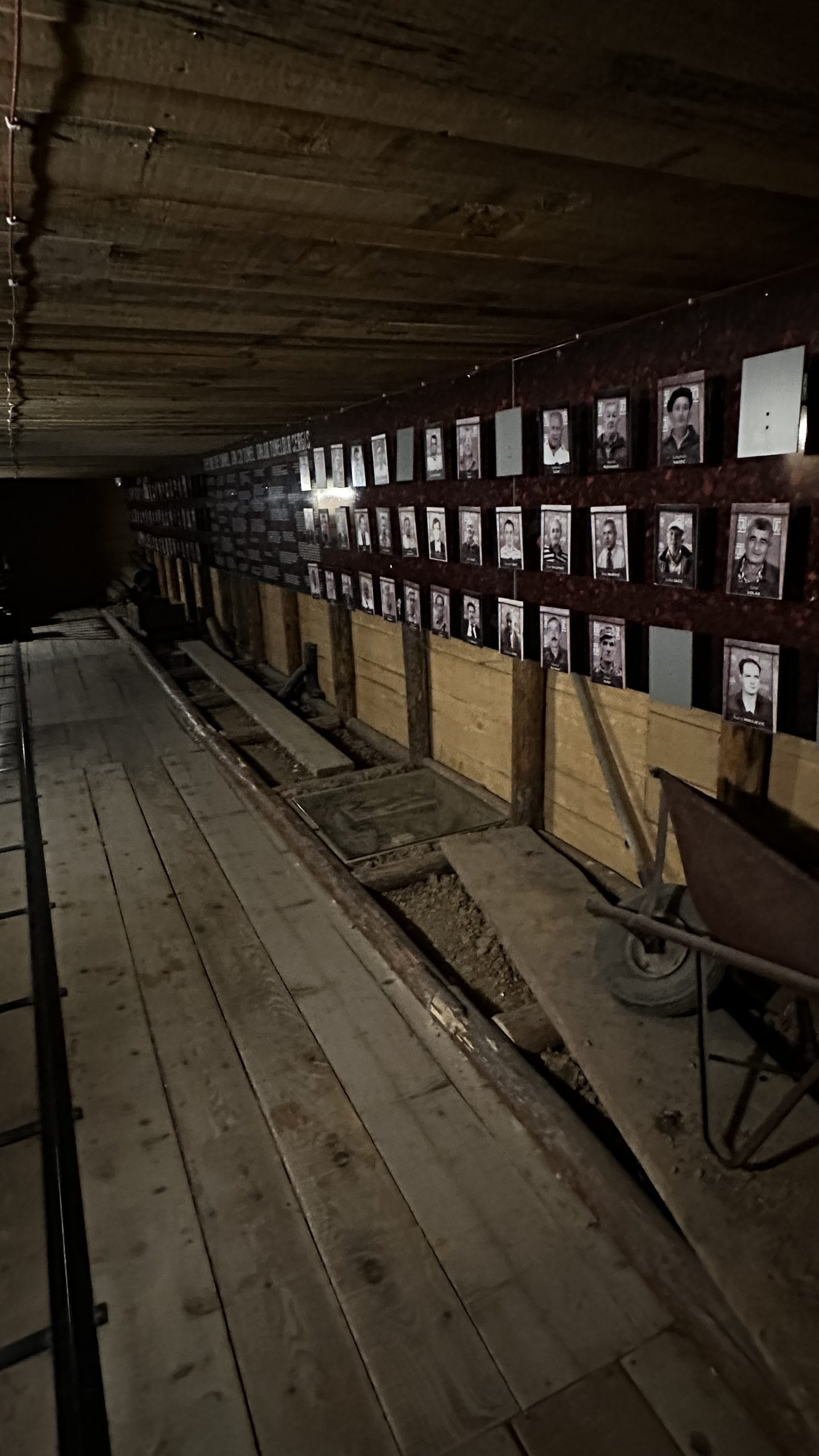
Approximately 800 metres long and often barely high enough to stand upright, the tunnel became a vital lifeline for the city’s inhabitants.
Food, medicine, supplies and people passed through this narrow underground passage, helping Sarajevo survive its isolation.
Today, a preserved section of the tunnel can be visited as part of a museum, with exhibits explaining its construction and importance.
Walking through even a short section gives you some appreciation of the conditions under which people had to move through it.
It is an extraordinary example of human determination and ingenuity under unimaginable circumstances.
Practical tip: Bring Bosnian convertible marks (BAM) in cash. At the time of our visit, admission had to be paid in local currency. We discovered that a nearby house offered to exchange euros, but it is better to arrive prepared.
Tito’s Secret Nuclear Bunker – A Journey into the Cold War
Our next destination, approximately an hour and a half from Sarajevo, was another remarkable historical site: Tito’s Bunker near Konjic.
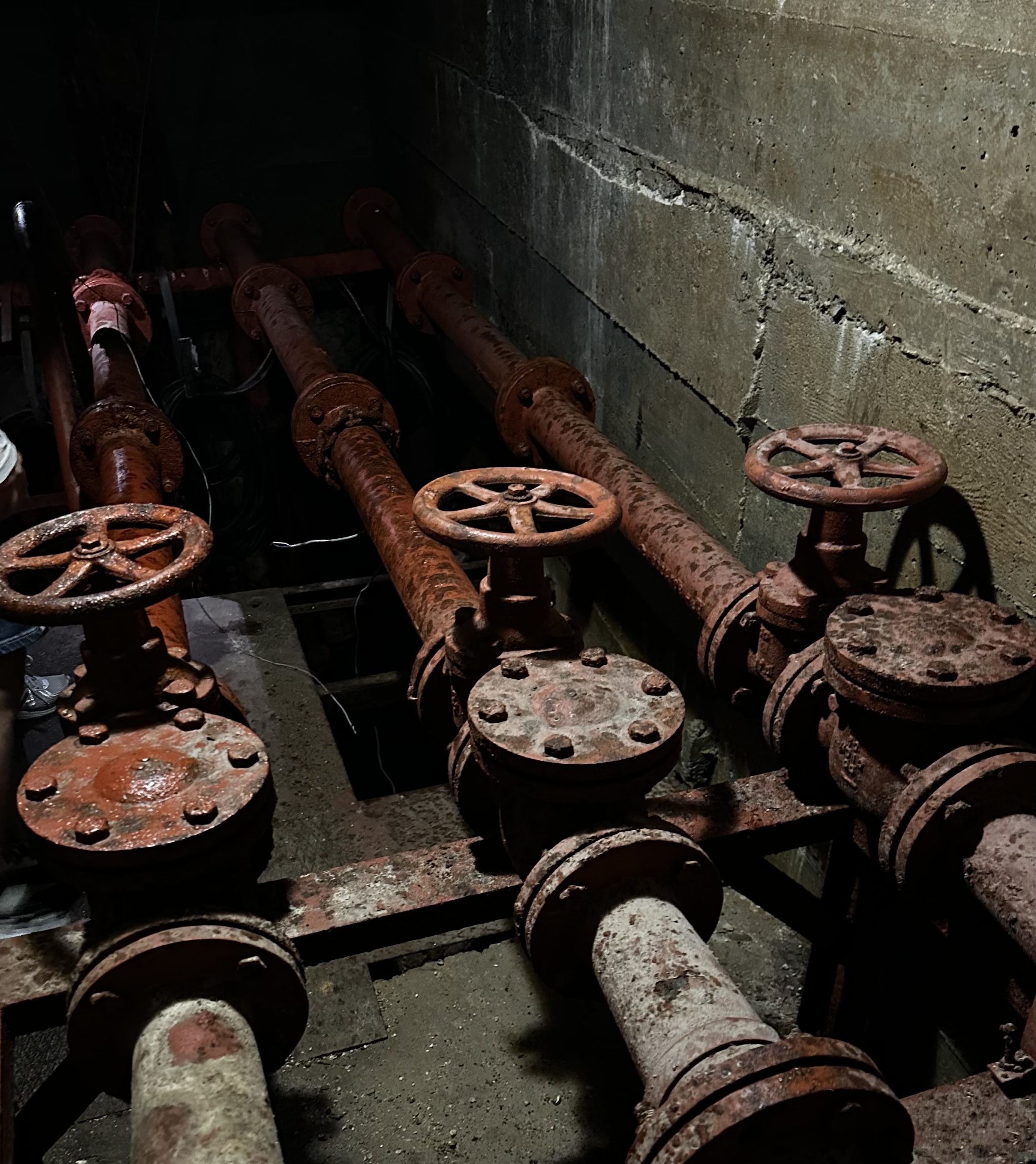
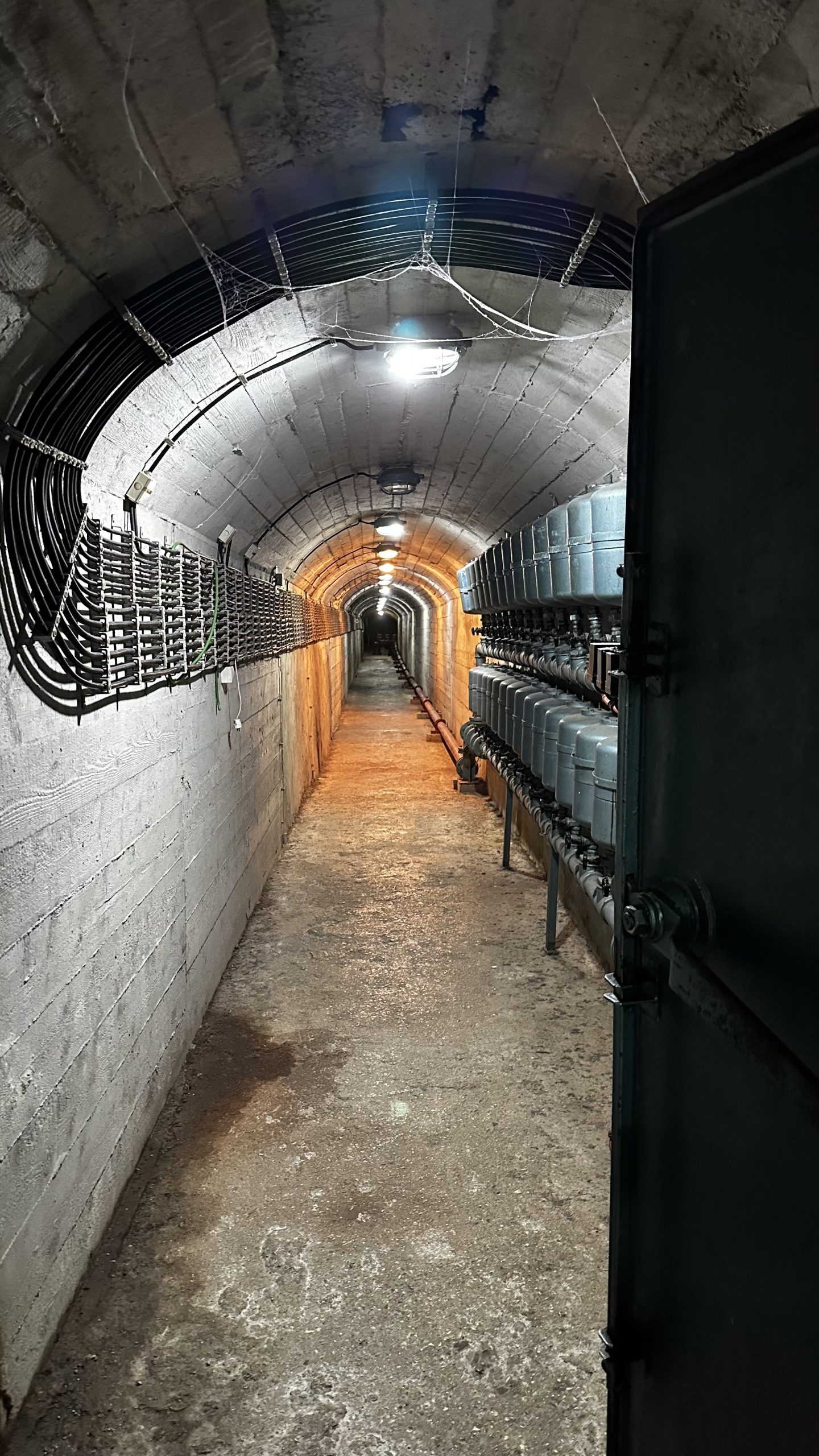
Officially known as ARK D-0, this enormous underground complex was constructed during the Cold War to protect Yugoslav leader Josip Broz Tito and a select group of senior political and military officials in the event of a nuclear attack.
Construction began in 1953 and continued for more than two decades, with the project remaining one of Yugoslavia’s most closely guarded secrets.
Hidden deep inside a mountain, the bunker was designed to accommodate approximately 350 people and allow them to survive underground for an extended period.
It contains sleeping quarters, conference rooms, communication facilities, ventilation systems and everything else considered essential to keep the country’s leadership functioning after a nuclear catastrophe.
Thankfully, the bunker was never needed for its intended purpose.
Architecturally, it is hardly what I would call beautiful. In fact, much of it feels like a maze of utilitarian corridors and rooms frozen in the 1970s.
But fascinating? Absolutely!
Walking through the complex, we could almost imagine the atmosphere of secrecy and paranoia that must have surrounded its construction.
Practical tip: Visits are only possible on guided tours, which should be arranged in advance. The bunker is located within a military-controlled area, and ticket collection and access arrangements require some planning, as the ticket office was some 30 minutes away, so don’t assume you can simply turn up at the entrance.
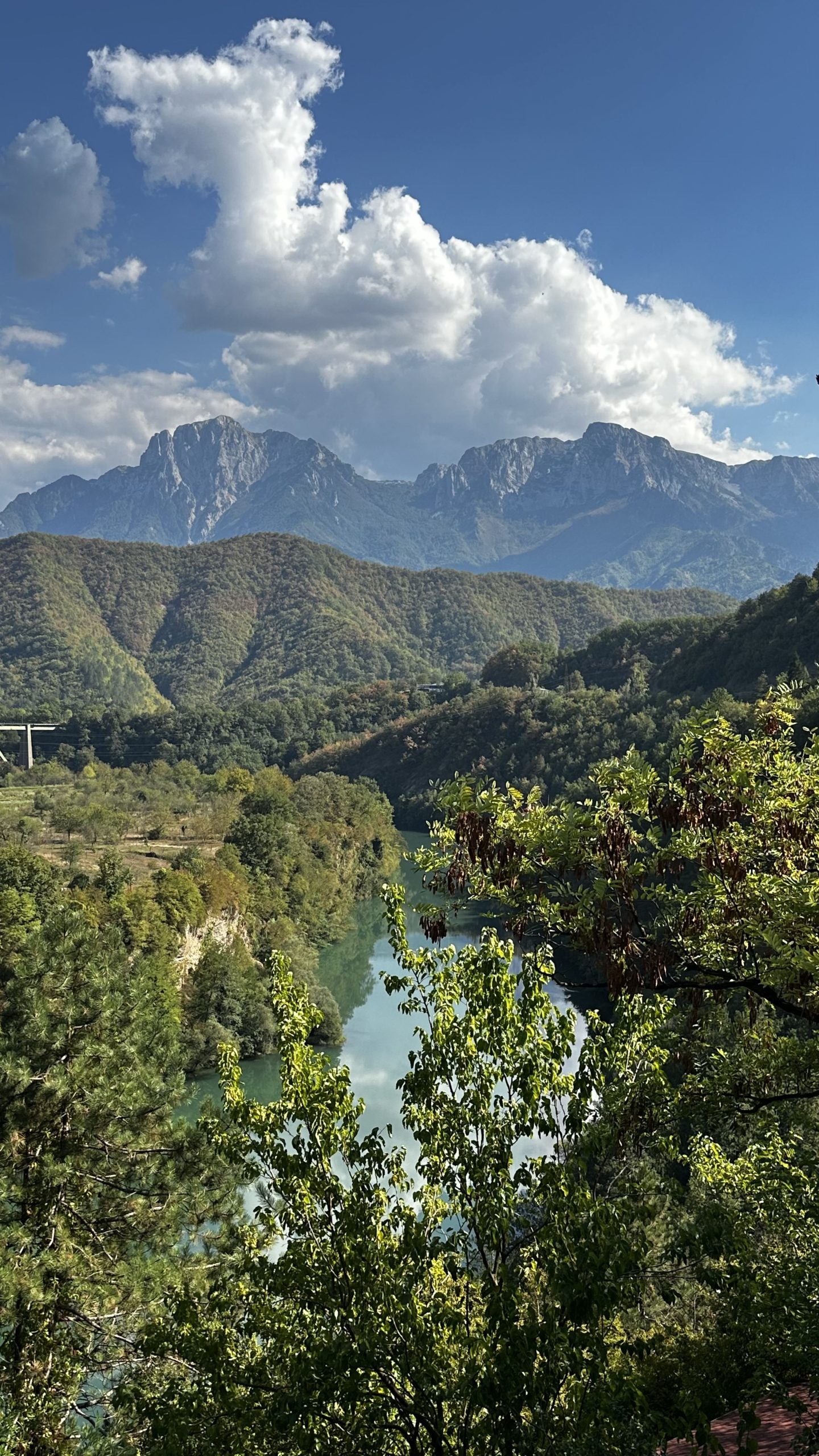
Mostar – Straight Out of a Fairy Tale
After so much history, it was time for a change of scenery.
Our next stop was Mostar, arguably one of the most picturesque towns in the Balkans.
The moment you enter its historic centre, it is easy to understand why visitors fall in love with the place.
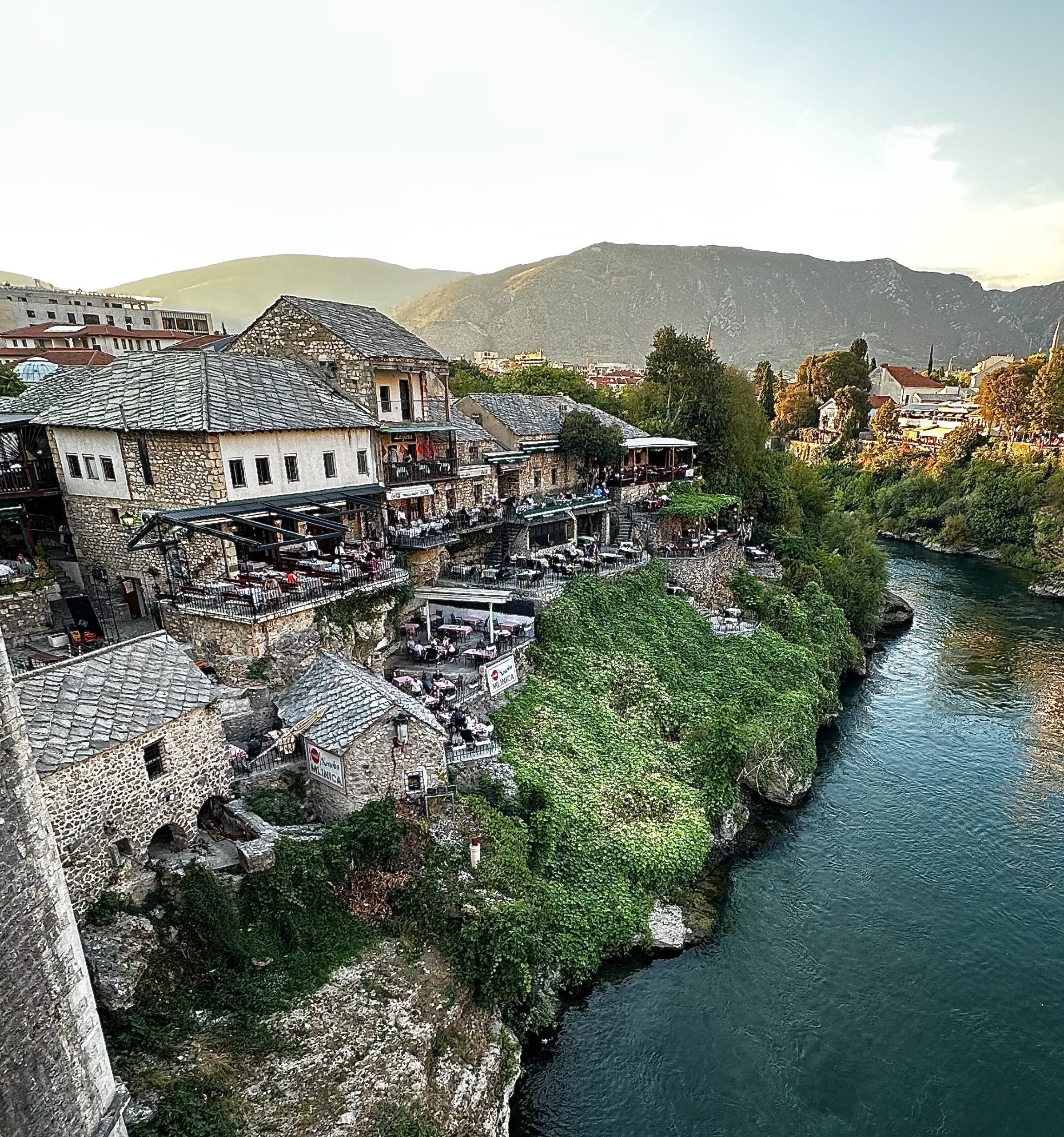
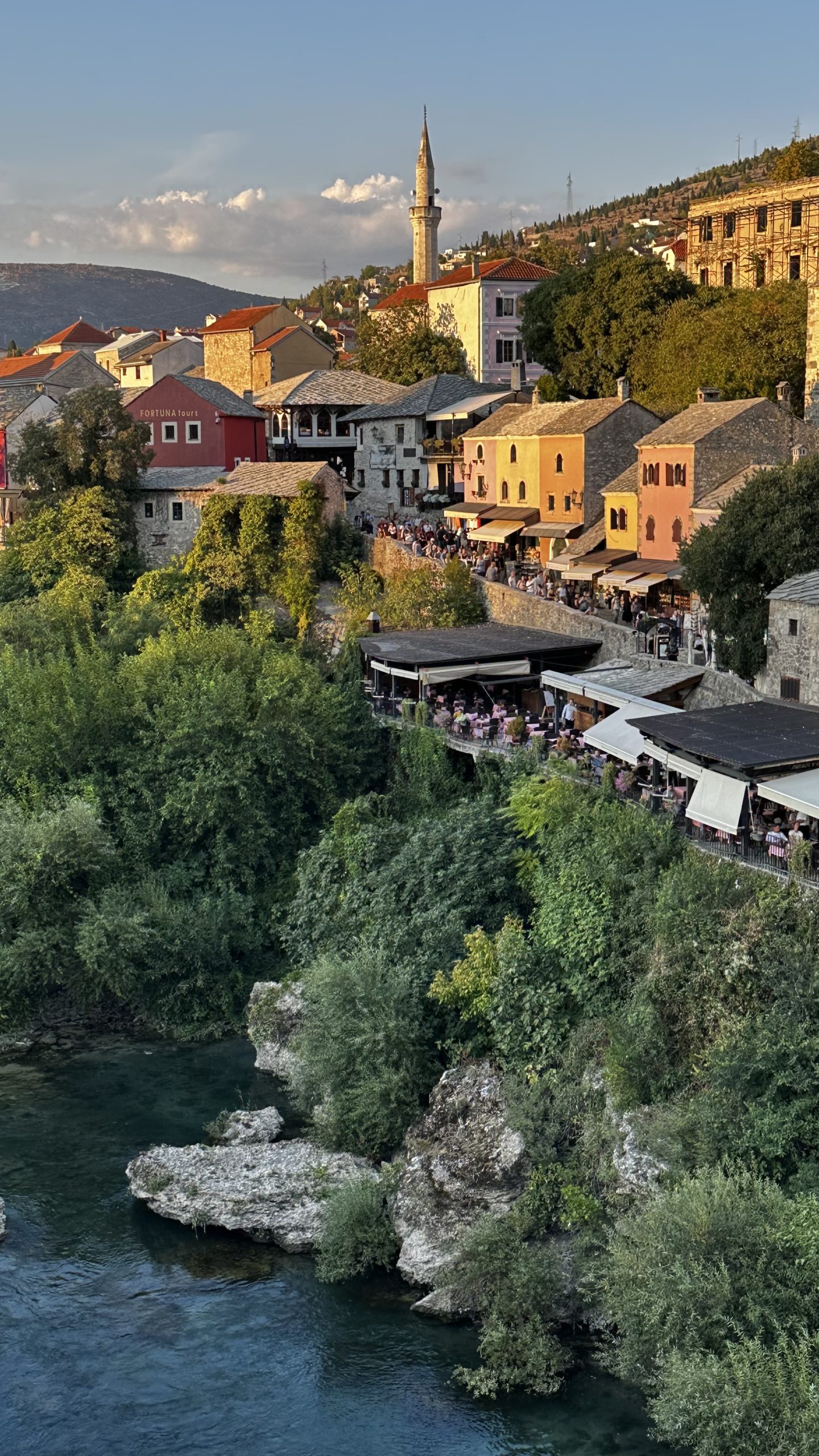
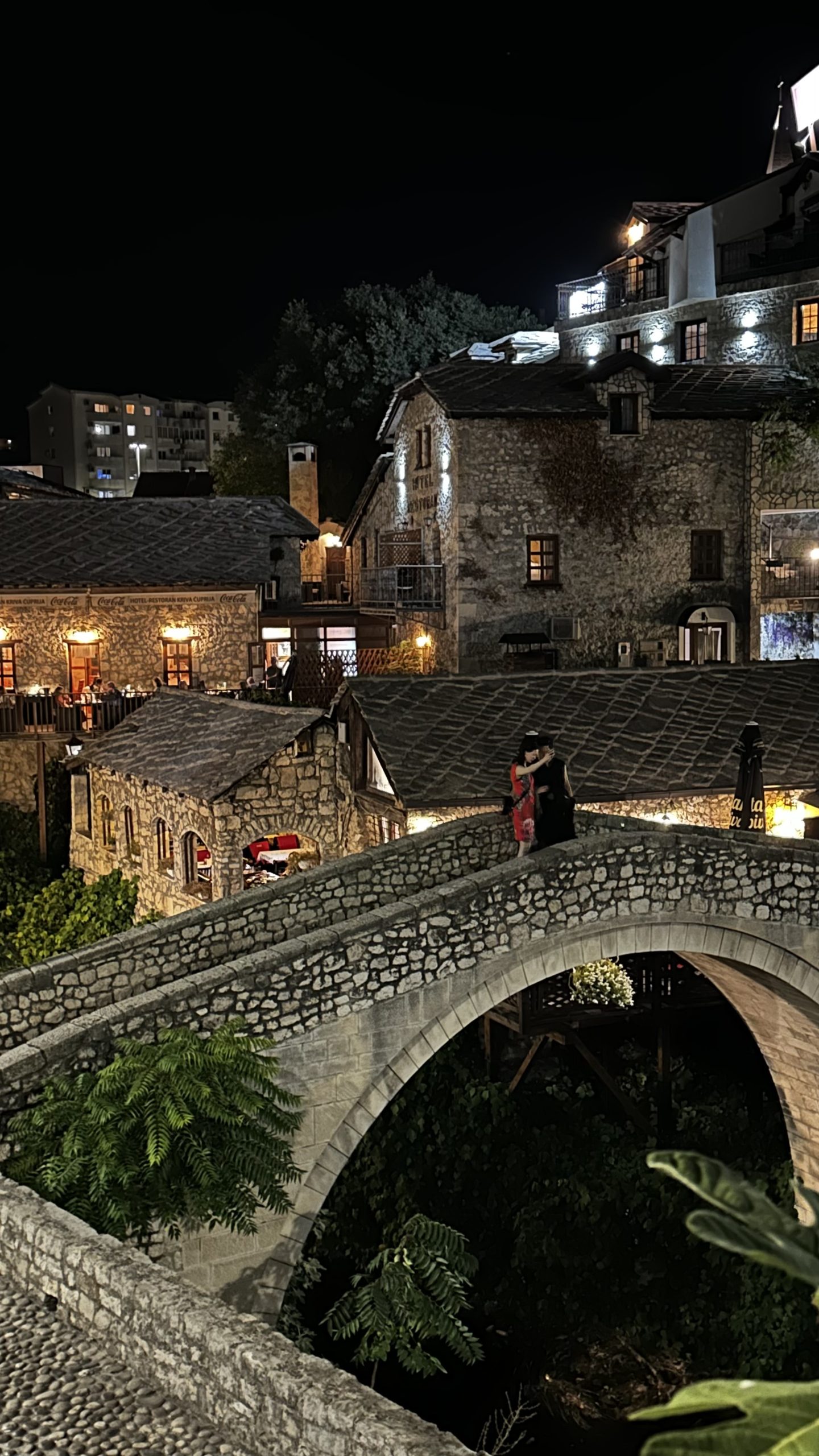
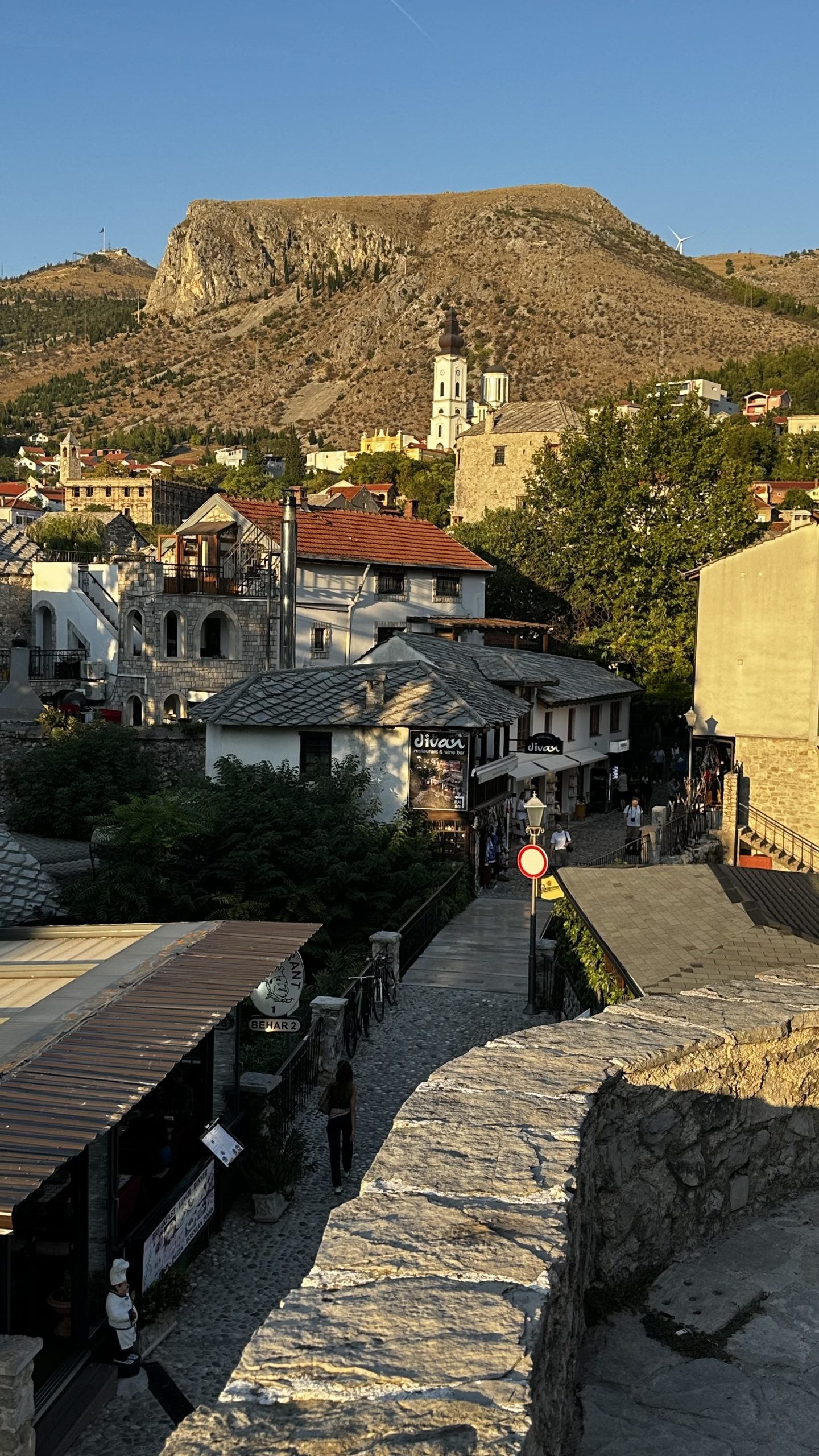
Narrow cobblestone streets, traditional stone buildings, little shops and restaurants overlooking the emerald-green Neretva River create an almost theatrical setting.
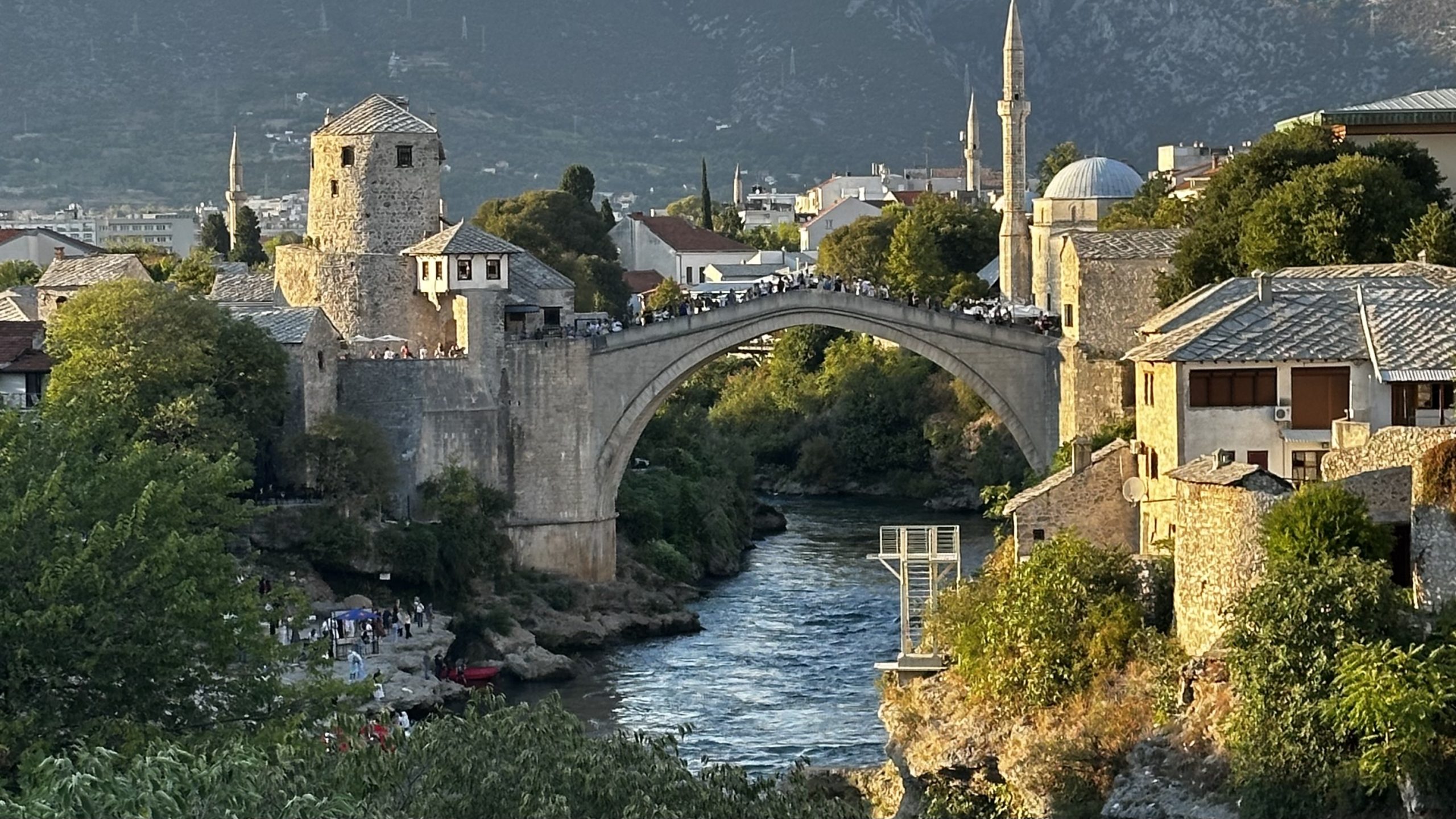
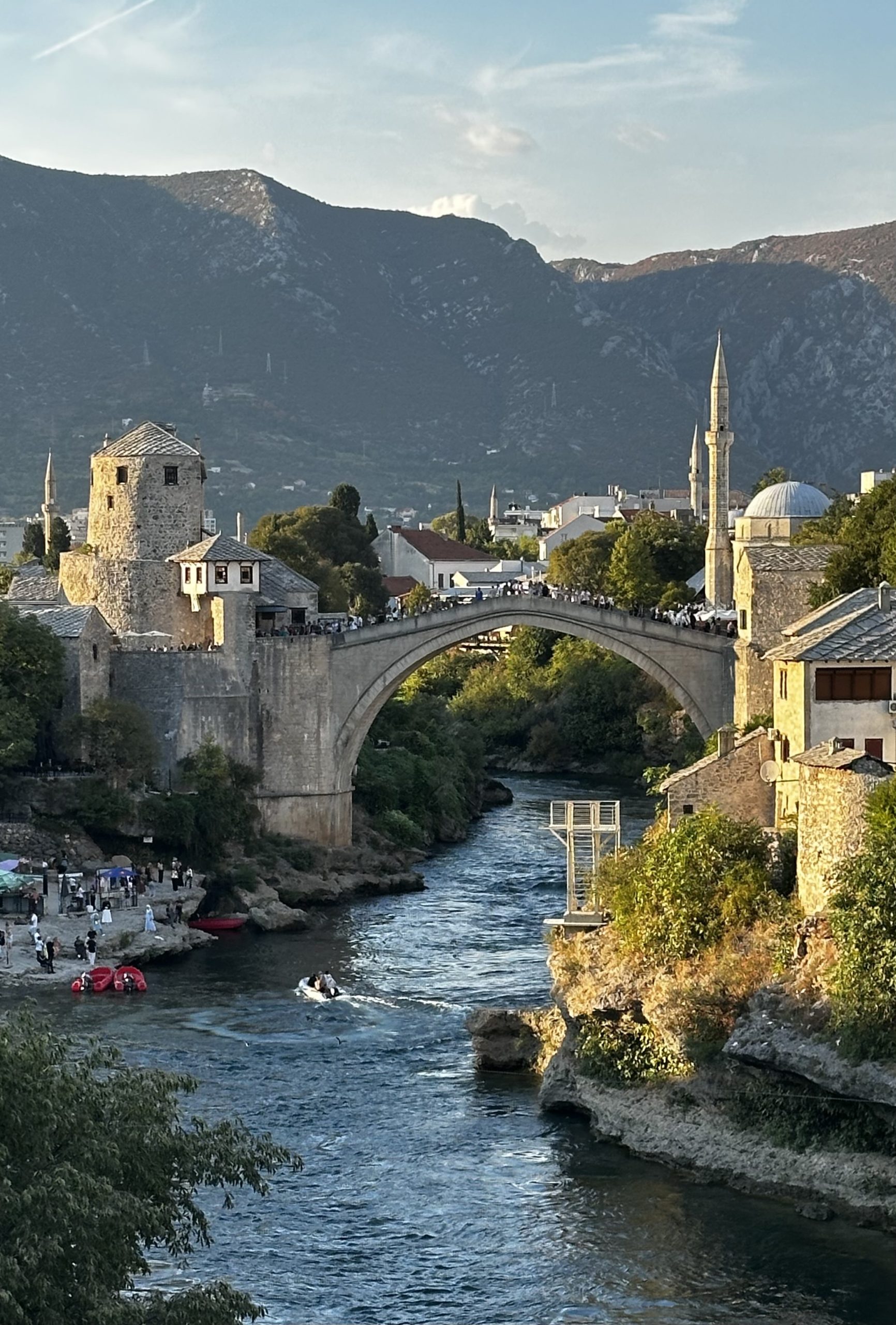
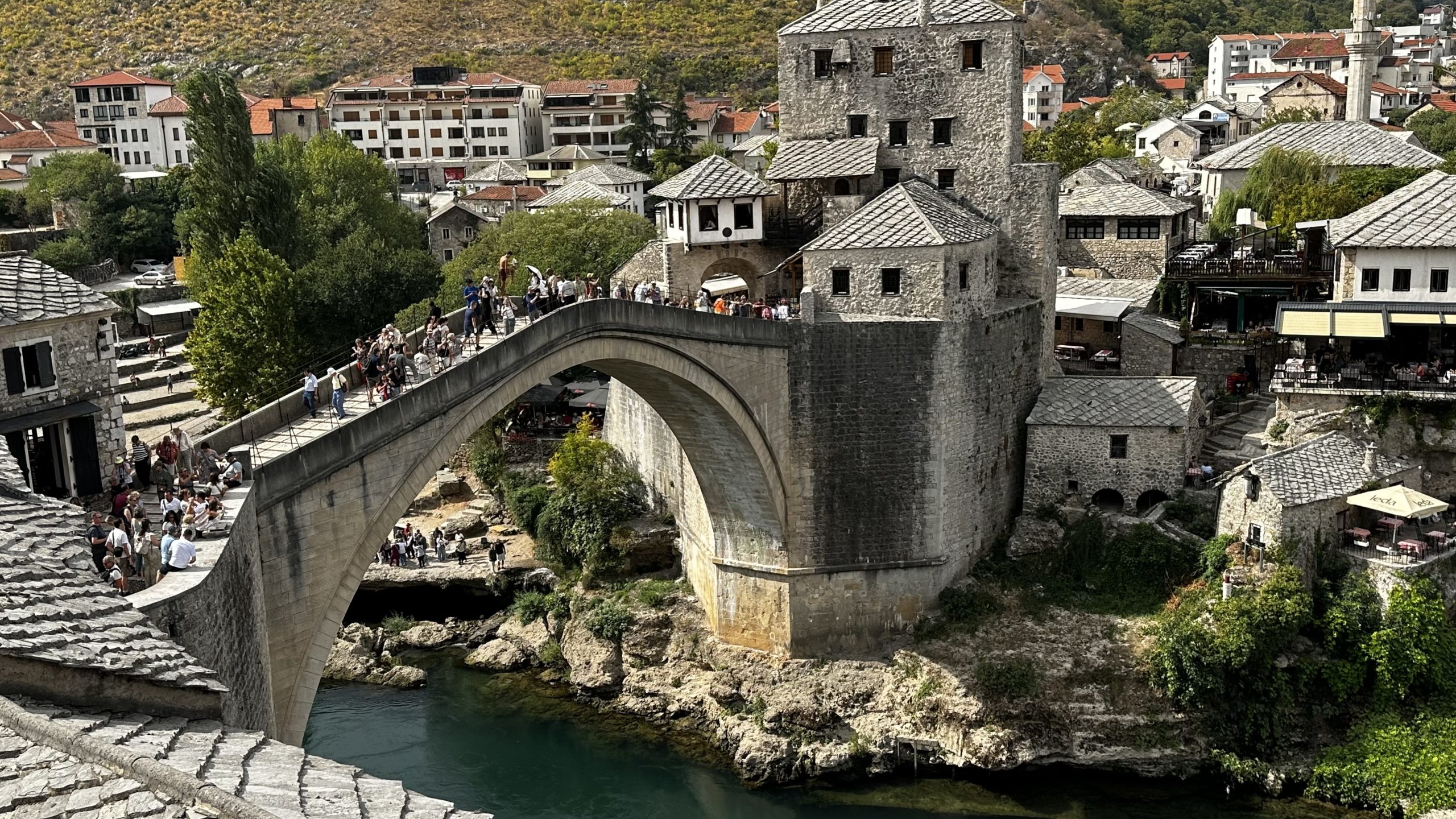
And then, of course, there is the town’s most famous landmark: the magnificent Stari Most, or Old Bridge.
Originally built in the 16th century under Ottoman rule, the bridge was destroyed during the Bosnian War in 1993 and subsequently reconstructed, reopening in 2004.
Today, it is a UNESCO World Heritage landmark and a powerful symbol of both the city’s history and its recovery.
Looking at the elegant stone arch spanning the river, it is difficult not to be impressed.
Mostar could easily serve as the setting for a historical epic or fantasy movie.
The downside? It certainly isn’t a hidden gem anymore.
Even in late September, the old town was packed with visitors, and countless souvenir shops competed for attention.
Nevertheless, Mostar is absolutely worth visiting, and I would recommend spending two nights rather than treating it as a quick stop.
Once the day-trippers disappear, the atmosphere becomes considerably more enjoyable, and the illuminated bridge is particularly beautiful in the evening.
Blagaj – A Monastery Beneath the Cliffs
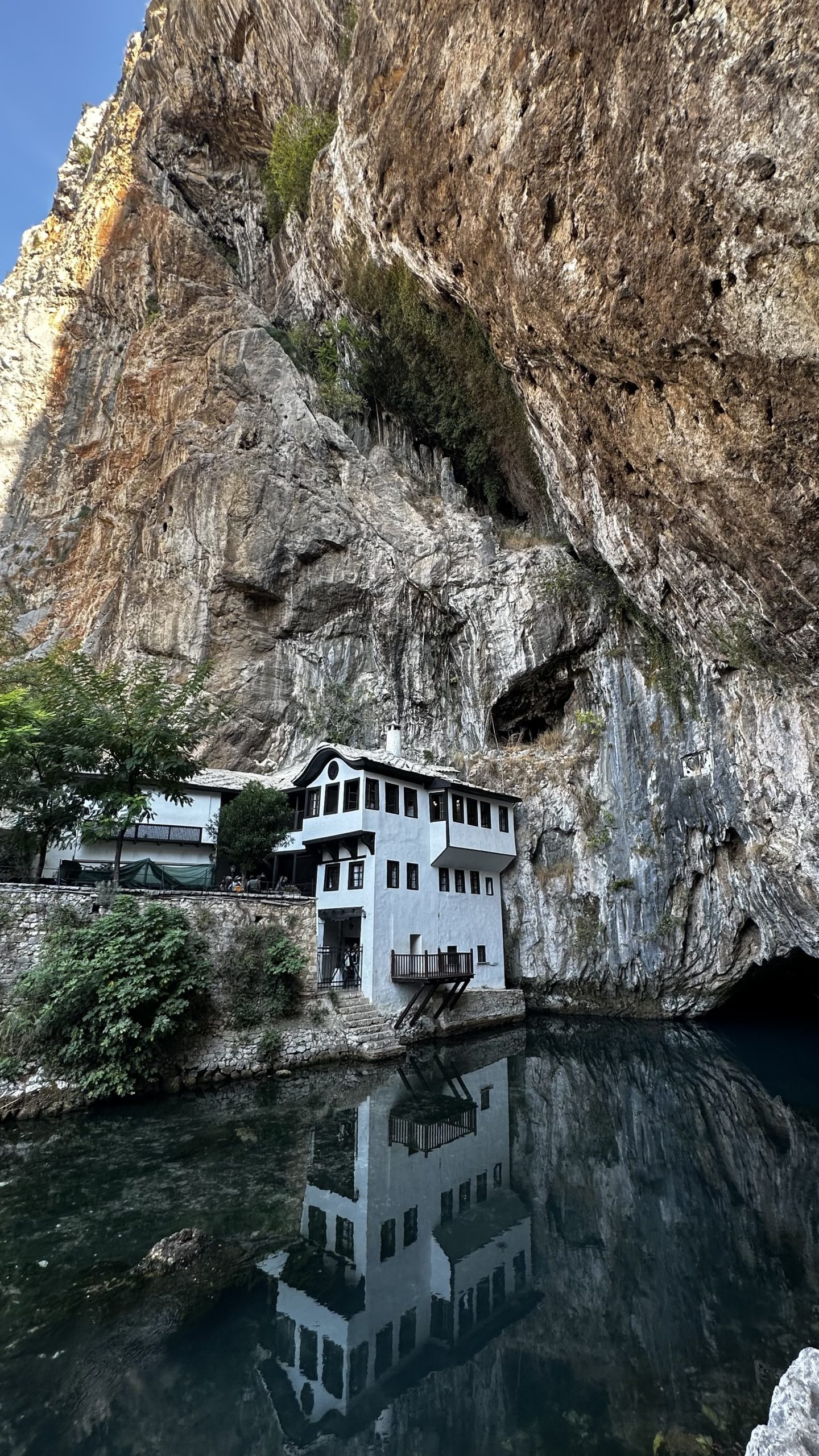
Just a short drive from Mostar lies one of the region’s most spectacularly situated landmarks: Blagaj Tekke.
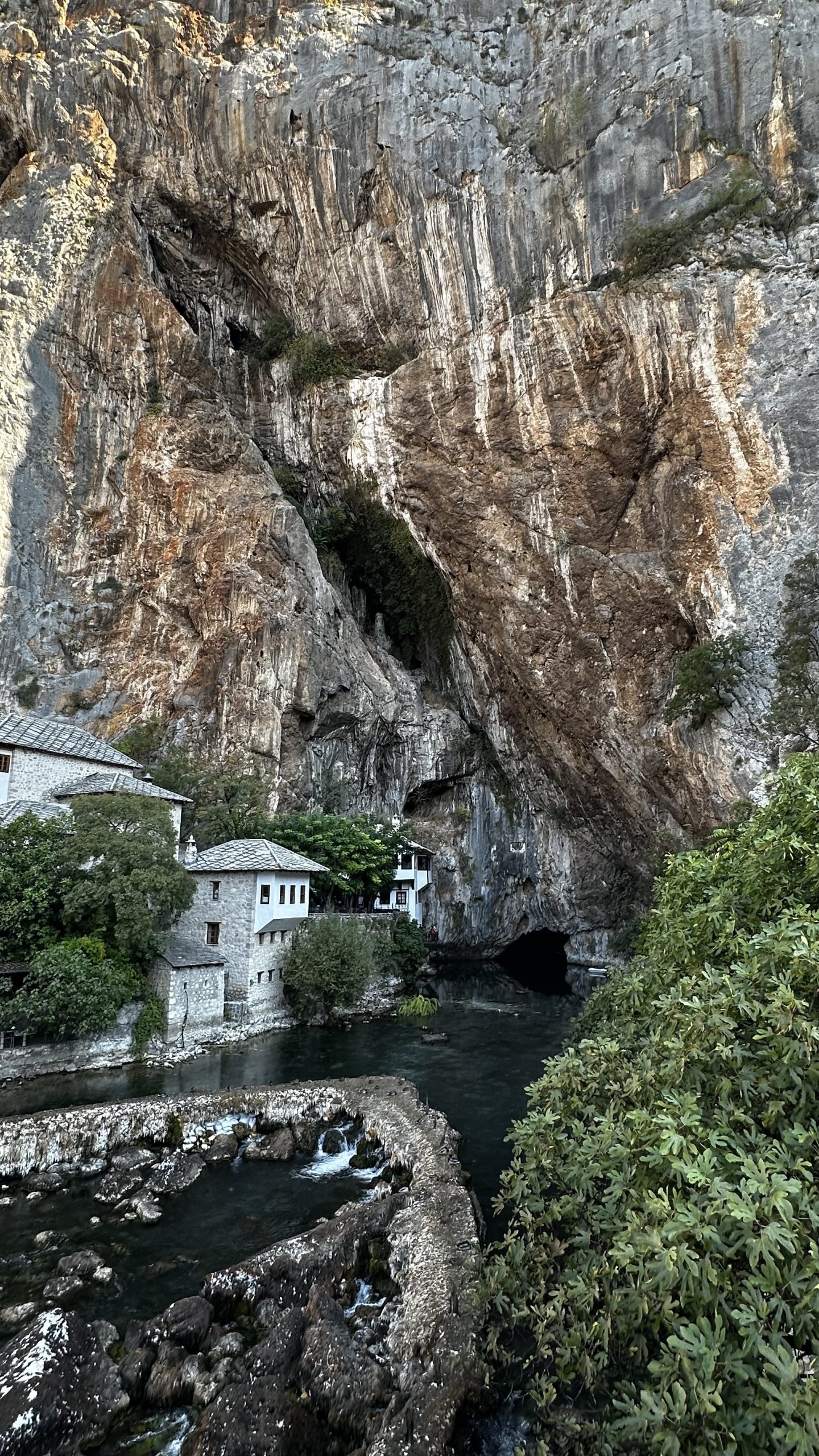
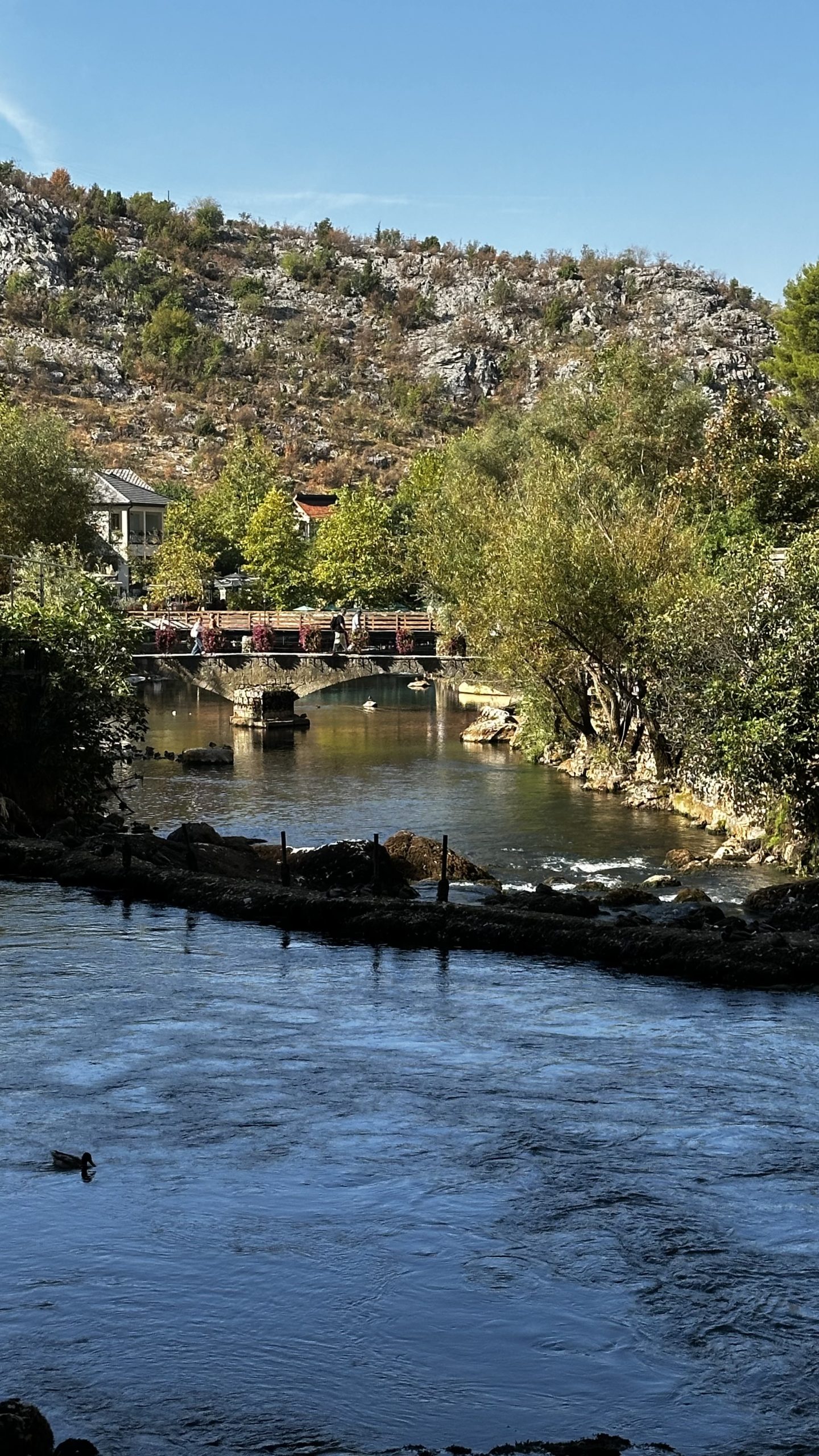
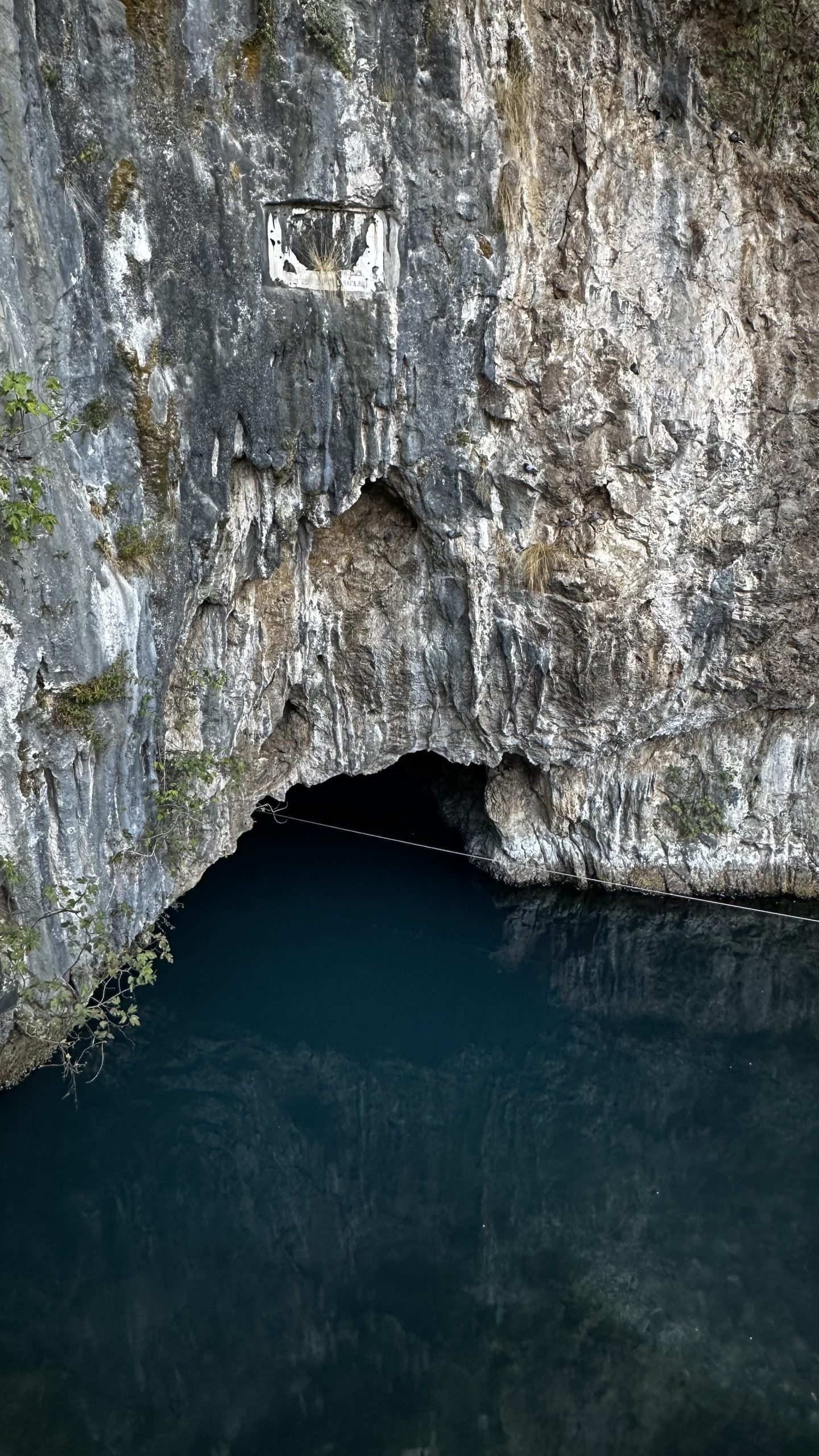
This historic Sufi dervish monastery stands at the foot of an enormous limestone cliff, right beside the source of the Buna River.
The river emerges from a vast cave beneath the rock face, creating a dramatic setting with crystal-clear turquoise water.
The white monastery building, with its wooden balconies extending over the water, looks almost impossiblypicturesque against the towering cliff.
It is one of those places where photographs genuinely struggle to capture the full beauty of the surroundings.
Although often described simply as a monastery, the Tekke is specifically associated with the Islamic Sufi tradition and has served as a place of spiritual retreat and contemplation for centuries.
We found the setting absolutely enchanting.
Practical tip: Arrive early in the morning. The site attracts plenty of visitors, and its peaceful atmosphere is best appreciated before the tour groups arrive.
Waterfalls, Rivers and a Final Bosnian Lunch
As we continued south towards Montenegro, we made a couple of scenic stops.
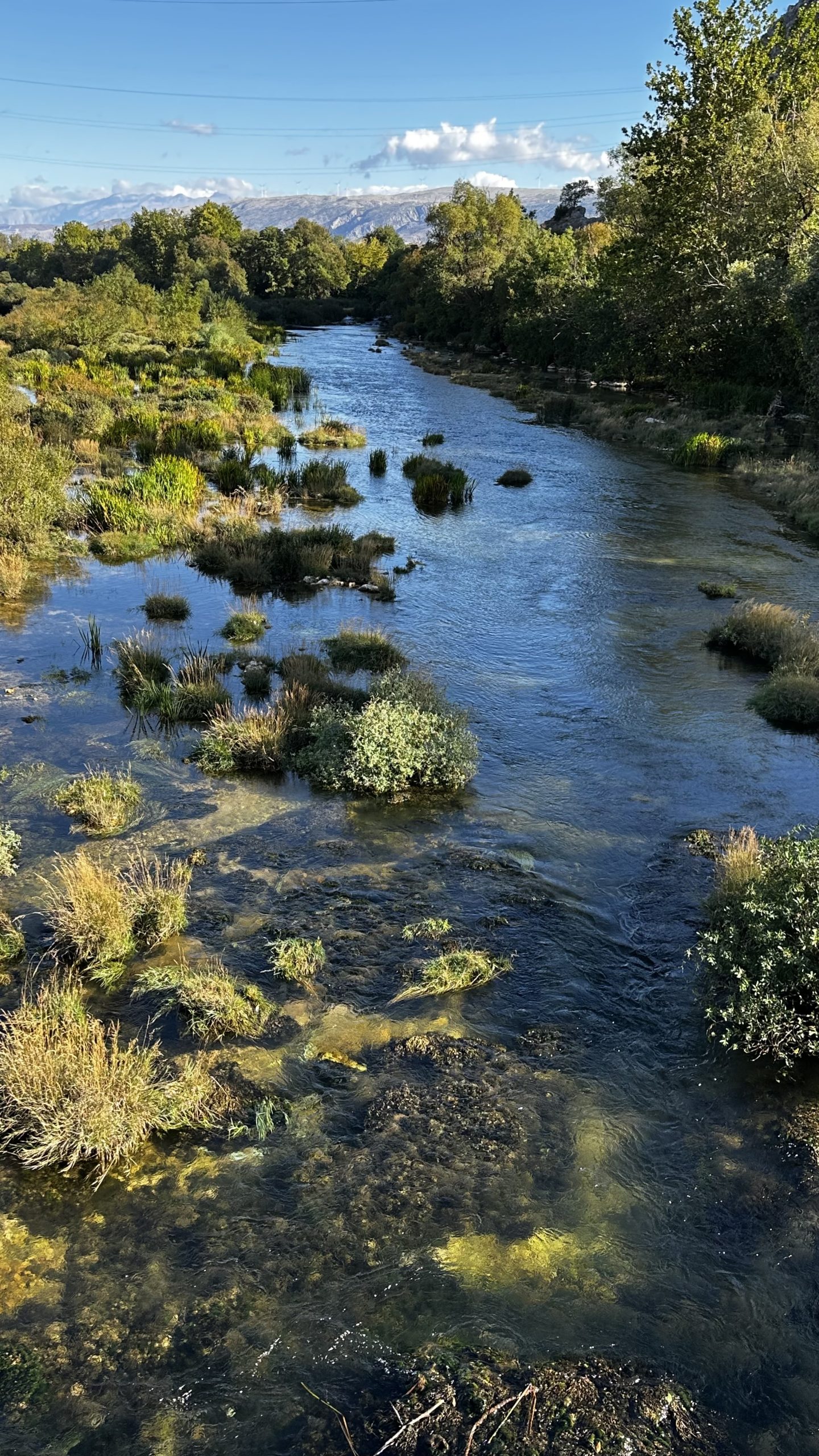
Our first was Bunski Kanal, where the Buna River meets the Neretva through a narrow and unusual natural channel.
It is certainly an interesting geological feature, and some tour operators even offer dedicated excursions here.
Personally, however, we felt that a short stop of around 15 minutes was sufficient to appreciate the scenery and take a few photographs.
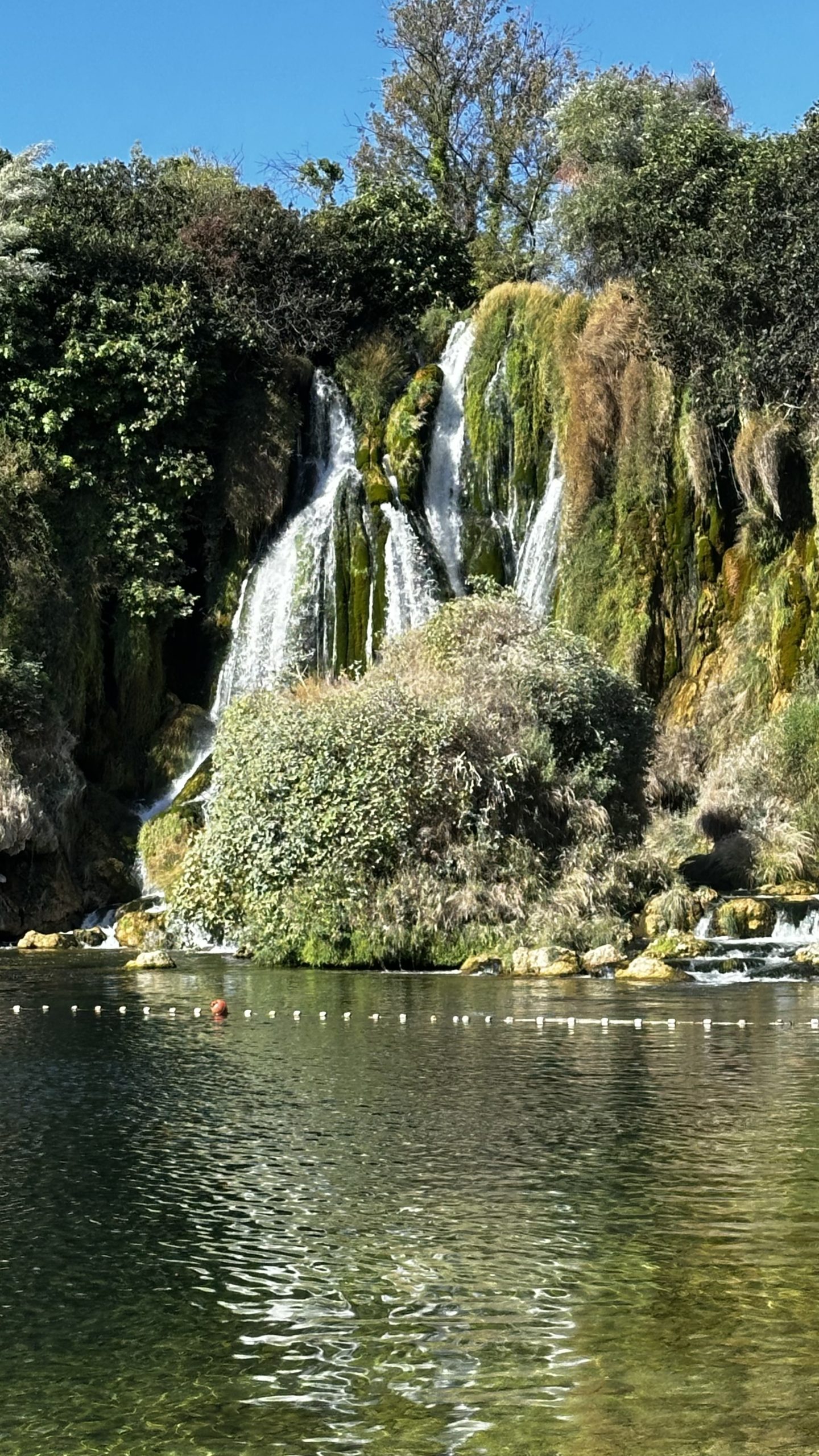
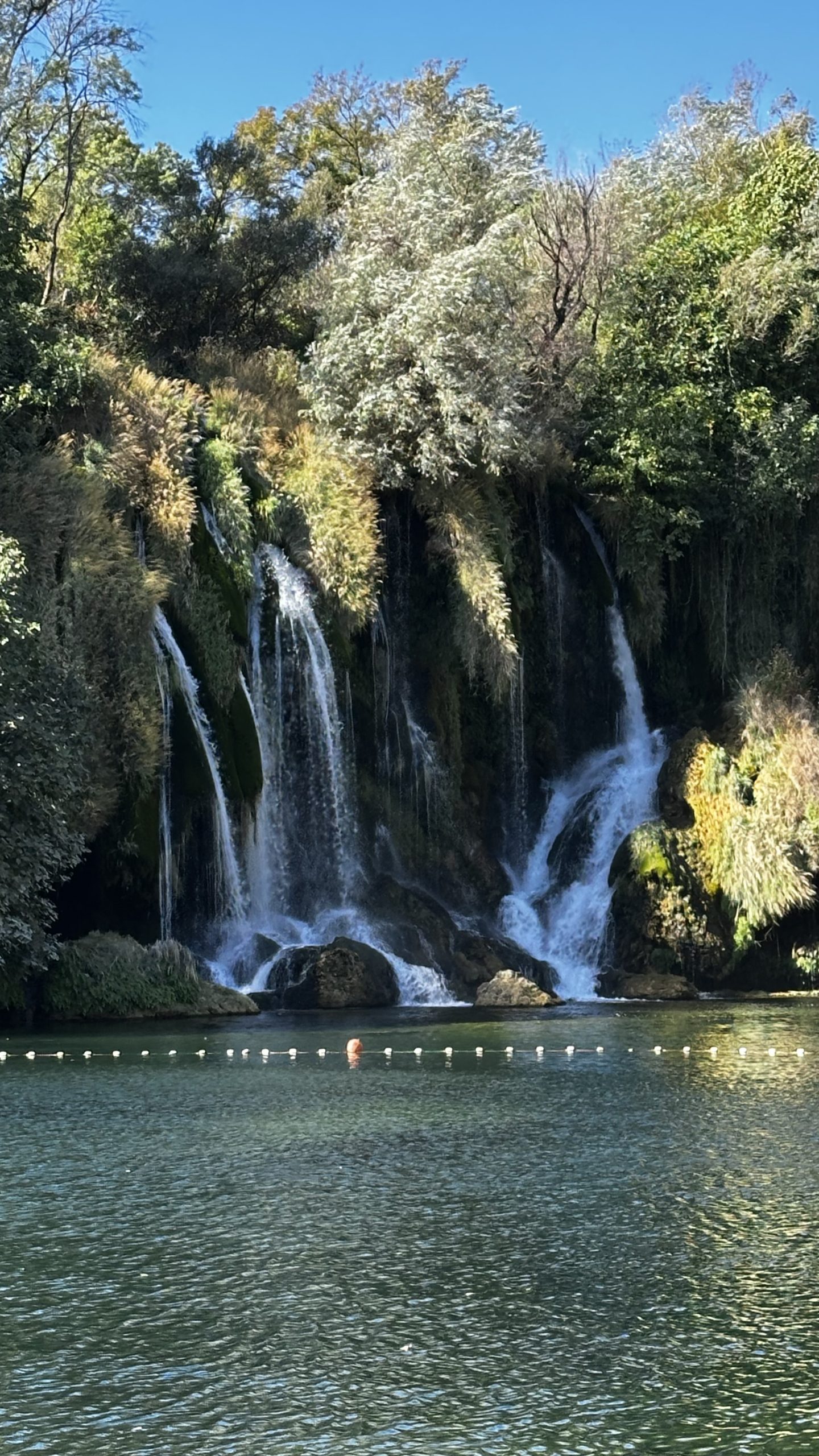
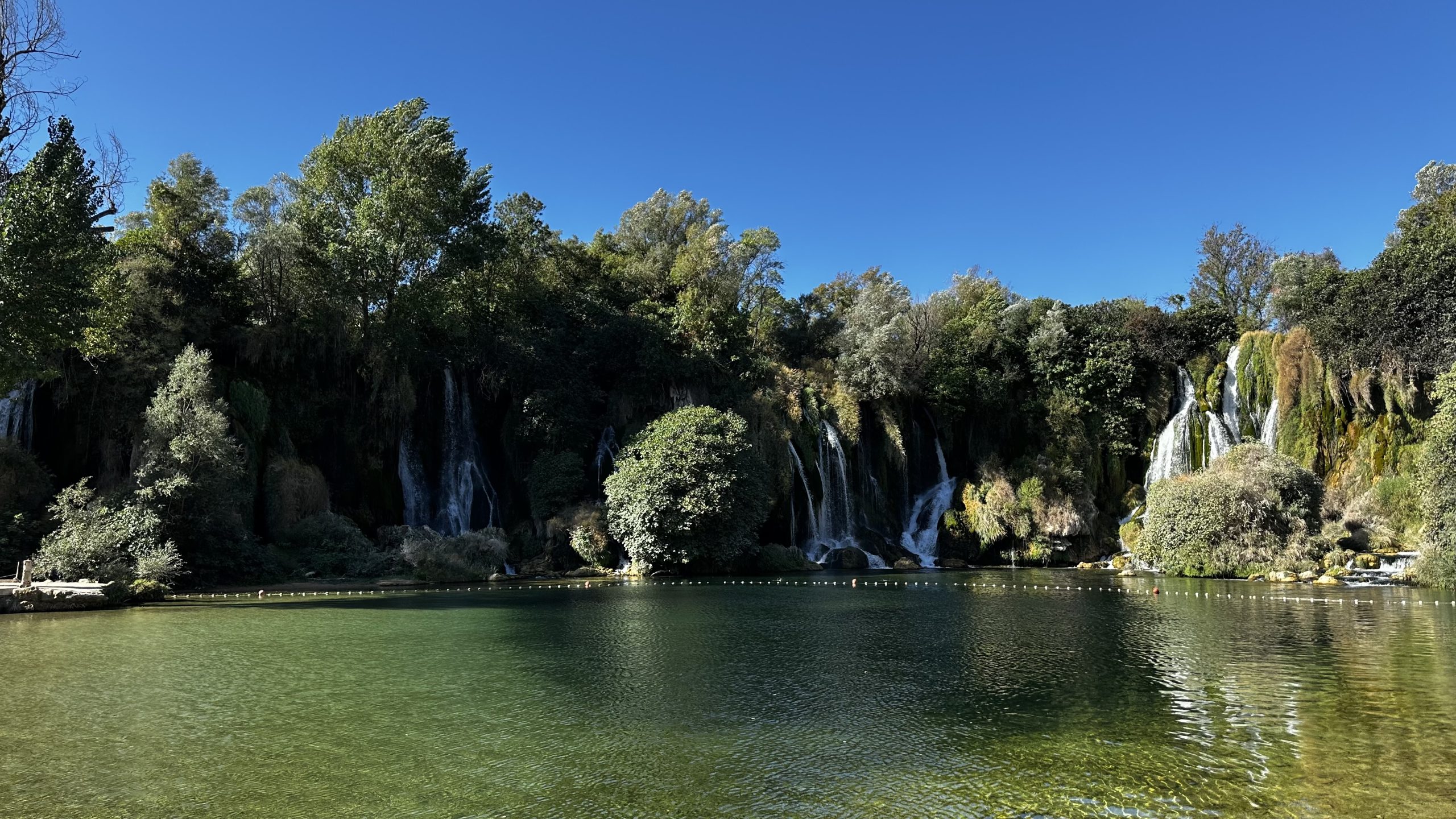
Much more spectacular were the Kravica Waterfalls.
Here, the Trebižat River cascades over a broad, curved limestone formation into a beautiful natural pool surrounded by greenery.
The falls are particularly impressive when viewed from below, with multiple streams of water tumbling over the rocks.
During suitable conditions and in designated areas, visitors can also enjoy swimming, making it a lovely place to cool off on a warm day.
Unsurprisingly, Kravica has become a major tourist attraction, complete with cafés and visitor facilities.
Again, arriving early is a good idea if you prefer a quieter experience.
A Brief Visit to Republika Srpska
Before crossing into Montenegro, we stopped for lunch in Trebinje, a pleasant town on the Trebišnjica River.
Trebinje is located in Republika Srpska, one of the two principal political entities that make up Bosnia & Herzegovina.
This arrangement dates back to the Dayton Peace Agreement of 1995, which brought the Bosnian War to an end.
Under the agreement, Bosnia & Herzegovina remained one internationally recognised sovereign country, but its internal political structure was divided primarily between the Federation of Bosnia & Herzegovina and RepublikaSrpska. The separately administered Brčko District adds another layer to this already complex constitutional arrangement.
Republika Srpska has its own institutions and is predominantly populated by ethnic Serbs, but it is not an independent country, nor is it part of neighbouring Serbia.
For visitors, the distinction is not necessarily immediately obvious, although signs, symbols and the cultural atmosphere may differ from other parts of Bosnia & Herzegovina.
Trebinje itself was a lovely place for a break.
We enjoyed our final Bosnian lunch overlooking the river, reflecting on the many impressions of the preceding days.
Bosnia & Herzegovina had offered us far more than we had expected: extraordinary history, beautiful landscapes, fascinating cultural contrasts and genuinely welcoming people.
But now it was time for the second part of our journey.
Montenegro, here we come!
Montenegro – Six Nights by the Beautiful Bay of Kotor
For Montenegro, we deliberately chose a different travel rhythm.
Rather than changing hotels every couple of nights, we decided to spend six consecutive nights in one location and explore the surrounding area at a more leisurely pace.
After all, travelling should also include a little relaxation!
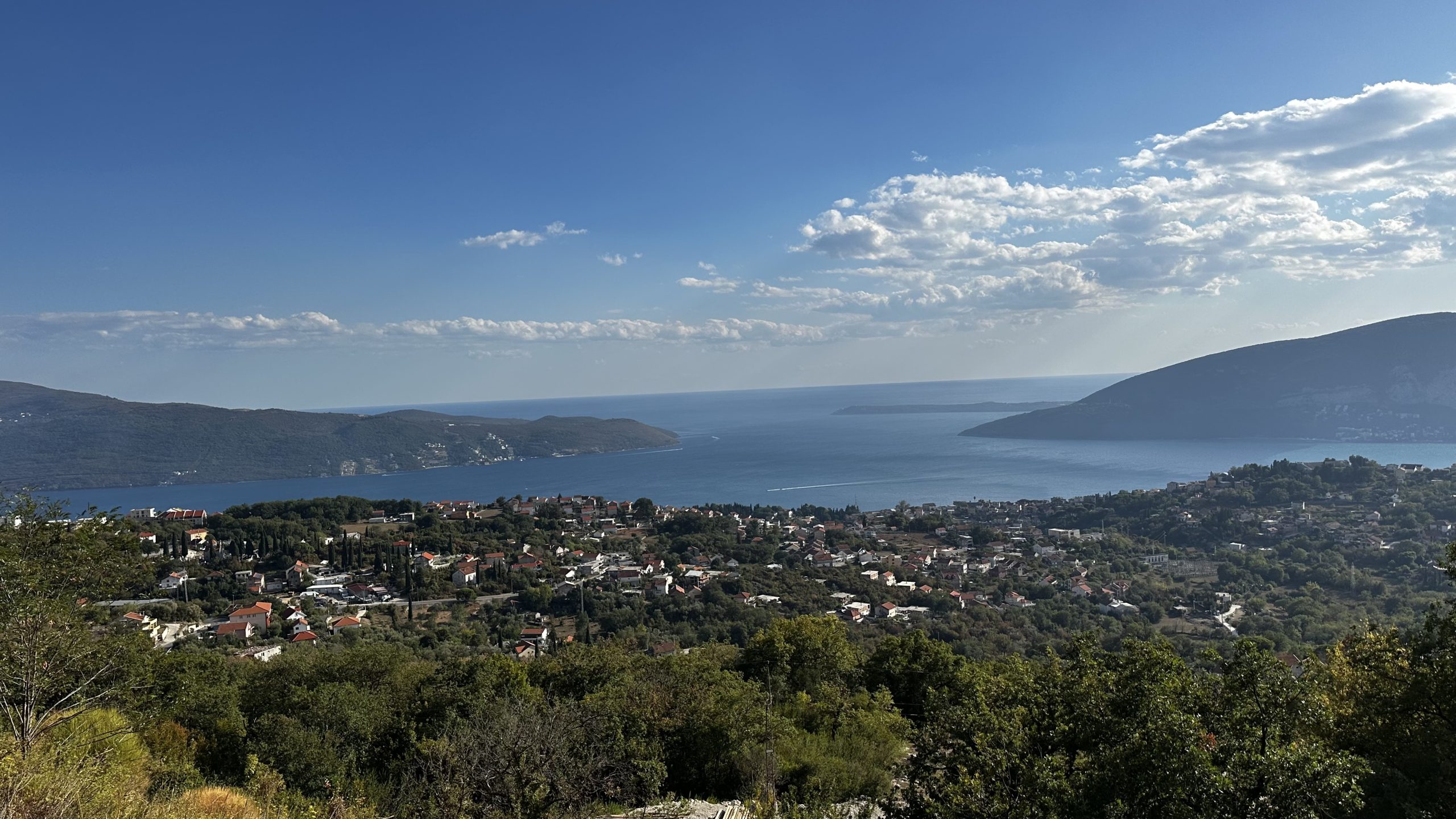
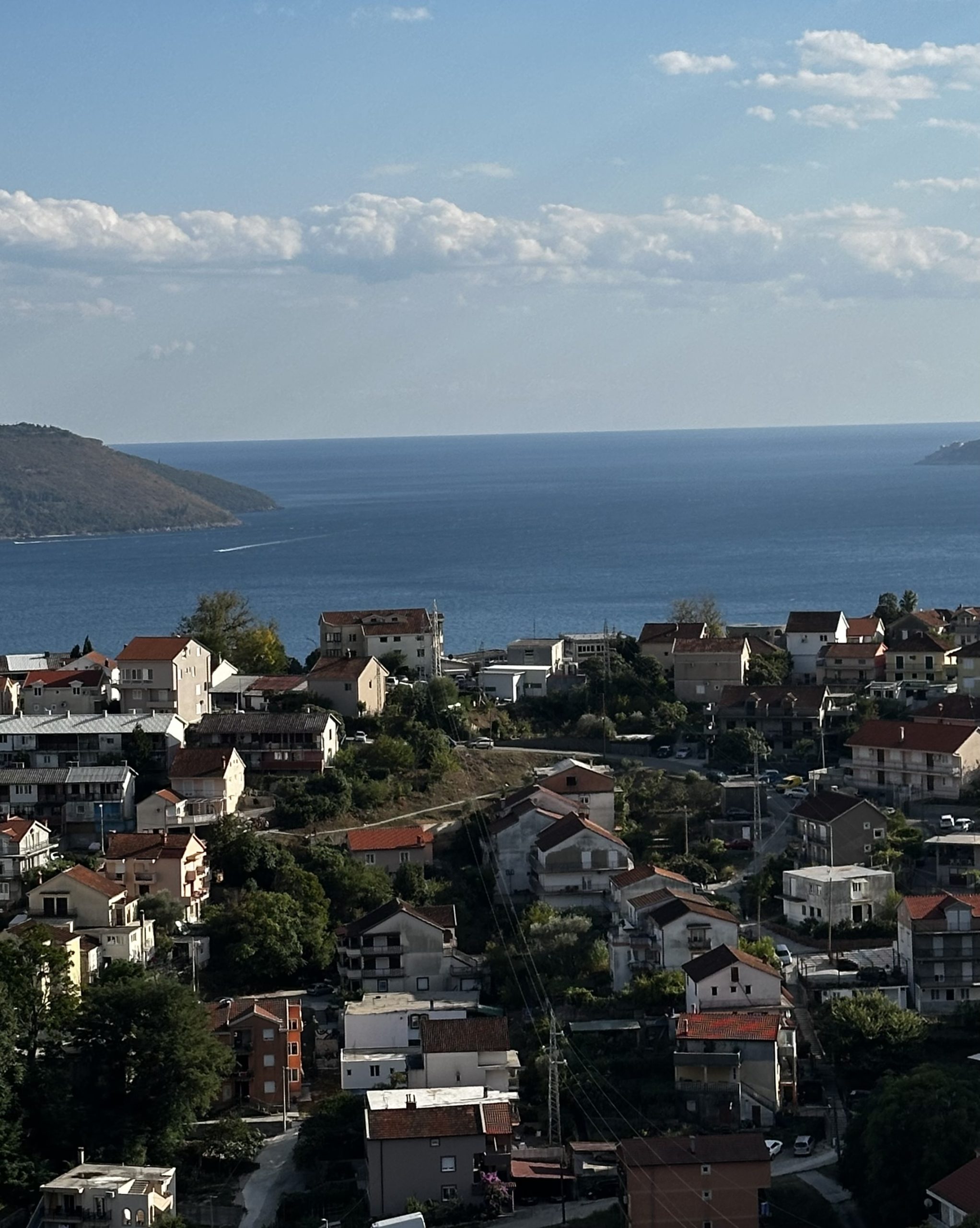
Our chosen base was Boka di Mare in Tivat, a lovely accommodation with beautiful views across the Bay of Kotor.
The drive from Bosnia brought us into increasingly dramatic coastal scenery, with mountains rising steeply above the blue waters of the Adriatic.
To shorten the journey, we used the Kamenari–Lepetane ferry, which connects the two shores of the narrow Verige Strait.
The crossing takes only a few minutes and saved us a considerable drive around the bay. At just €5 for our car, it was excellent value.
And arriving at our accommodation, with its wonderful bay views, confirmed that we had made the right choice.
Tivat – The Perfect Base for Exploring the Bay
Tivat turned out to be an excellent place to stay.
Unlike some of the more crowded historic towns along the bay, Tivat has a comparatively modern and relaxed atmosphere.
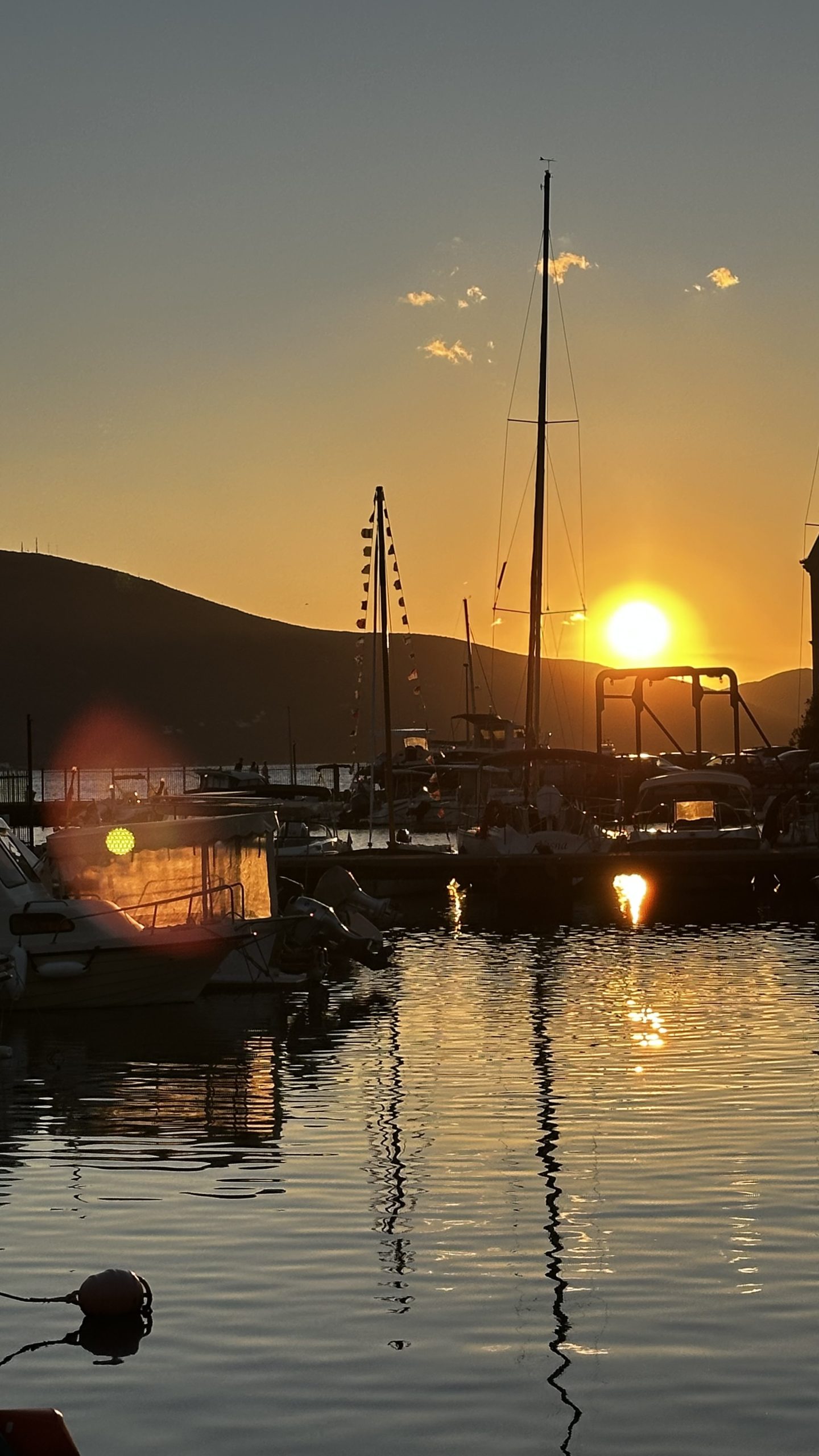
Its waterfront promenade is ideal for an evening stroll, and the nearby Porto Montenegro marina adds an unexpectedly glamorous touch, with luxury yachts, stylish restaurants and elegant shops.
The town also has its own international airport, making it a convenient gateway to the region.
For us, however, Tivat’s greatest advantage was its location.
We could easily explore the surrounding towns and coastline while returning each evening to the same comfortable accommodation.
No daily packing, no endless checking in and out of hotels, and no need to rush.
Exactly what we wanted after our more intensive sightseeing in Bosnia.
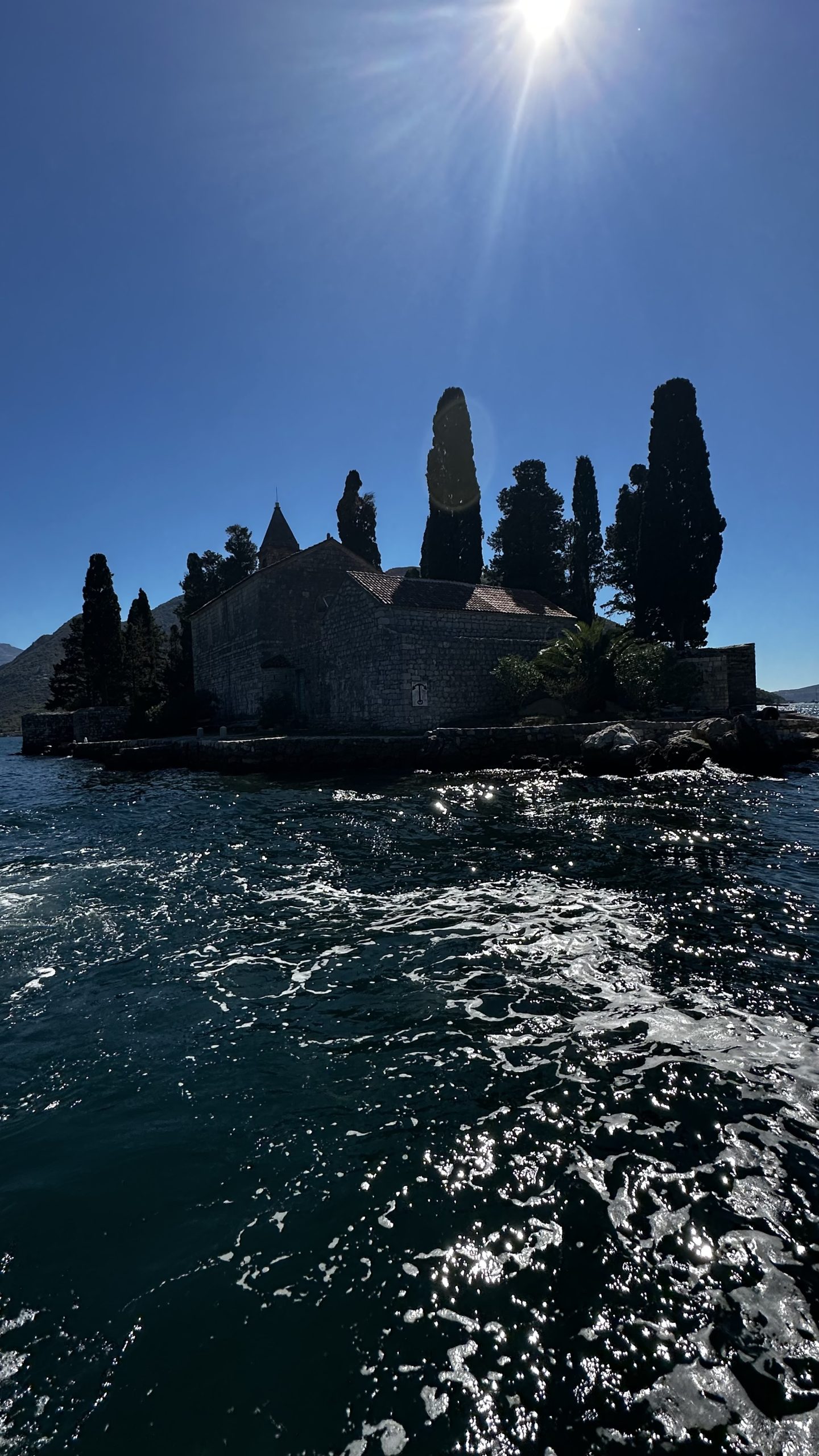
Cruising the Bay of Kotor – A Day to Remember
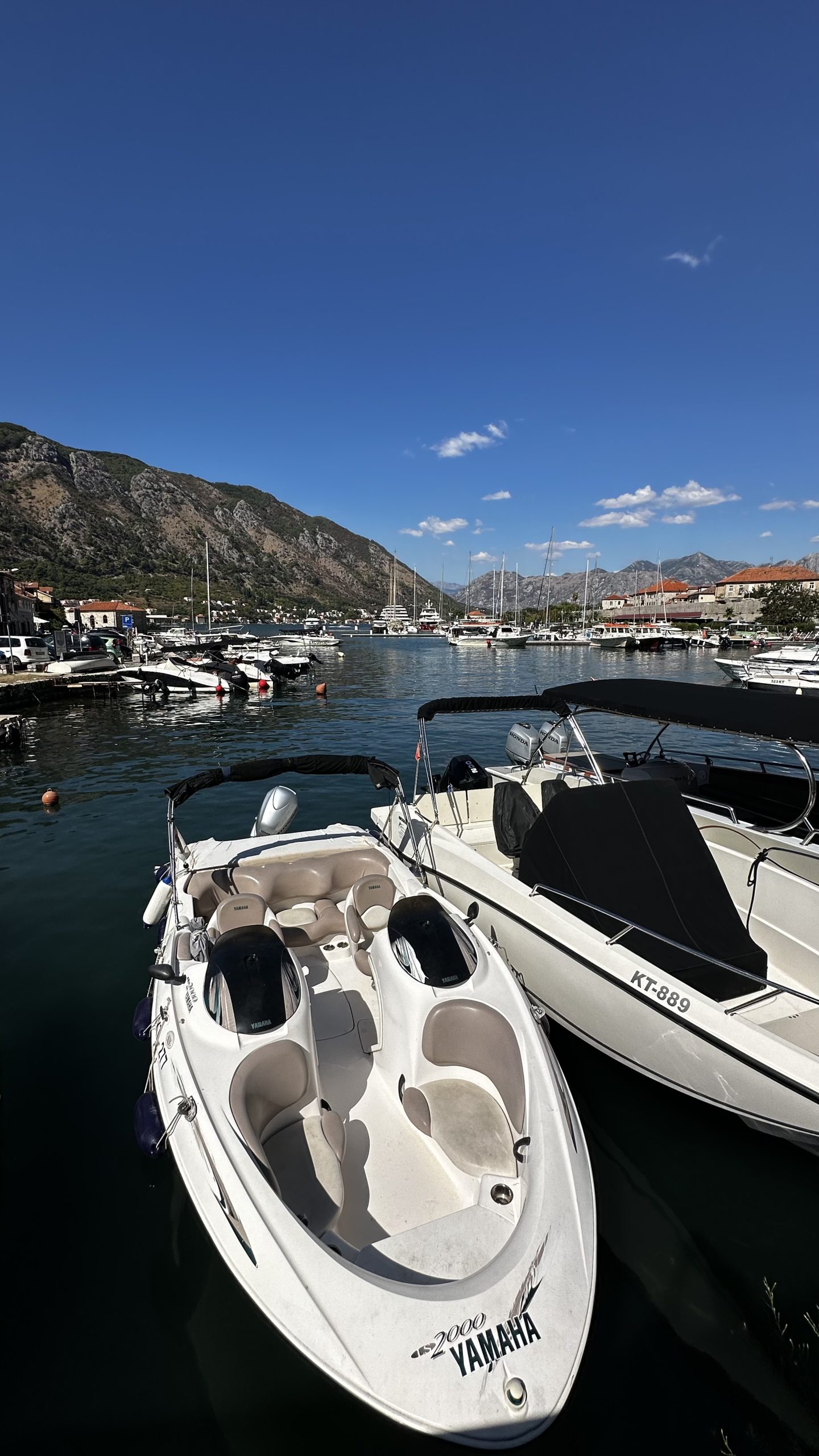
One of the absolute highlights of our stay was a boat trip through the Bay of Kotor.
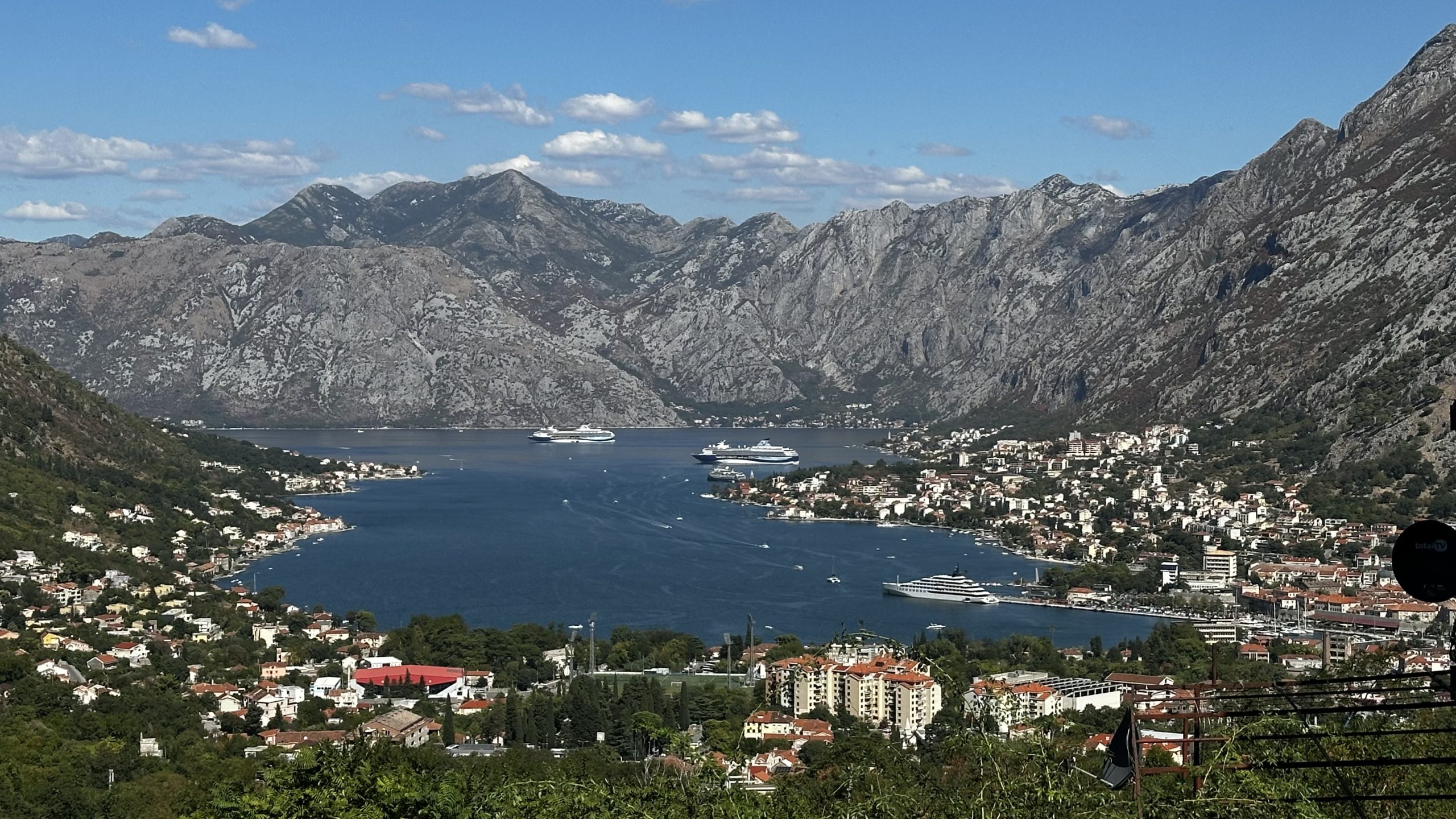
The bay is often described as Europe’s southernmost fjord, although technically it is a submerged river valley rather than a glacial fjord.
Whatever its geological classification, the scenery is simply breathtaking.
Steep mountains rise dramatically from the water, while picturesque stone villages, church towers and tiny islands dot the shoreline.
On a beautiful sunny day, with the mountains reflected in the calm blue water, it is hard to imagine a more scenic place for a boat excursion.
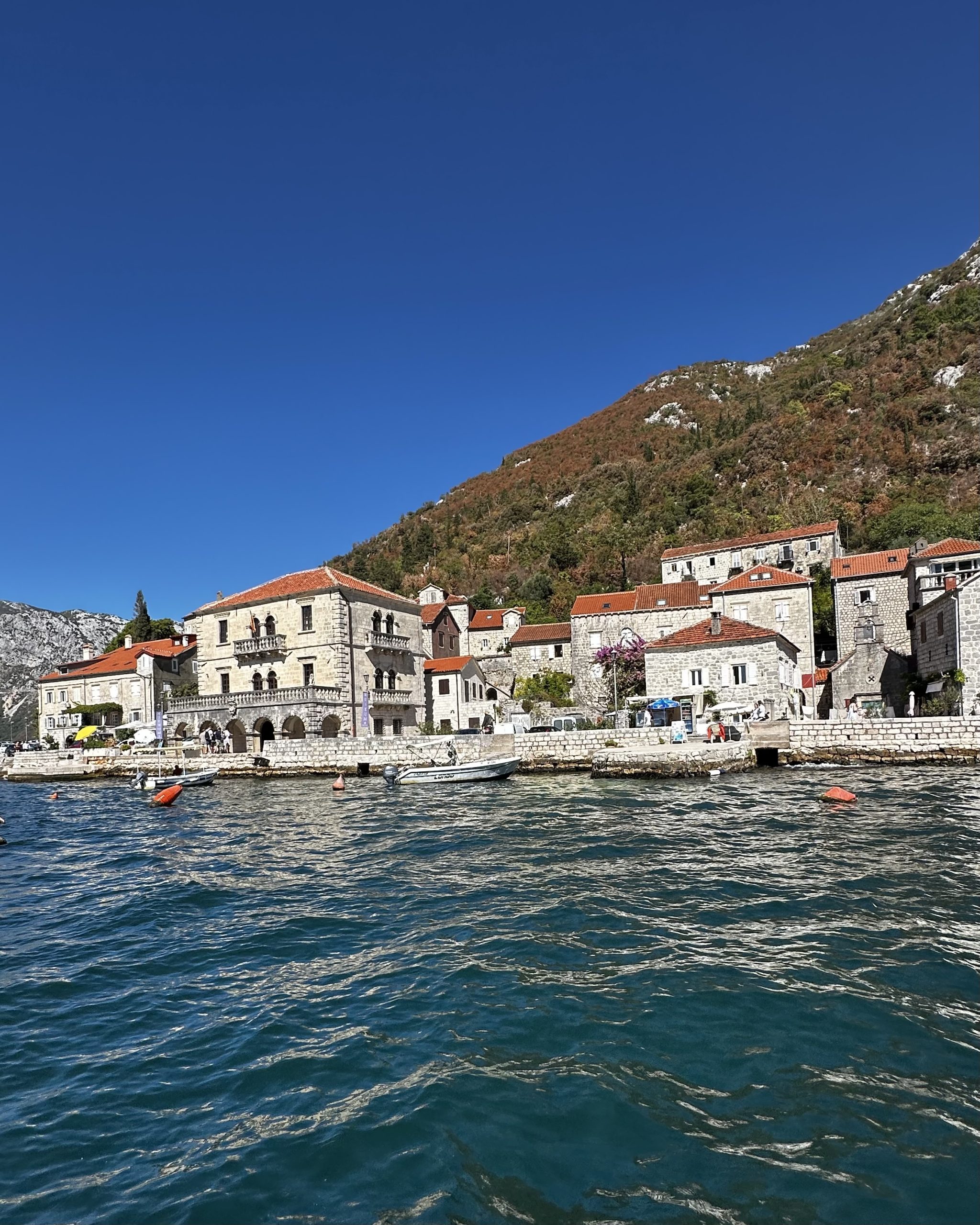
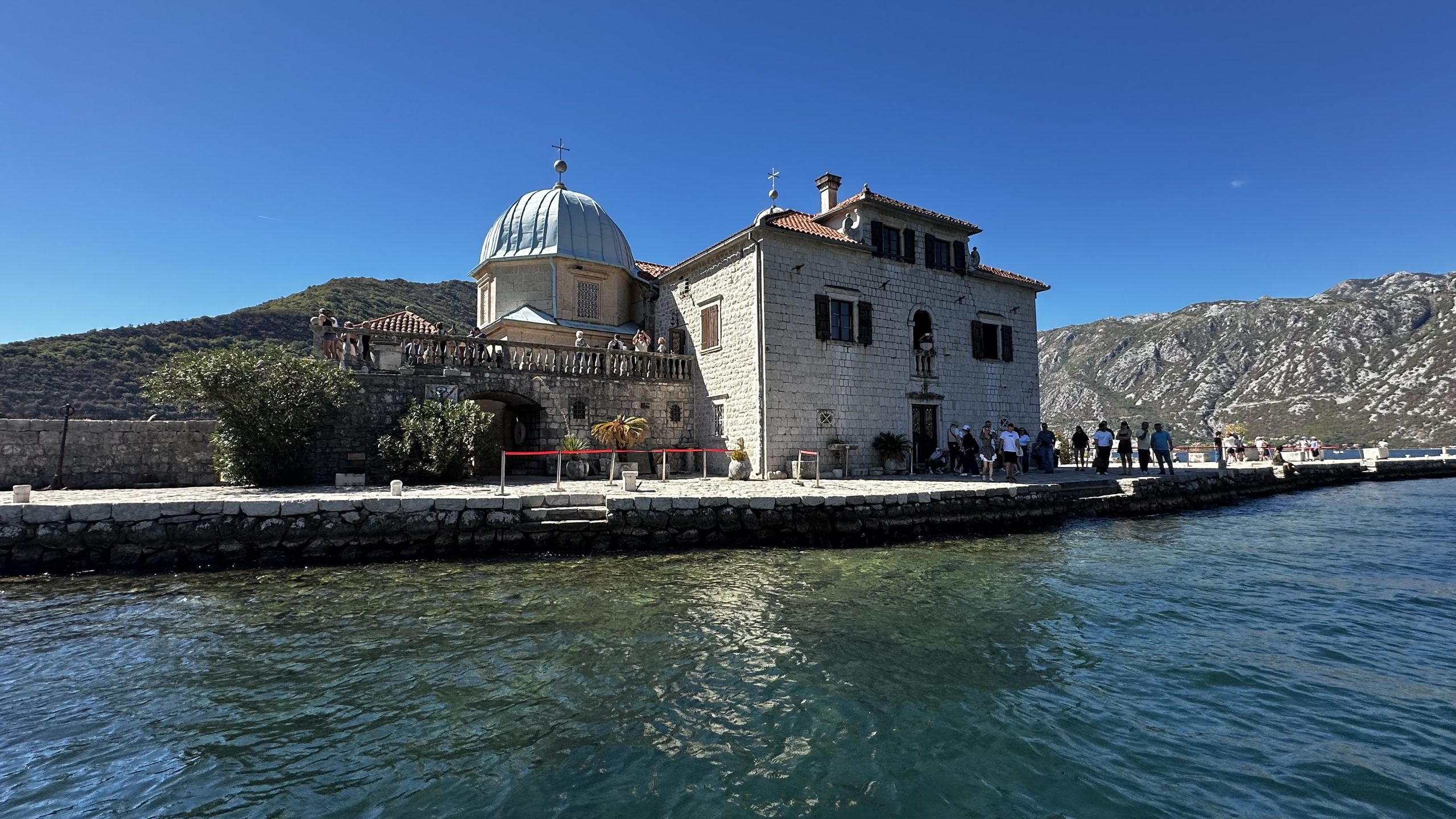
Our trip took us past Perast, one of the most beautiful towns in the bay.
Its elegant Venetian-style palaces and churches reflect centuries of maritime prosperity and make it one of Montenegro’s most photogenic destinations.
Just offshore lie two famous little islands: Our Lady of the Rocks (Gospa od Škrpjela), an artificial island crowned by a church, and Saint George (Sveti Đorđe), a natural island with a monastery.
Seeing them from the water, framed by the towering mountains, was truly spectacular.
For Jürgen and me, this was one of the most enjoyable days of the entire journey.
Warm sunshine, magnificent scenery, a gentle breeze and no particular schedule to worry about.
Sometimes a great travel experience doesn’t need much more than that.
Kotor – Medieval Magic, Movie Sets and a Little Modern-Day Traffic
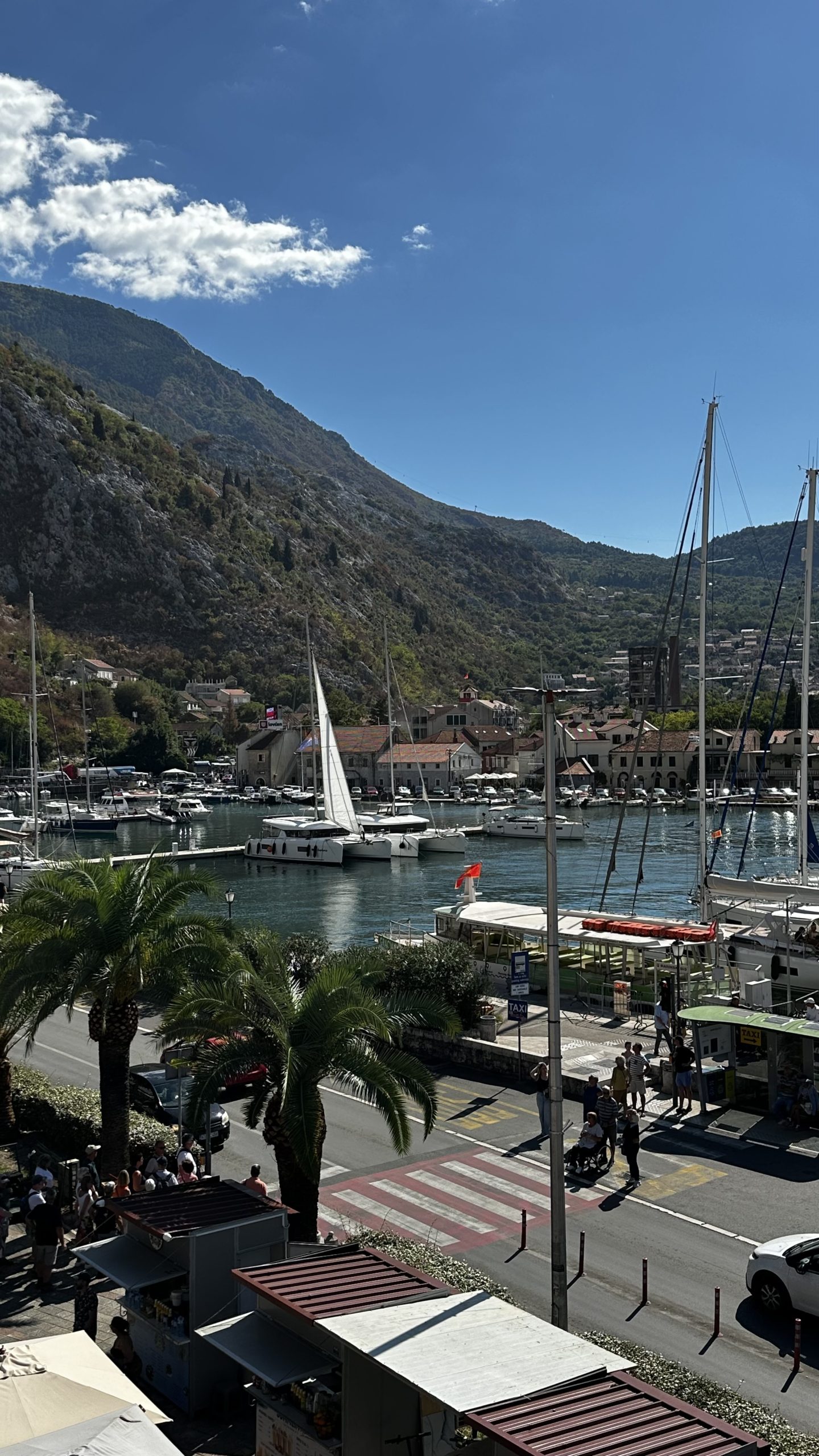
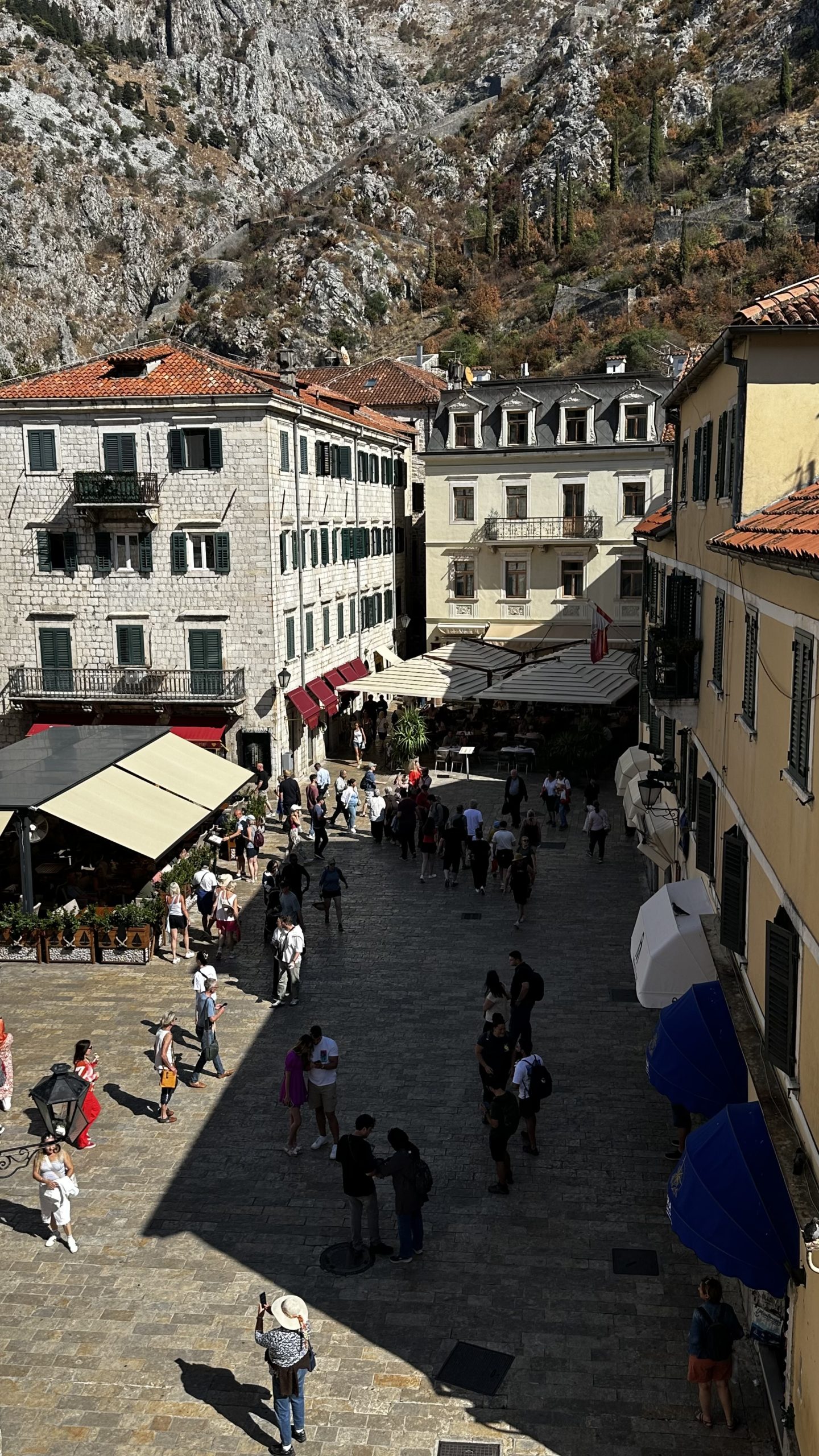
Of course, no visit to the Bay of Kotor would be complete without exploring Kotor itself.
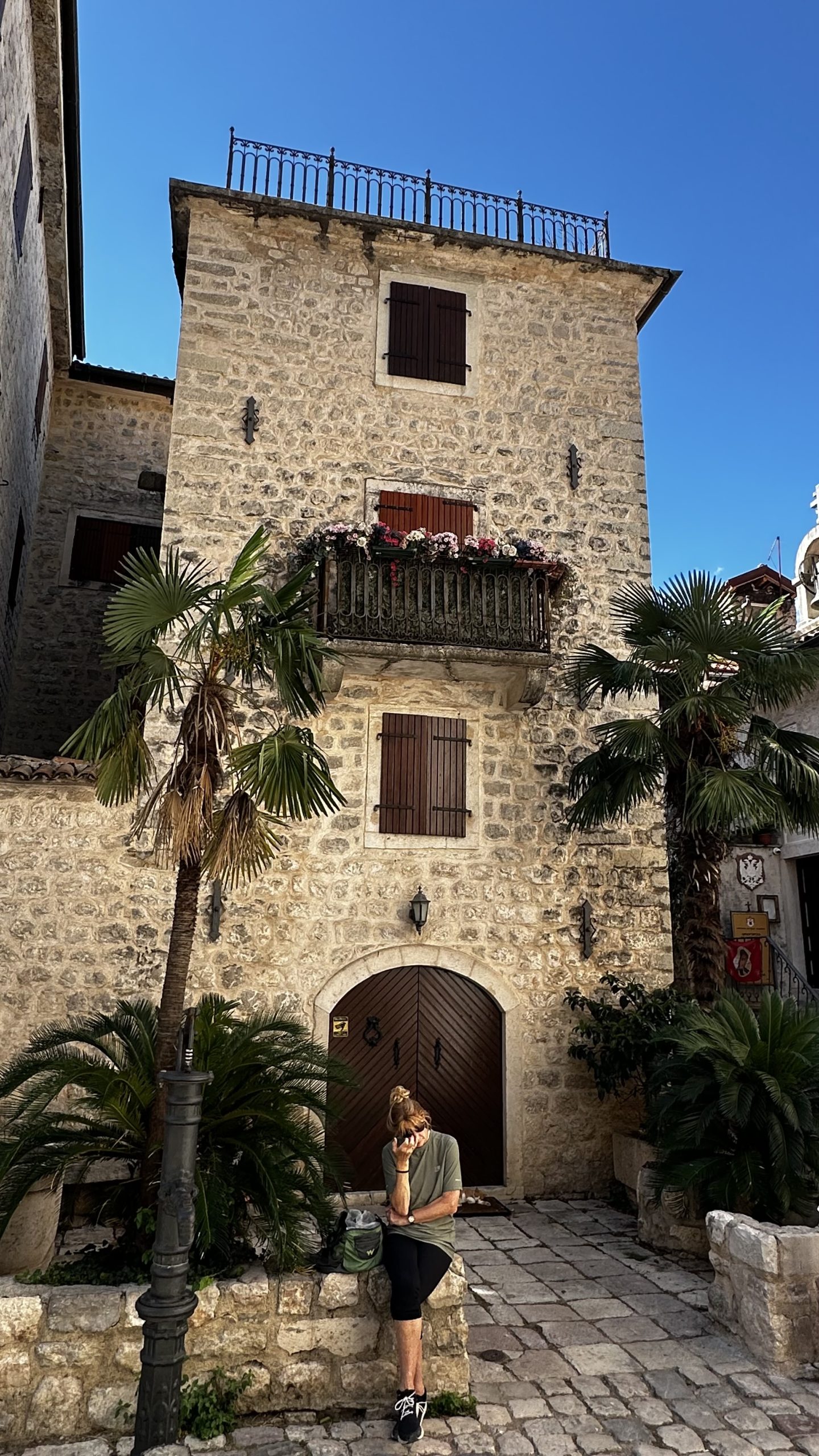
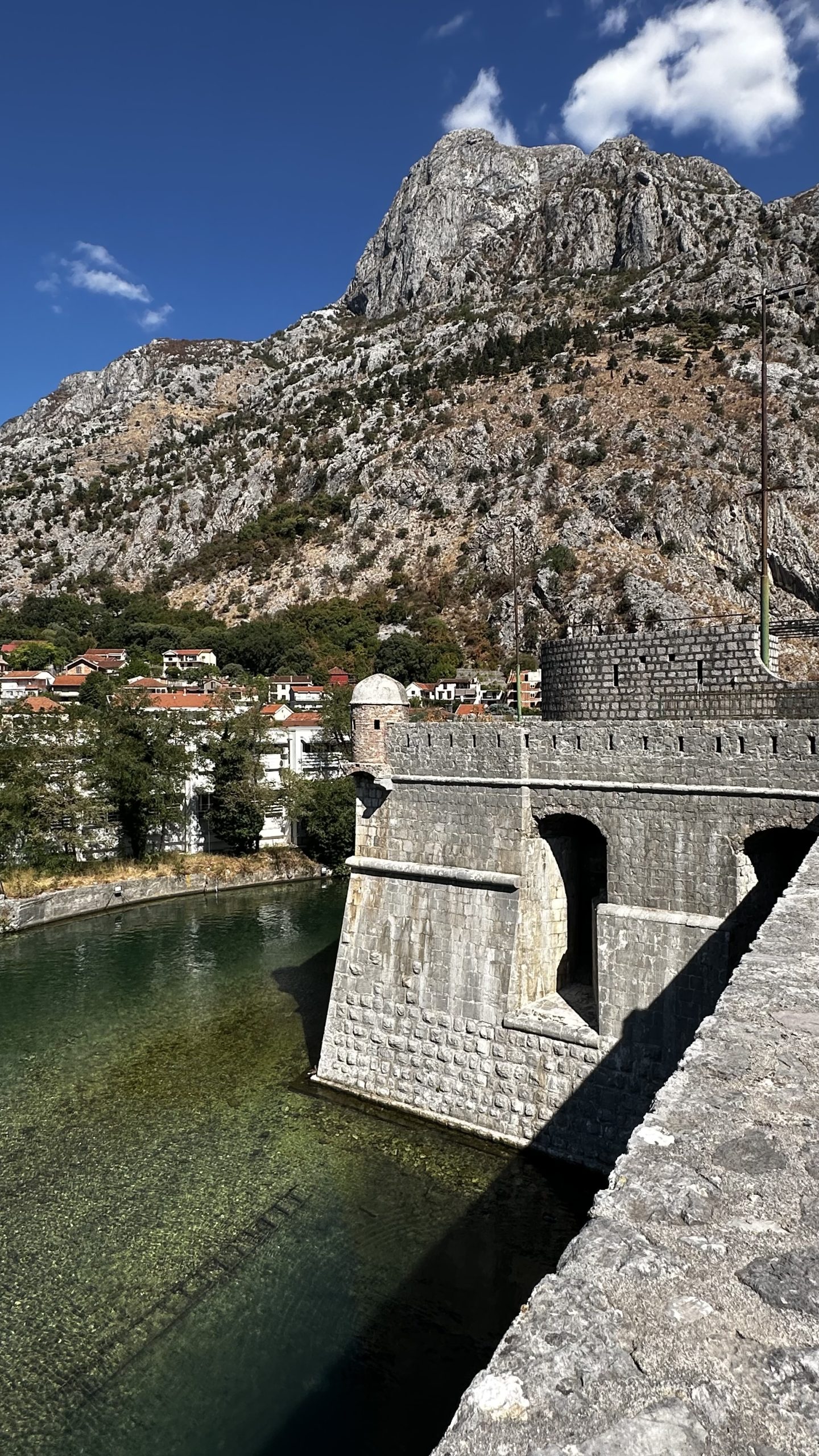
Surrounded by imposing medieval fortifications and backed by dramatic mountains, Kotor’s old town is one of the most atmospheric places in the Adriatic.
Passing through the historic city gates feels rather like entering another century.
Inside, narrow stone alleyways open onto charming squares lined with churches, cafés and centuries-old buildings.
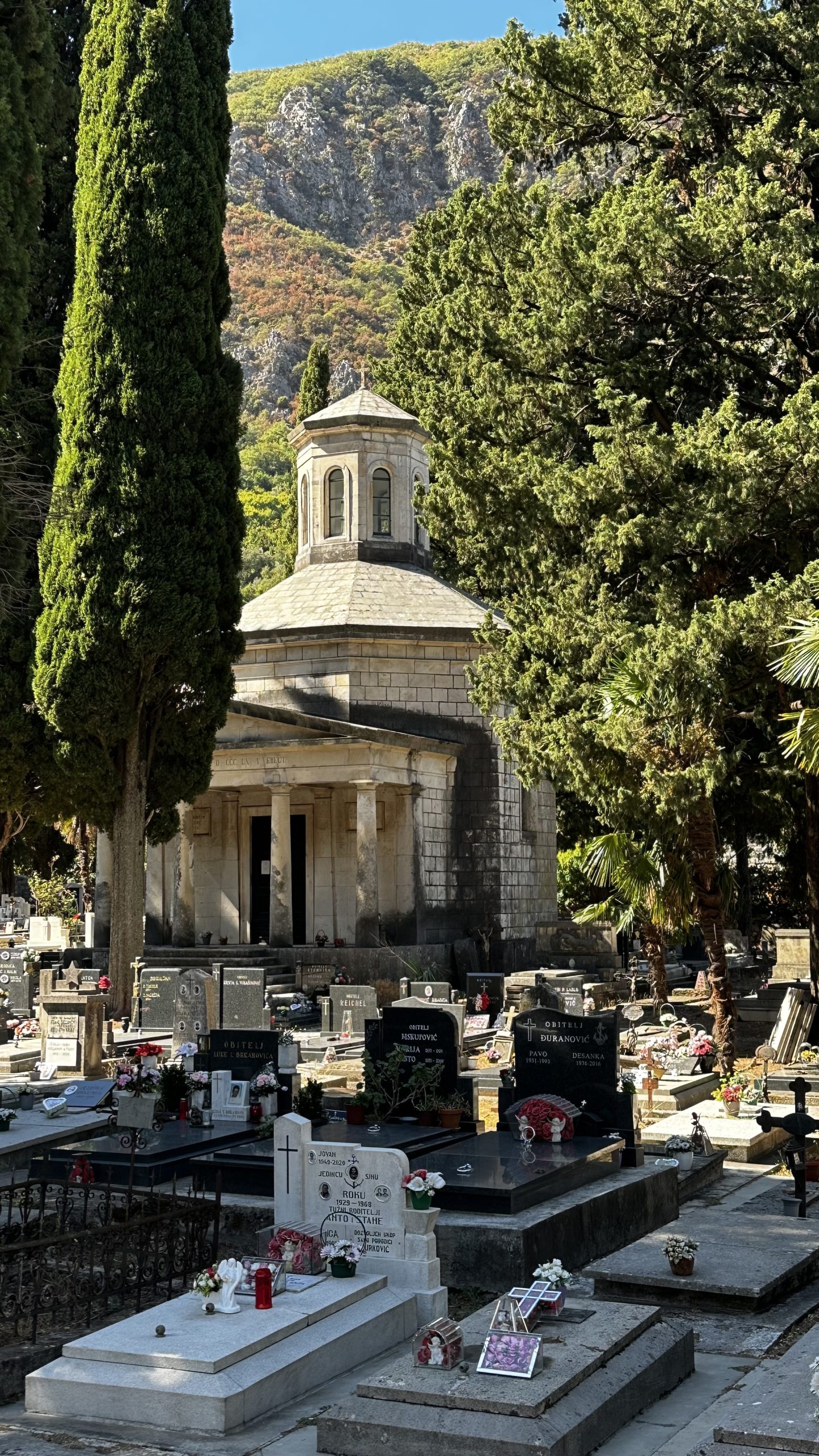
The town’s Venetian heritage is visible everywhere, and its beautifully preserved historic centre forms part of a UNESCO World Heritage Site.
It is another of those destinations that looks almost too perfect to be real.
And apparently, we weren’t the only ones who thought Kotor looked like a movie set!
The town’s remarkably preserved medieval architecture has attracted several international film productions. Its atmospheric streets featured in Papillon (2017), as well as Coriolanus (2011), directed by and starring Ralph Fiennes, and The November Man (2014), featuring former James Bond actor Pierce Brosnan.
In fact, Kotor’s old town was used for the opening scenes of Papillon, while other locations around Montenegro doubled for places as far away as South America.
Walking through the narrow alleyways, surrounded by centuries-old stone buildings and dramatic mountain scenery, it is easy to understand why filmmakers find the town so irresistible.
And the best part? Unlike a Hollywood movie set, this one is entirely real!
Unfortunately, Kotor’s popularity also brings some challenges.
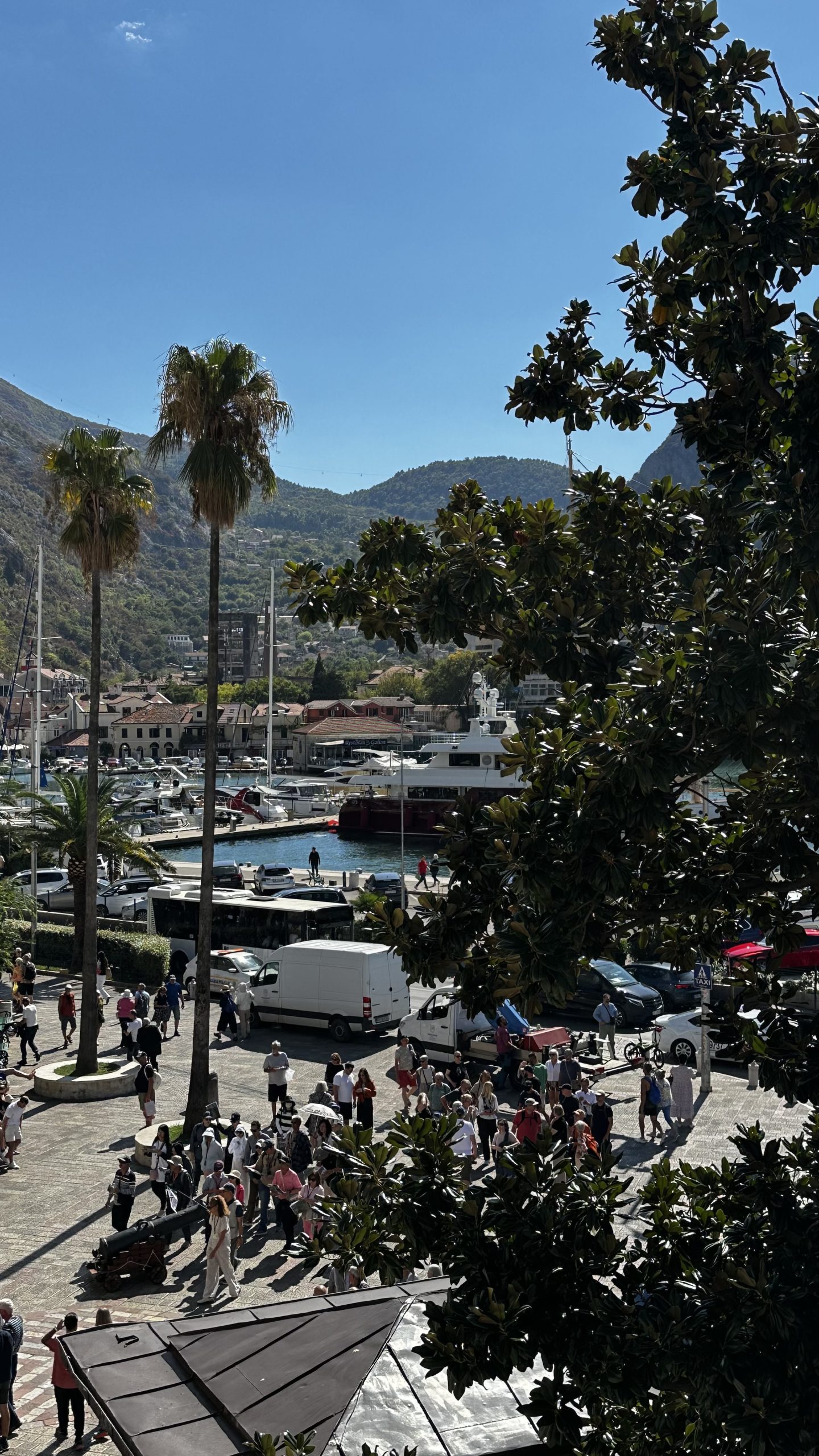
Cruise ships and day-trippers can flood the old town, and traffic around the bay can become surprisingly congested, even outside the peak summer season.
Practical tip: Allow plenty of time when driving to Kotor, particularly when cruise ships are in port. Better still, consider arriving by boat if a suitable connection is available.
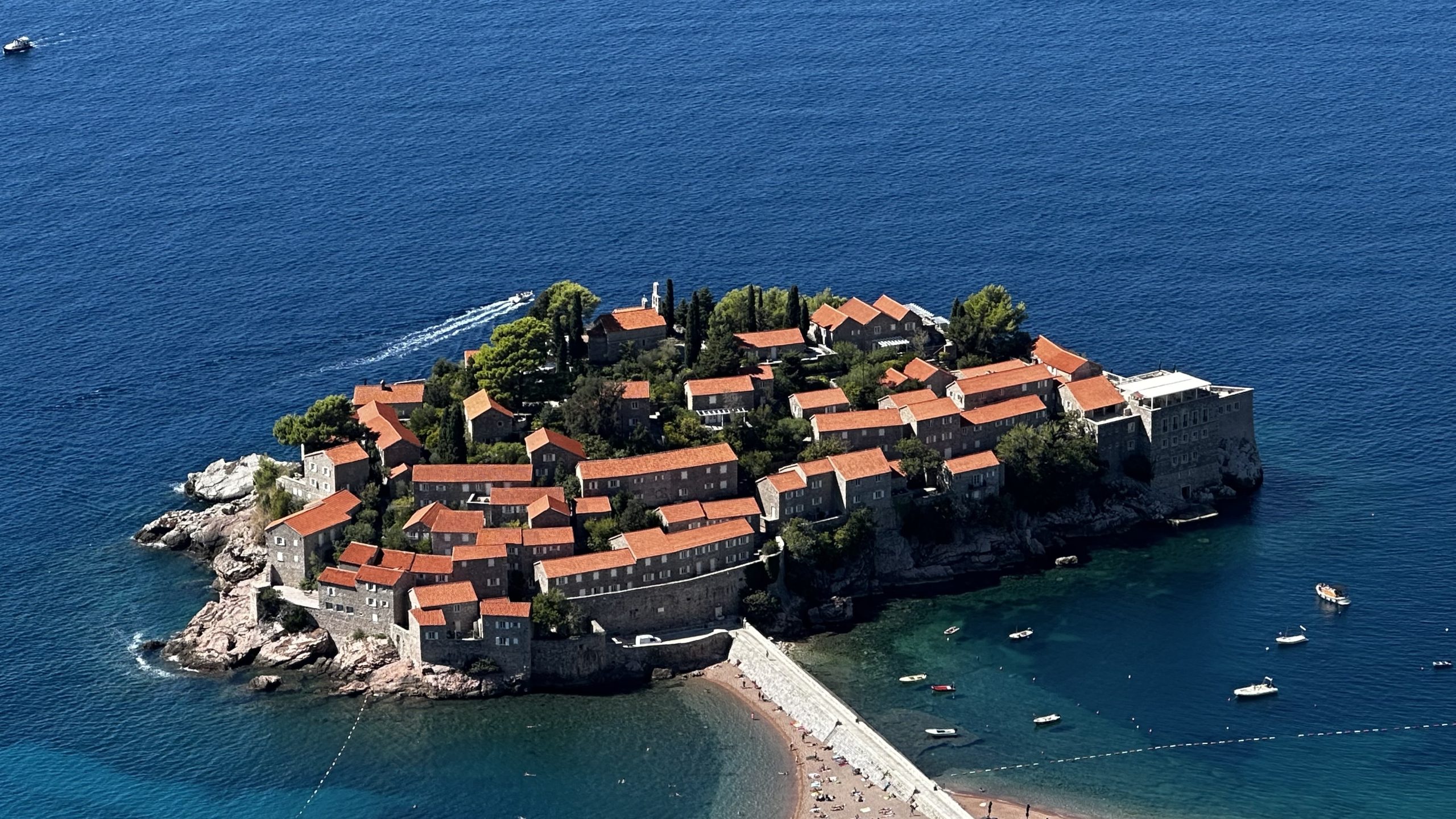
Sveti Stefan – Montenegro’s Iconic Island
Another memorable excursion took us beyond the Bay of Kotor to the open Adriatic coast.
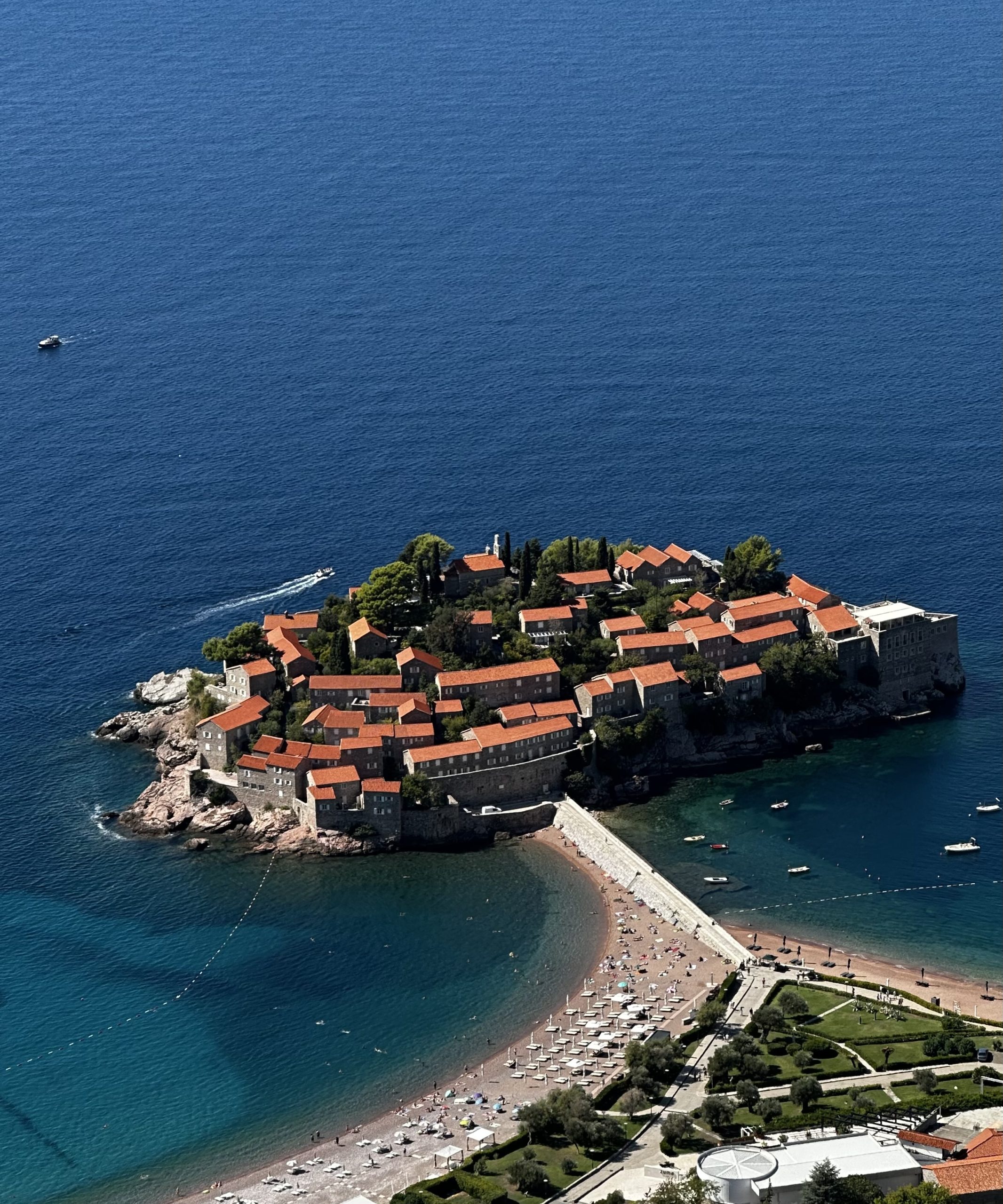
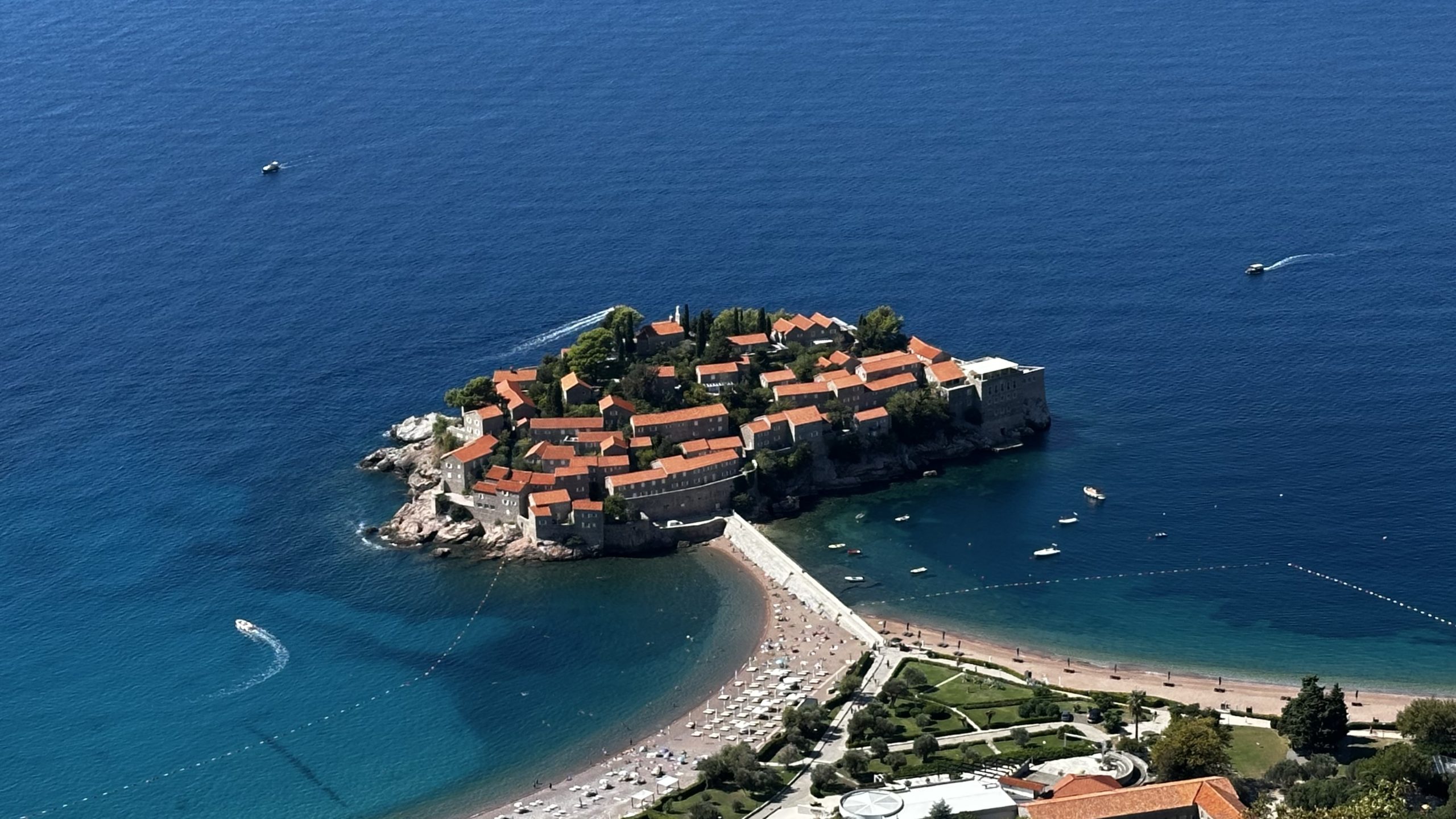
Our destination was Sveti Stefan, probably one of Montenegro’s most famous postcard views.
This tiny fortified island, connected to the mainland by a narrow causeway, is covered with historic stone buildings and terracotta rooftops.
Originally a fishing village, it was transformed into an exclusive luxury resort during the Yugoslav era and became a favourite retreat for international celebrities and prominent visitors.
Today, the island remains one of Montenegro’s most recognisable landmarks.
Even when access to the island itself is restricted, the views from the surrounding coastline are spectacular.
And the journey there provided another wonderful experience.
Breakfast With a View Over Budva
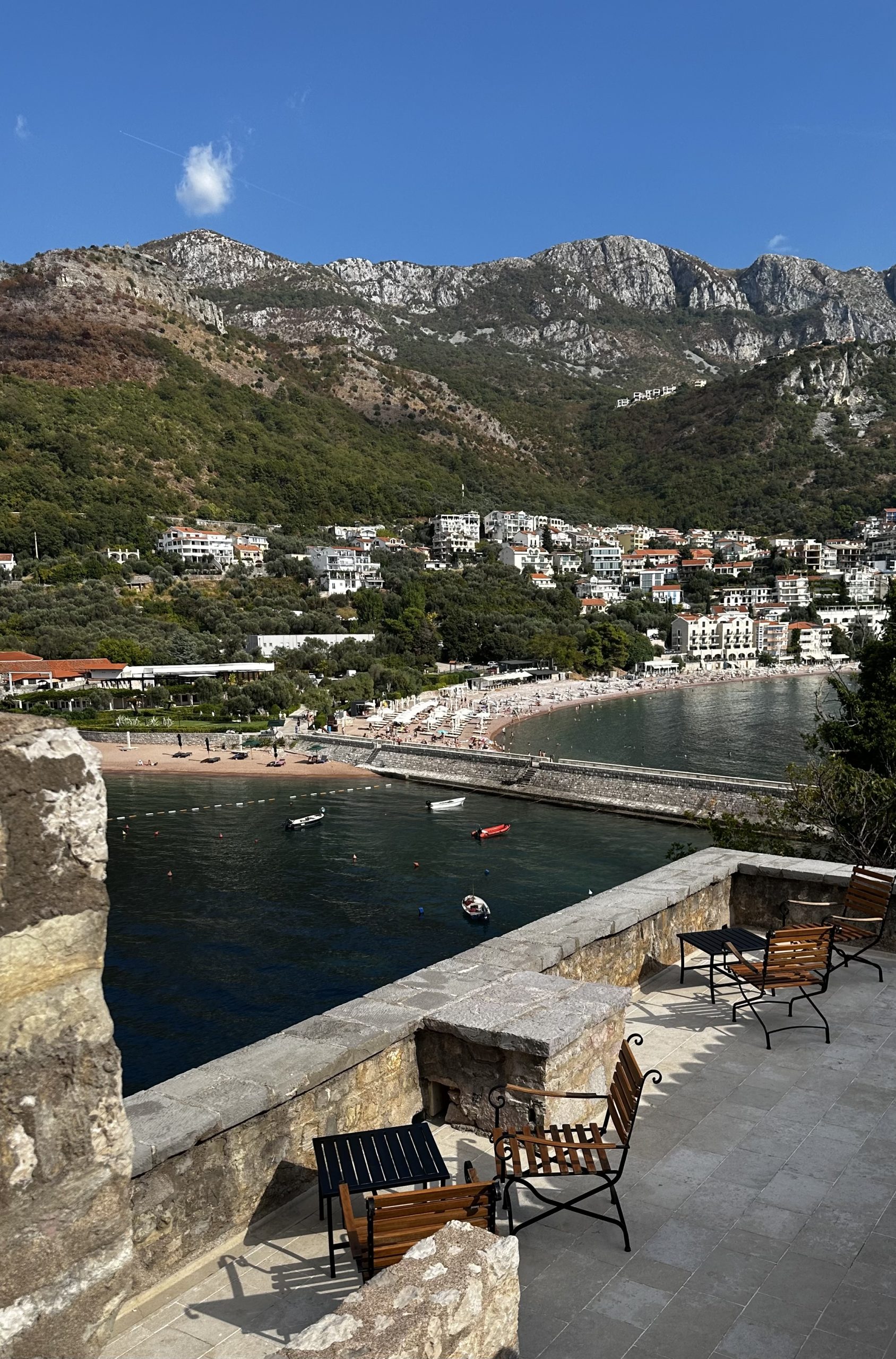
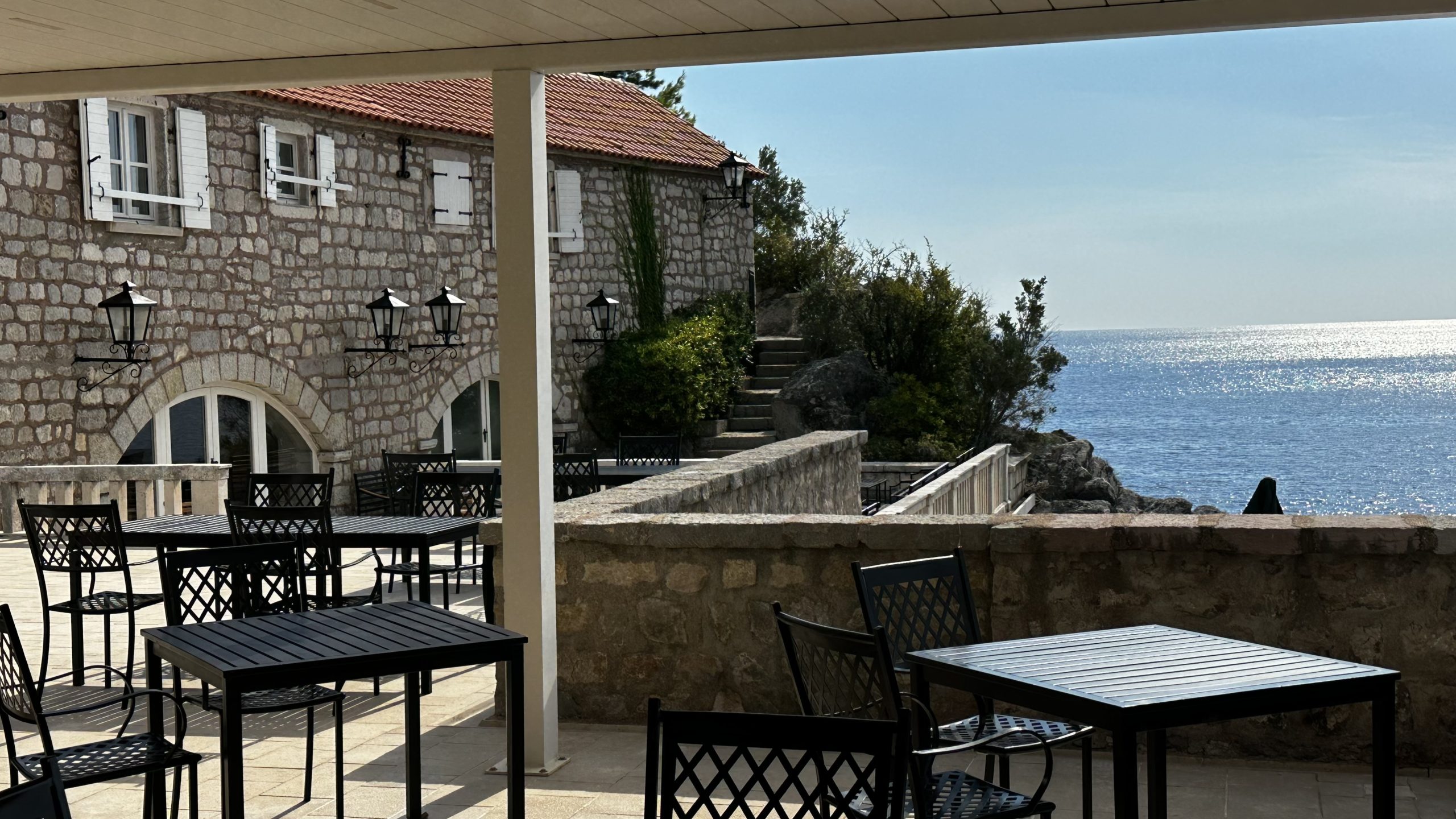
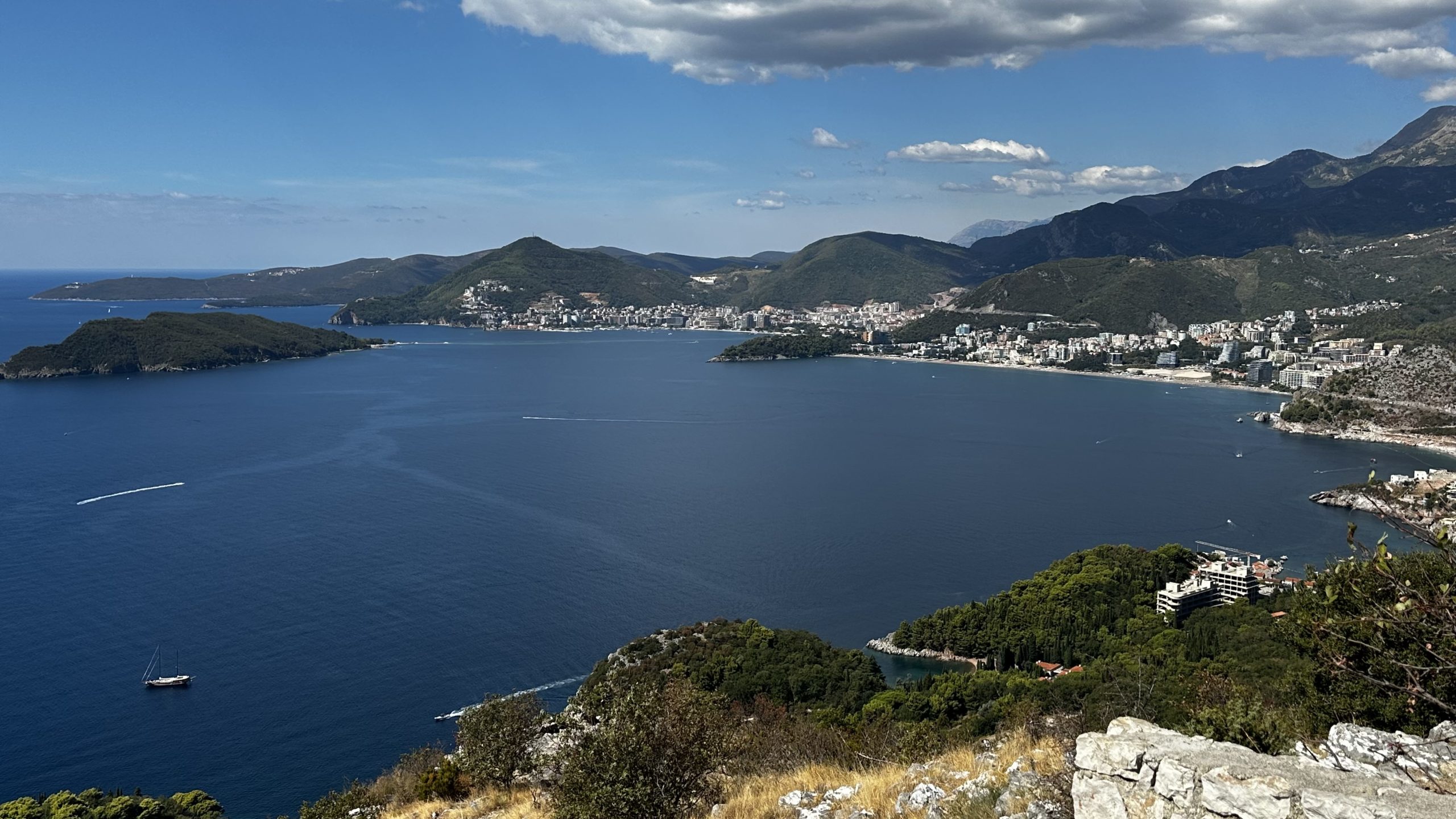
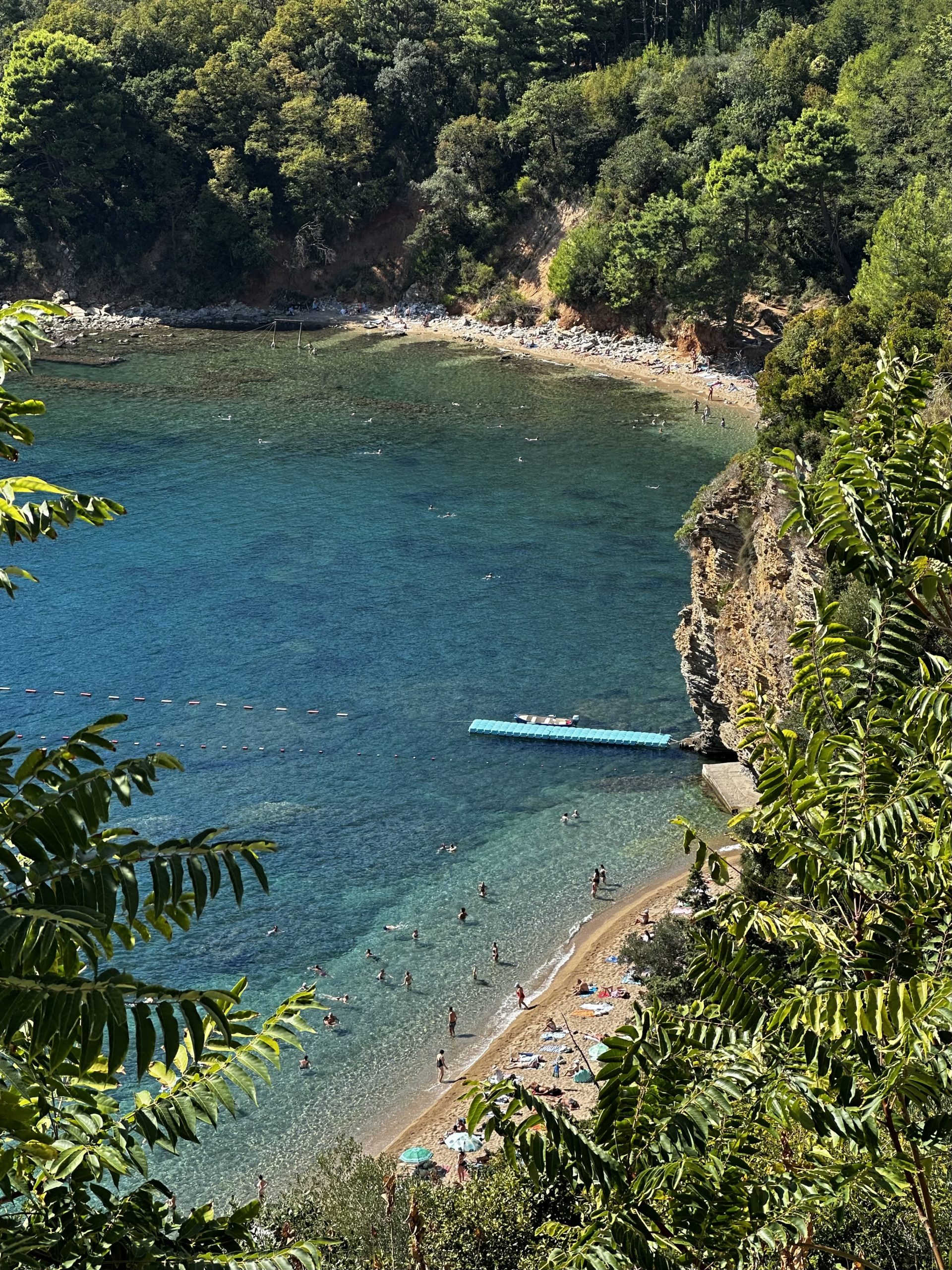
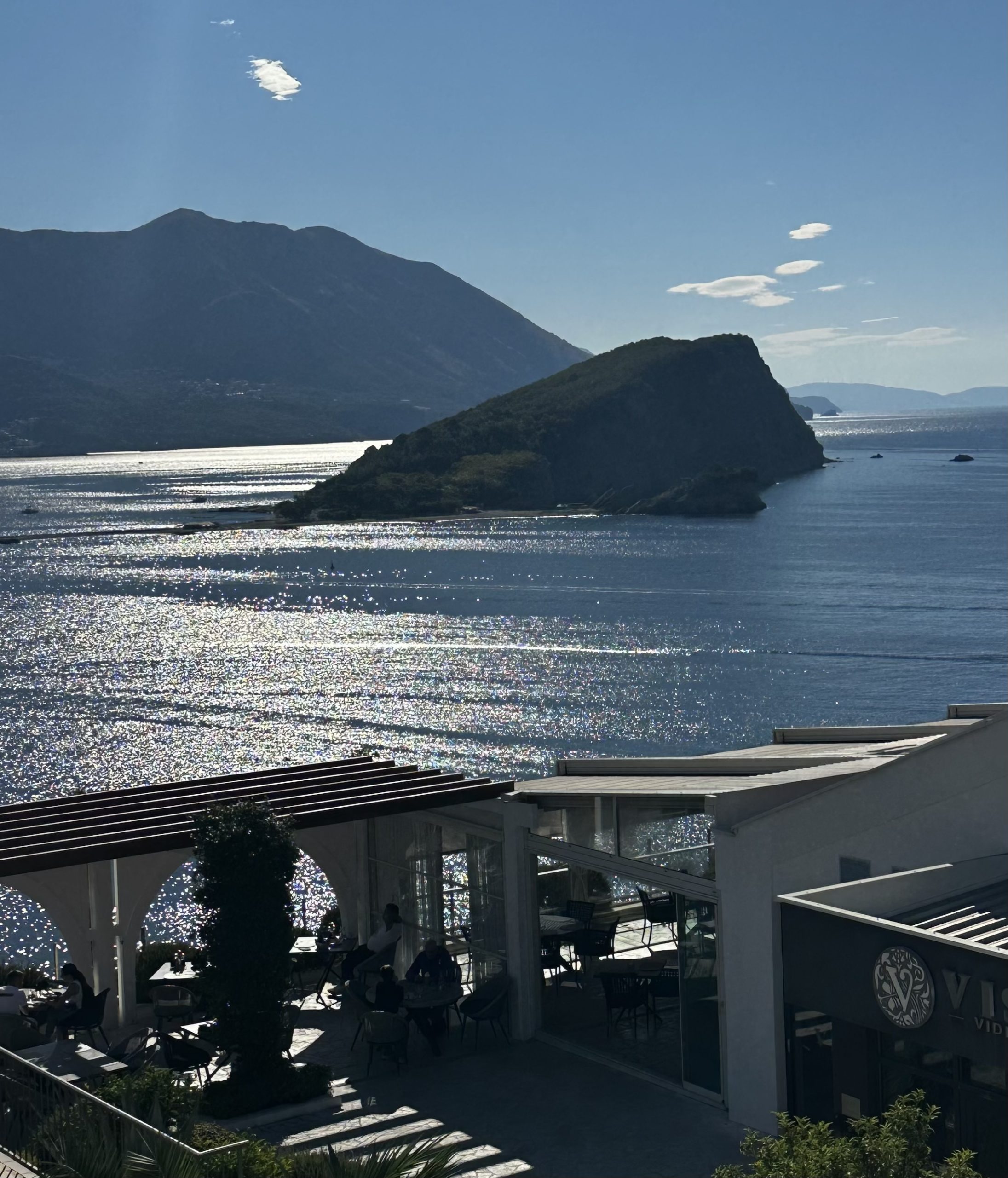
On the way, we stopped for breakfast at Restaurant Vista Vidikovac, which offers breathtaking panoramic views over the coastline and the historic town of Budva.
Sitting there with our morning coffee, looking down at the turquoise Adriatic and the red rooftops of the old town, was a wonderful way to start the day.
It is precisely these unhurried moments that make travelling with a good companion so enjoyable.
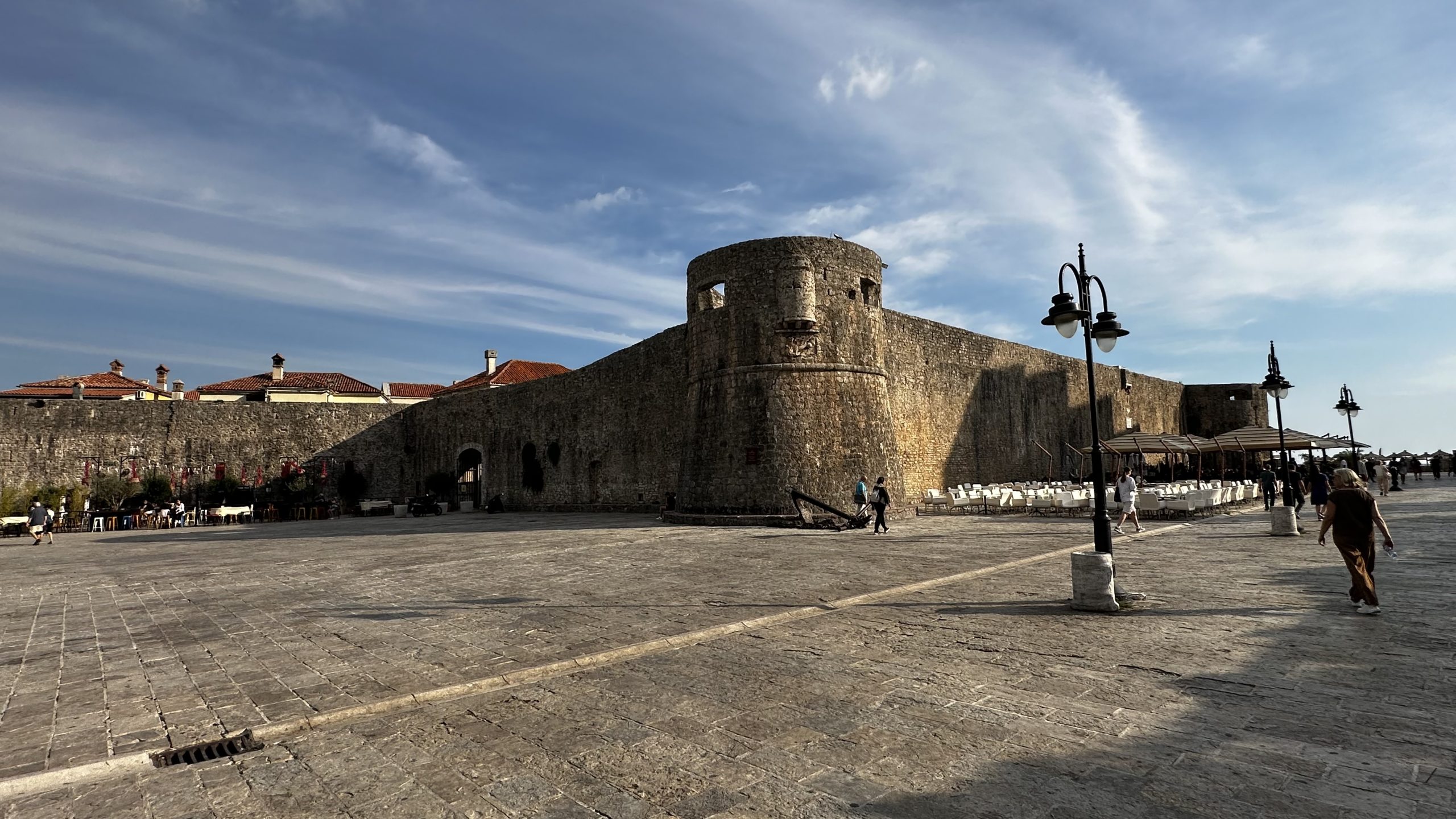
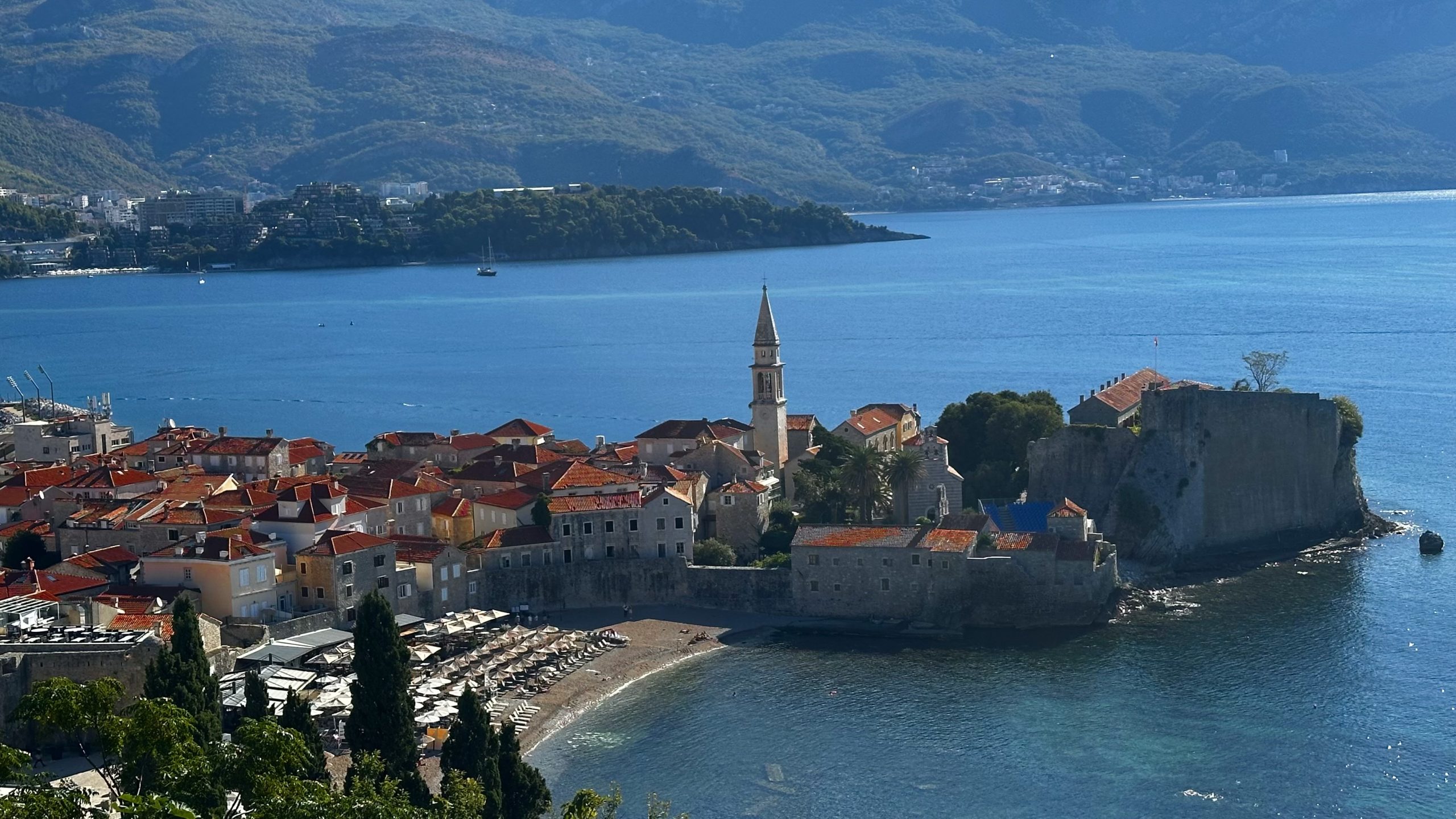
We also took the opportunity to explore Budva, one of Montenegro’s best-known coastal resorts.
Its old town is charming, with narrow streets, stone buildings and historic fortifications overlooking the sea.
In some ways, it reminded us of Kotor, although it is considerably smaller and has a somewhat different, more resort-oriented atmosphere.
Worth a visit, certainly, but for us Kotor remained the more impressive of the two.
A Culinary Journey Through the Balkans
Of course, no travel story would be complete without mentioning the food.
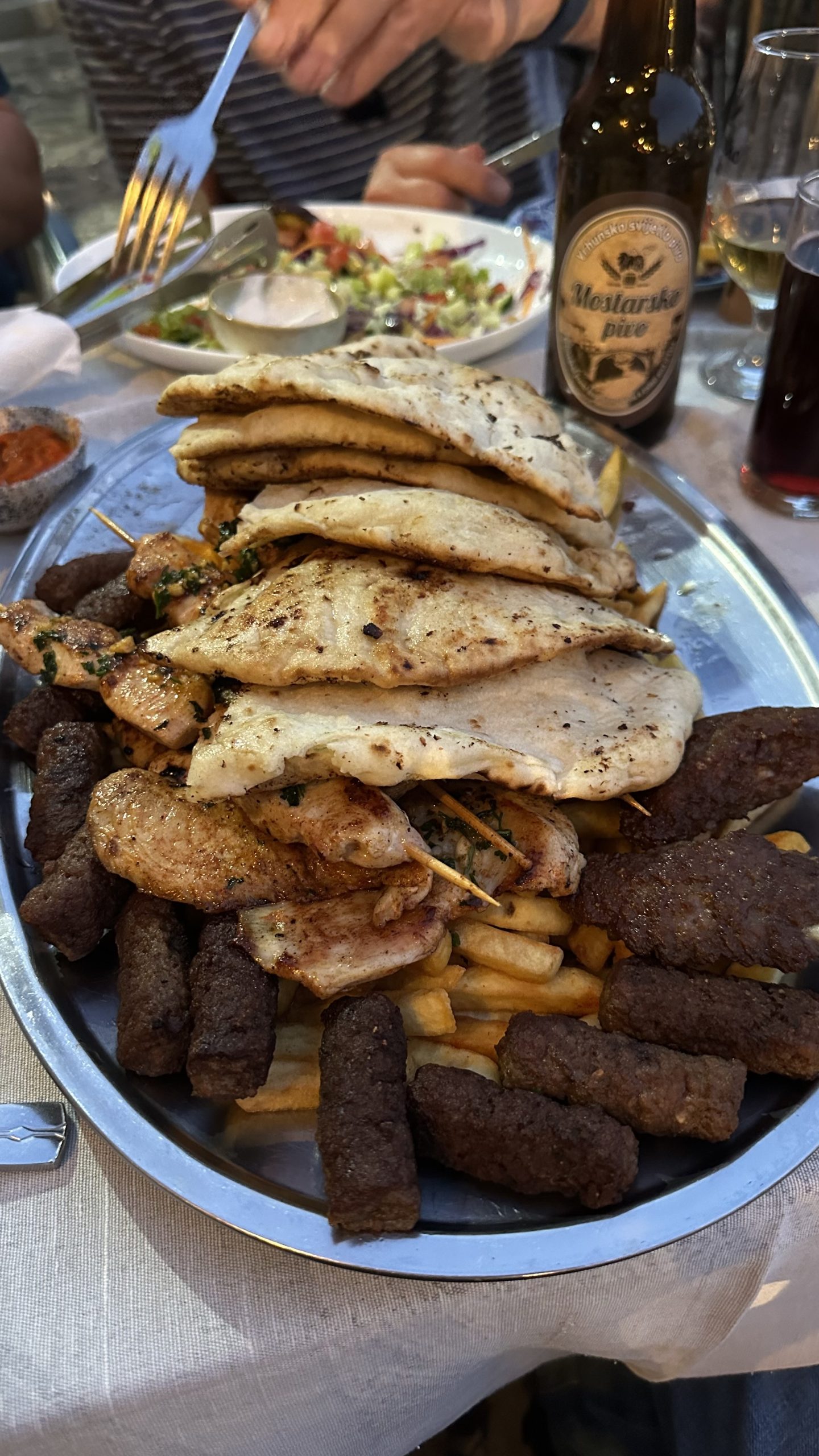
Throughout our journey, we thoroughly enjoyed exploring Balkan cuisine, which is hearty, flavourful and often decidedly meat-oriented.
Grilled meats feature prominently on many menus, including ćevapi, the famous small grilled minced-meat sausages typically served with flatbread, onions and sometimes kajmak, a rich dairy spread.
Another regional favourite is pljeskavica, a large grilled meat patty that could loosely be described as the Balkan answer to a hamburger.
We also enjoyed dishes such as burek and other varieties of filled pastry, traditional stews and, along the Montenegrin coast, fresh seafood.
Portions are often generous, and dining out can be surprisingly affordable compared with many Western European destinations, particularly away from the most popular tourist hotspots.
Add some local wine, a cold beer or a strong Bosnian coffee, and you have all the ingredients for a very enjoyable evening.
For Jürgen and me, sharing good meals and talking about the day’s experiences became an important part of the journey.
And after a full day of sightseeing, we rarely needed much encouragement to find a nice restaurant!
Podgorica – One Last Stop Before Heading Home
Eventually, our two weeks were drawing to a close.
We left the Bay of Kotor and drove to Podgorica, Montenegro’s capital, where we would spend our final night before my early morning flight the following day.
Podgorica is a perfectly pleasant city, with cafés, restaurants and a few interesting sights.
However, compared with the extraordinary historic towns, dramatic mountains and magnificent coastal scenery we had experienced elsewhere, it did not leave quite the same impression.
In our view, half a day is sufficient for a quick look around, unless you have a particular interest in the city.
For most visitors, the real highlights of Montenegro lie beyond its capital.
And so our Balkan adventure came to an end.
Recap
Was two weeks enough to explore Bosnia & Herzegovina and Montenegro?
Certainly not to see everything. But enough to fall in love with this fascinating region? Absolutely.
What made the journey so special was the remarkable contrast between the two countries and the different experiences they offered.
In Bosnia & Herzegovina, we encountered a country where history is never far away. Sarajevo’s moving reminders of war, Tito’s extraordinary nuclear bunker, Mostar’s magnificent bridge and the peaceful beauty of Blagaj all left lasting impressions.
Montenegro, meanwhile, captivated us with its dramatic coastal landscapes, picturesque medieval towns and the relaxed rhythm of life around the Bay of Kotor.
Looking back, choosing just two countries and spending six nights in one location in Montenegro was exactly the right decision. We had enough time to discover, explore and learn, but also to slow down and simply enjoy being there.
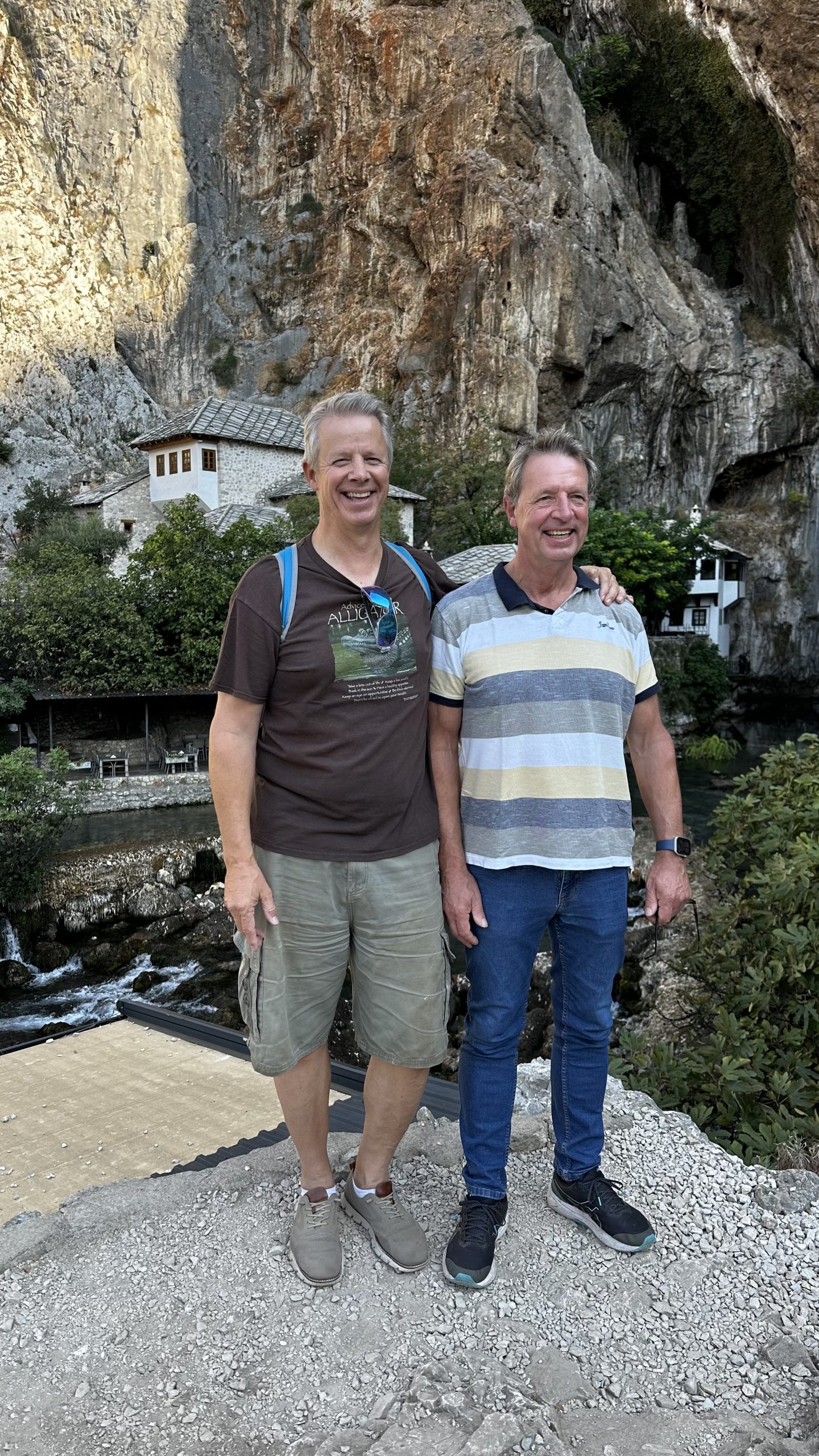
And there is something else that made this journey particularly memorable: sharing it with my travel buddy Jürgen.
From our conversations about Sarajevo’s complicated history to the simple pleasure of watching the sun set over the city, from exploring mysterious underground bunkers to cruising across the sparkling waters of the Bay of Kotor, these are experiences that become even more meaningful when shared with a good friend.
My advice? Visit in May, June or September if possible. Take your time, allow yourself to wander, and don’t try to squeeze too many destinations into one trip.
The Balkans have so much more to offer than their troubled past might suggest. They are beautiful, diverse, welcoming and full of surprises.
And I suspect this won’t have been our last trip together.